Key Takeaways
- Nvidia CEO Jensen Huang says precise 3D digital twins are essential before AI can activate products in marketing
- Adobe launched CX Enterprise, an agentic AI system for end-to-end customer lifecycle management
- Companies with proprietary AI models trained on their own data will have a competitive advantage
The Case for Perfect Digital Replicas
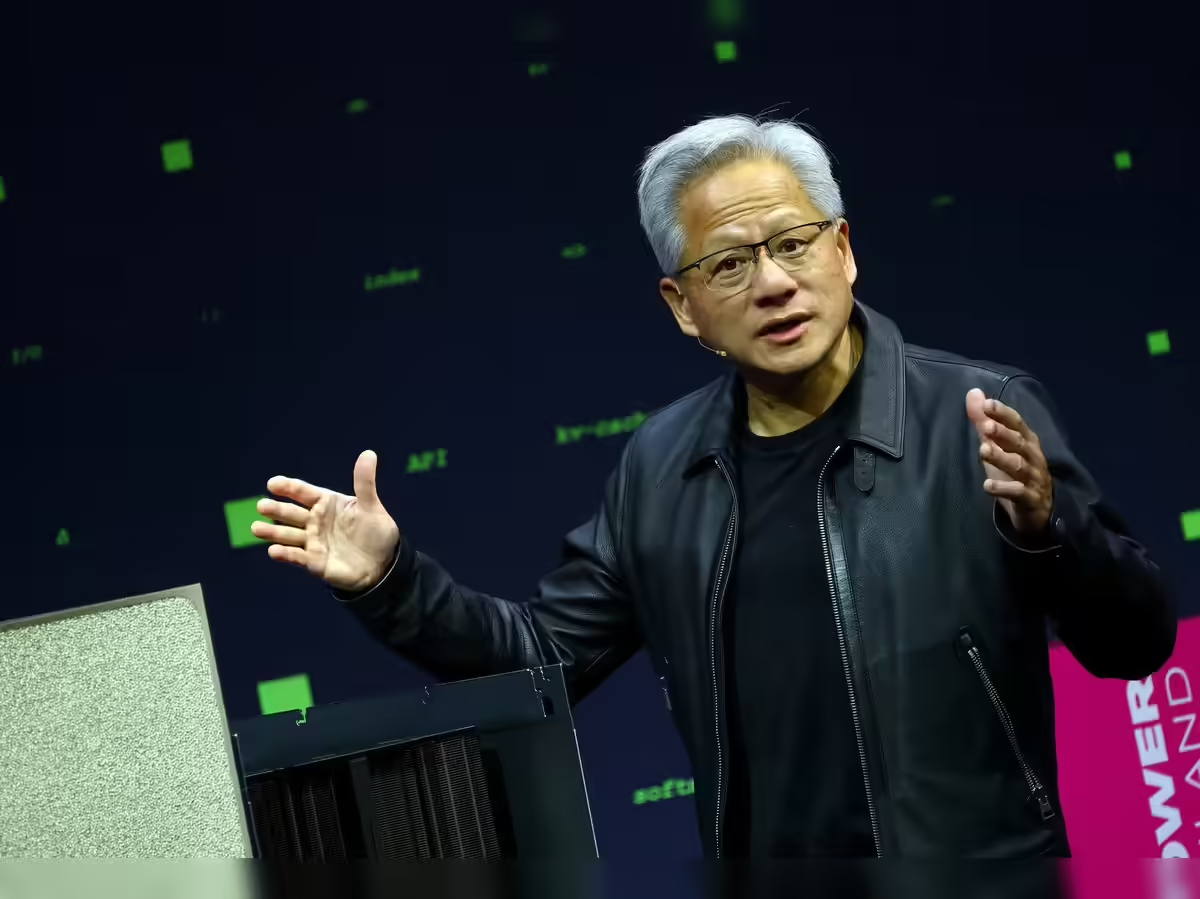
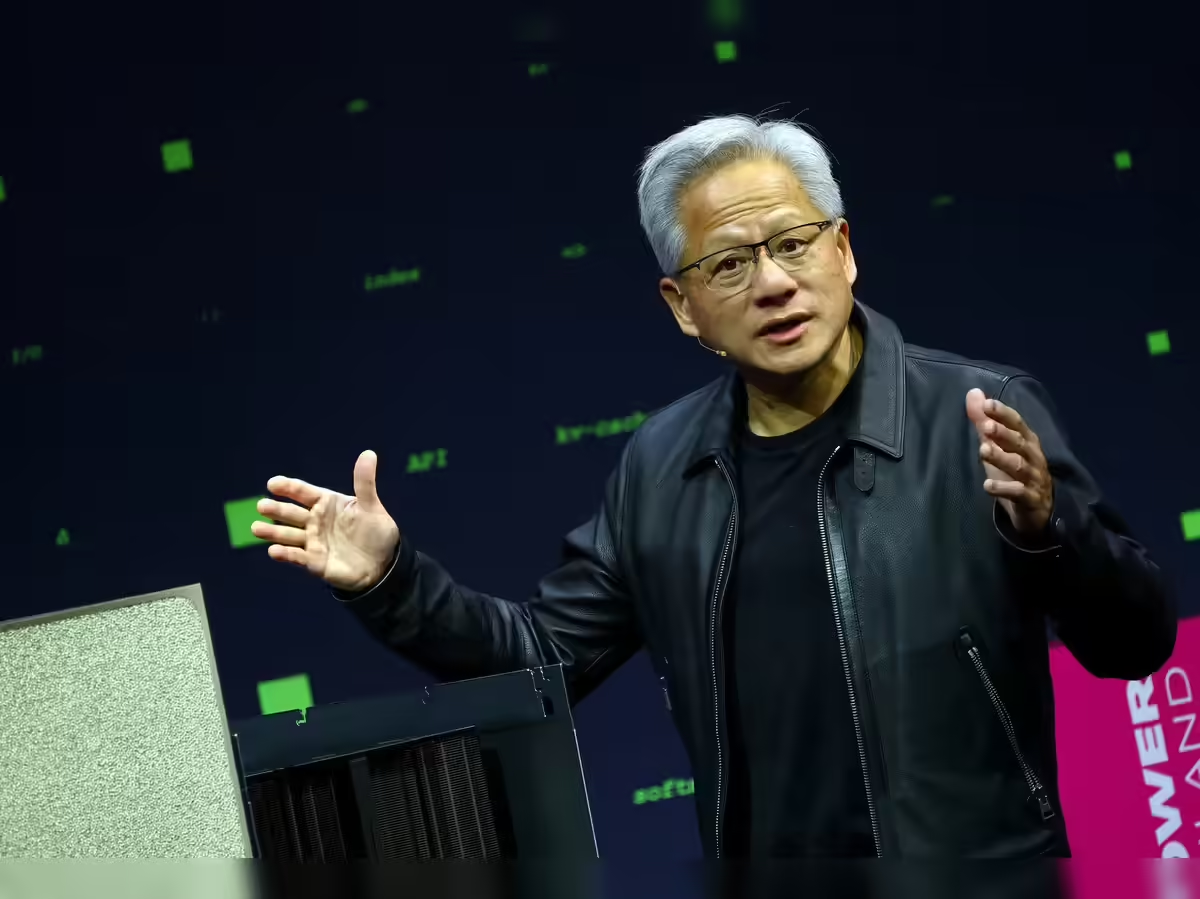
Nvidia CEO Jensen Huang made a pointed argument at Adobe Summit 2026 in Las Vegas: companies cannot use generative AI to market their products until they create precise 3D digital twins first. Speaking in a keynote conversation with Adobe CEO Shantanu Narayen, Huang positioned these digital replicas as the foundation for AI-powered marketing.
“We need a high fidelity, truthful representation of many of the things that we do in life. The product needs to be precise. The brand identity has to be precise. The design is precise. It's not an approximate representation of the product.”
— Jensen Huang, Nvidia CEO
Huang's logic is straightforward. Once a company has an exact digital representation of a product, whether a car or a perfume bottle, generative AI can place that product in any creative environment. The digital twin serves as what Huang called a "grounded truth" that AI systems can reference.
Nvidia, currently the world's most valuable publicly listed company at $5 trillion market capitalization, sees this as part of a broader push to apply computing power to industries like life sciences, logistics, manufacturing, and transportation.
From Language to Action
Huang argued that AI's ability to move between language and images points to something bigger. If AI can translate language into images and images back into language, it should eventually translate language into physical actions.
"Unless the computer can understand the physical world there is no chance of enhancing and automating it," Huang said. "We're finally at a time where if you can go from language to images, and images to language, why can't we go from language to chunks of actions which is articulation?"
For marketers, this means AI could take a perfect digital twin of a product and automatically generate ads, social content, and product visualizations without human designers placing the product in each scene manually.
Adobe's Agentic AI Push
Adobe used the summit to announce Adobe CX Enterprise, an end-to-end agentic AI system designed to manage customer lifecycles from acquisition through conversion and retention. The system aims to simplify how businesses handle prospects and maintain customer loyalty.
Narayen emphasized that customer experience orchestration is changing rapidly as AI agents take on complex workflows. These range from on-brand content production to one-to-one personalization at scale.
“Winning isn't just about producing the most content; it's actually about producing the right content on brand at scale and delivered in a way that feels personal and connected at every single touch point.”
— Shantanu Narayen, Adobe CEO
Narayen also stressed that enterprises running proprietary models trained on their own data will have a significant advantage. Companies that can turn unique brand knowledge into consistent, scaled output will outperform those relying on generic AI tools.
Brand Consistency as Business Requirement
Adobe's announcement reflects a shift in how companies think about AI-generated content. Narayen noted that RAM consistency, IP protection, and connected asset management are no longer best practices. They are now business-critical requirements.
The implication is clear: as AI generates more marketing content, the risk of off-brand or inconsistent messaging increases. Companies need systems that enforce brand guidelines automatically, not as an afterthought.
This aligns with Huang's point about digital twins. A precise 3D representation of a product ensures that AI-generated visuals stay accurate. Combined with Adobe's brand-aware orchestration tools, companies could theoretically produce large volumes of on-brand content without manual review of every asset.
Logicity's Take
Huang's framing is smart marketing for Nvidia's Omniverse platform, which creates exactly the kind of digital twins he describes. But he's also right. Most companies struggle to keep product images consistent across channels. 3D digital twins could solve that, but the upfront investment in creating them remains a barrier for all but the largest brands.
How another tech-forward company is navigating AI and automation
Frequently Asked Questions
What is a 3D digital twin?
A 3D digital twin is a precise digital replica of a physical product. It captures exact dimensions, materials, colors, and textures so AI systems can render the product accurately in any environment.
Why does Jensen Huang say digital twins are necessary for AI marketing?
Huang argues that generative AI needs a "grounded truth" to work from. Without a precise digital representation, AI-generated images of products will be approximations that may not match the real thing.
What is Adobe CX Enterprise?
Adobe CX Enterprise is an agentic AI system announced at Adobe Summit 2026. It manages the entire customer lifecycle, from acquiring prospects to driving conversions and building long-term loyalty.
How does agentic AI differ from regular AI?
Agentic AI refers to AI systems that can take autonomous actions to complete complex workflows, rather than just responding to individual prompts. In marketing, this means AI that can handle multi-step campaigns independently.
Which companies benefit most from 3D digital twins?
Companies with physical products that need consistent visual representation across marketing channels. Automotive, consumer electronics, fashion, and beauty brands stand to gain the most from precise digital product replicas.
Need Help Implementing This?
Building 3D digital twins and integrating agentic AI into your marketing stack requires technical expertise and strategic planning. If you're exploring how these technologies apply to your business, reach out to the Logicity team for guidance.
Source: Tech-Economic Times / ET
Manaal Khan
Tech & Innovation Writer
Produced with AI assistance and reviewed by the Logicity editorial team. Learn more in our Editorial Policy.




