Key Takeaways
- Nvidia and Microsoft posted identical 'new era of PC' messages with coordinates pointing to Jensen Huang's Computex keynote location
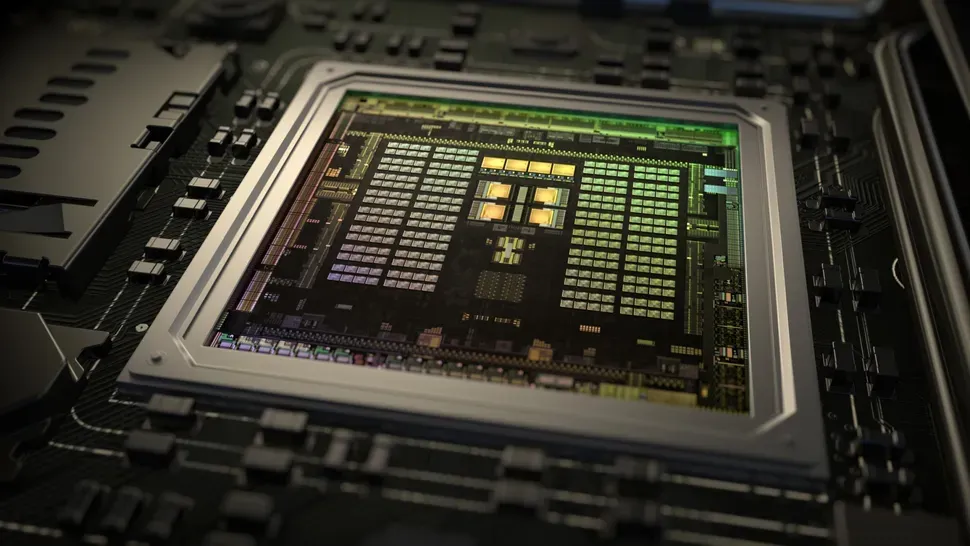
- The N1X platform is rumored to be a mobile version of the GB10 Superchip with an RTX 5070-class GPU and 128GB unified memory
- Microsoft's involvement suggests N1X will run Windows on Arm, potentially bringing advanced AI capabilities to mainstream laptops
Coordinated Teasers Point to Major Announcement
Nvidia and Microsoft have posted identical messages on X, each reading 'A new era of PC' followed by coordinates: 25.0528, 121.5990. Those coordinates point to the Taipei Music Center, where Nvidia CEO Jensen Huang will deliver his GTC Taipei 2026 keynote during Computex next week.
The matching posts suggest a joint announcement. Microsoft's Windows account sharing the exact same message is a strong signal that whatever Nvidia unveils will run Windows, not just Linux.
What We Know About the N1X Platform
Industry speculation has long pointed to N1X as a mobile variant of Nvidia's GB10 Superchip. The GB10 powers the DGX Spark mini-PC, which pairs an RTX 5070-class GPU with 128GB of LPDDR5X memory and a MediaTek-designed 20-core Arm CPU.
The DGX Spark runs Ubuntu Linux and targets AI developers. A Windows-compatible version would open the platform to a much broader audience. Consumers and enterprise buyers who need Windows app compatibility could access Nvidia's AI compute without switching operating systems.
“This isn't just a new chip; it's a new platform foundation that allows our partners to push the boundaries of what Windows on Arm can deliver.”
— Pavan Davuluri, Corporate Vice President, Windows and Surface at Microsoft
Why Microsoft Needs N1X
Microsoft's current Windows on Arm partners, primarily Qualcomm, have not produced anything close to the GB10's raw AI capability. Copilot+ PCs ship with limited local AI performance. The N1X could change that math.
With 128GB of unified memory accessible to both CPU and GPU, N1X systems could run large language models locally. That's a capability current laptops can't match. Microsoft could build new first-party AI features that require this class of hardware.
“We are redefining what a modern PC is capable of, bringing unprecedented AI and graphics performance to the thin-and-light form factor.”
— Jensen Huang, CEO of Nvidia
The Memory Bandwidth Problem
The GB10 architecture has a known limitation. Because the CPU and GPU share the same pool of LPDDR5X memory, the GPU has access to only 273 GB/s of bandwidth. Traditional gaming laptops with dedicated GDDR memory offer significantly more.
In testing, the GB10 can run games, but gaming is not its strength. Unless Nvidia has changed the architecture for N1X, these laptops will likely emphasize AI workloads over gaming performance.
That trade-off may be acceptable for users who prioritize local AI inference over frame rates. But it narrows the potential audience at launch.
Community Reaction: Cautious Optimism
Discussion on r/hardware and Hacker News shows enthusiasm tempered by past Windows on Arm disappointments. Users are waiting to see if Nvidia's driver expertise can solve the compatibility issues that plagued earlier attempts.
The key question: can N1X run legacy x86 applications smoothly through emulation while also delivering strong native Arm performance? Nvidia's track record with GPU drivers is excellent, but this would be new territory.
What to Expect at Computex
Jensen Huang's keynote will likely include the official N1X announcement. Based on the Microsoft collaboration, expect details on Windows compatibility, AI benchmarks, and possibly OEM partners. Asus, a Taiwanese company, would be a natural launch partner given the Computex venue.
Pricing and availability remain unknown. The DGX Spark targets developers with a premium price. Consumer N1X laptops may arrive at lower price points, though the 128GB unified memory configuration will likely stay expensive.
Logicity's Take
Frequently Asked Questions
What is the Nvidia N1X?
N1X is rumored to be a mobile version of Nvidia's GB10 Superchip, featuring a Blackwell-architecture GPU and a 20-core MediaTek-designed Arm CPU with 128GB of unified memory.
Will N1X laptops run Windows?
Microsoft's coordinated teaser with Nvidia strongly suggests N1X will support Windows on Arm, unlike the Linux-only DGX Spark.
When will Nvidia announce N1X?
The teasers point to Jensen Huang's GTC Taipei 2026 keynote during Computex, which takes place the week of May 29, 2026.
Can N1X laptops play games?
The GB10's unified memory architecture limits GPU bandwidth to 273 GB/s, which restricts gaming performance compared to laptops with dedicated GDDR memory. Gaming is possible but not the platform's focus.
How does N1X compare to Apple Silicon?
Both use Arm-based unified memory architectures. The N1X would have a more powerful GPU due to Nvidia's Blackwell design, but Apple's M-series chips have years of macOS optimization that Windows on Arm lacks.
Need Help Implementing This?
Source: Latest from Tom's Hardware
Beyond Copilot: Focus Shifts to Local AI Agents
The new article adds that Dell and Microsoft's Surface brand are expected to unveil devices at Computex and Build, rather than just teasing a platform. It also introduces significant new details about Microsoft's shift from Copilot to locally-run 'AI agents' powered by the OpenClaw framework.
Manaal Khan
Tech & Innovation Writer
Produced with AI assistance and reviewed by the Logicity editorial team. Learn more in our Editorial Policy.