Key Takeaways
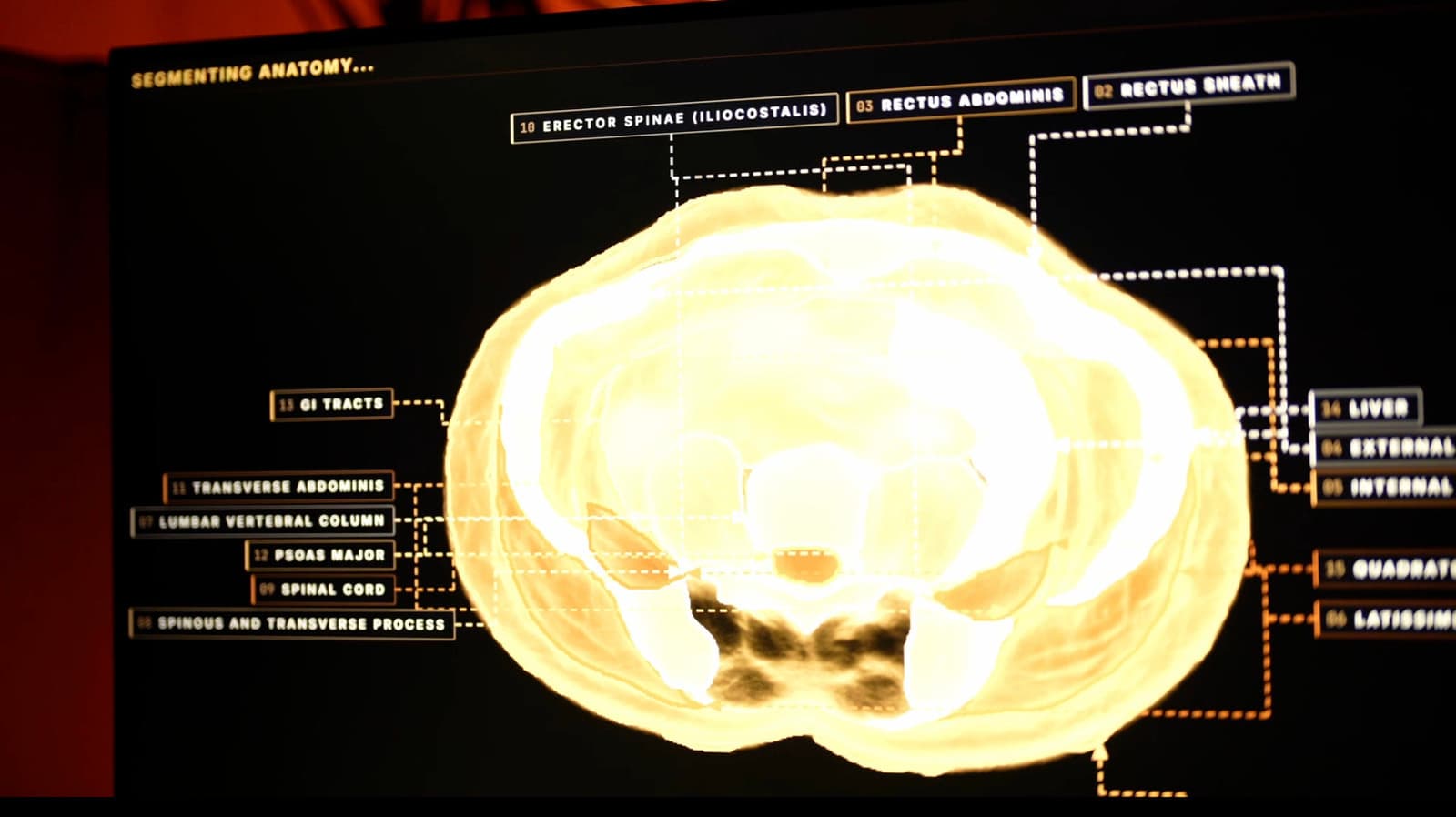
- Midjourney is pivoting from AI image generation to medical hardware with a full-body ultrasonic scanner
- The scanner uses 500,000 ultrasonic transducers to create MRI-quality images in under 60 seconds
- The company plans to open its first 'wellness spa' scanning location in San Francisco in 2027
Midjourney, the company behind the popular AI image generator, announced it is building a full-body ultrasonic scanner that can image your entire body in 60 seconds. The company is launching a new division called Midjourney Medical and plans to open wellness spas where customers can get scanned, with the first location opening in San Francisco in 2027.
This is not what anyone expected from a company known for turning text prompts into surreal digital art. But CEO David Holz framed it as an existential question: 'How do we want to be different? What do we want to become?' The answer, apparently, is a medical imaging company.
How does the Midjourney scanner work?
You step onto a platform and get submerged in water at a rate of 2 inches per second. Your body passes through a ring containing half a million ultrasonic transducers, each the size of a grain of sand. Every one of those squares emits ultrasonic waves and records the echoes bouncing back. Midjourney compares the experience to being surrounded by half a million tiny dolphins using echolocation from every angle.
The result is a 3D map of your body down to a fraction of a millimeter. Midjourney claims the output looks like an MRI but takes a tiny fraction of the time. A traditional full-body MRI runs 60 to 90 minutes. The Midjourney scanner targets under 60 seconds.
Who is building it?
Midjourney is developing the scanner with Butterfly Network, a company that makes handheld ultrasound devices. In November 2025, Midjourney signed a licensing agreement securing exclusive rights to Butterfly's ultrasound-on-chip technology.
The project lead is Ahmad Abbas, Midjourney's head of consumer hardware. Abbas joined in late 2023 after working on Apple's Vision Pro. That hire now looks less like a curiosity and more like a signal.
What is the timeline?
FDA approval for diagnostic capabilities is part of the roadmap, but the company is framing the initial rollout as wellness, not clinical medicine. That distinction matters.
Why call it a spa instead of a clinic?
The 'spa' framing lets Midjourney sidestep some of the regulatory burden of clinical medical devices. FDA approval for diagnostic medical equipment involves years of trials and rigorous scrutiny. A wellness product sold for informational purposes faces a lower bar.
This is the core tension. Midjourney is promising MRI-like imaging at consumer scale. But if the scans are not clinically validated, what exactly are customers getting? A detailed picture of their insides that a doctor cannot legally rely on? The company says FDA diagnostic approval is coming in 2028, but that is two years after the spas start operating.
Can ultrasound really match MRI resolution?
This is where skeptics are loudest. MRI uses powerful magnetic fields and radio waves to image soft tissue in exquisite detail. Ultrasound is typically used for less demanding applications, like prenatal imaging or quick cardiac assessments. The physics are different.
Midjourney claims that half a million transducers, combined with advanced signal processing, can close that gap. The company has not published peer-reviewed studies backing this claim. On Reddit and HackerNews, the technical community is split. Some see a plausible breakthrough in high-density transducer arrays. Others suspect the marketing is ahead of the engineering.
There is also a data question. Midjourney built its image generation business on vast training datasets. A fleet of body scanners would generate an unprecedented dataset of human anatomy. Some commenters wonder whether the real product is not the scan you receive but the biological data you provide.
The boldest claim: preventing 30% of deaths
Midjourney says that with enough early imaging, the world could avoid 30 percent of all deaths and 50 percent of all healthcare costs. That is an extraordinary claim. The logic is that cheap, fast, frequent whole-body imaging would catch cancers, aneurysms, and other conditions early enough to treat them.
It is also unproven. Full-body screening has a mixed track record. It finds things. Many of those things are incidental and benign. False positives lead to unnecessary biopsies, anxiety, and cost. The medical establishment has debated routine full-body imaging for decades without consensus.
Midjourney is betting that AI analysis of its scans will be accurate enough, and cheap enough, to change the math. If it works, the impact is hard to overstate. If it does not, the company has built a lot of expensive bathtubs.
Logicity's Take
This is either a genuine moonshot or a brilliantly packaged data play. The technical claims are plausible but unverified. The regulatory strategy, calling it a spa, is clever and also raises legitimate concerns about what happens when unvalidated imaging results reach anxious consumers. The most interesting signal is who Midjourney hired: a Vision Pro veteran to lead hardware, and a deal with Butterfly, a serious ultrasound company. They are not just announcing a vision; they are assembling real capabilities. Whether those capabilities deliver MRI-quality results in 60 seconds is the question that will not be answered until paying customers start climbing into the water.
Frequently Asked Questions
When will the Midjourney scanner be available?
The first Midjourney spa is scheduled to open in San Francisco in 2027. FDA-approved diagnostic capabilities are targeted for 2028.
How much will a Midjourney body scan cost?
Midjourney has not announced pricing. Given the company's goal of 50,000 scanners by 2031, they appear to be targeting consumer accessibility, not hospital budgets.
Is the Midjourney scanner FDA approved?
Not yet. Initial spa locations will operate as wellness services. Midjourney is pursuing FDA diagnostic approval with a target date of 2028.
How is the Midjourney scanner different from an MRI?
MRI uses magnetic fields and takes 60-90 minutes for a full-body scan. The Midjourney scanner uses ultrasound technology, submerges you in water, and targets completion in under 60 seconds.
Who is building the Midjourney scanner?
Midjourney is developing it in partnership with Butterfly Network, using Butterfly's ultrasound-on-chip technology under an exclusive licensing agreement.
As Midjourney pivots to hardware, other companies are reconsidering their AI investments entirely.
Need Help Implementing This?
If your organization is evaluating emerging health tech or AI-driven diagnostic tools, Logicity can help you cut through the hype. Contact our team for vendor-neutral analysis and implementation guidance.
Source: Engadget
Huma Shazia
Senior AI & Tech Writer
Produced with AI assistance and reviewed by the Logicity editorial team. Learn more in our Editorial Policy.




