Key Takeaways
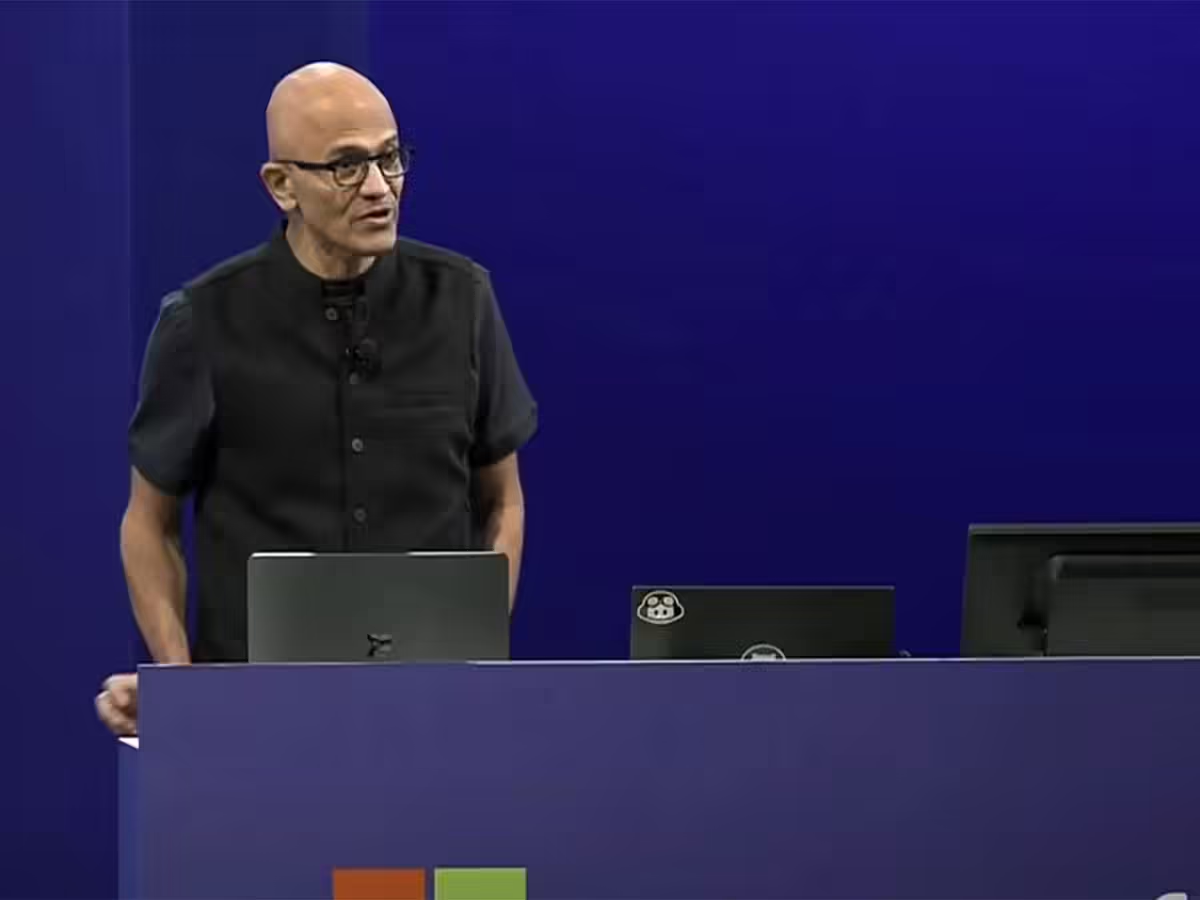
- Microsoft's Copilot Cowork bills per task at $0.01 per credit, marking the company's first pricing model change in 20 years
- The AI agent can autonomously handle multi-hour tasks like comparing 4,000 documents or preparing complex meetings
- Users can choose between Anthropic's Opus 4.8, Sonnet 4.6, or GPT 5.5 models based on their power and cost needs
Microsoft is abandoning the subscription model that defined its office software business for two decades. The company launched Copilot Cowork on Tuesday, an autonomous AI agent that drafts documents, builds spreadsheets, and sends emails on your behalf. The catch: every task gets billed separately based on computing power consumed, at $0.01 per credit.
This is not a minor tweak. For twenty years, Microsoft 365 customers paid predictable monthly fees regardless of usage. Now, heavy users of Copilot Cowork will pay more than light users. Charles Lamanna, Microsoft's executive vice president for Copilot and agents, compared it to filling up at a gas station.
Why Microsoft abandoned fixed subscriptions
The short answer: cost. Running agentic AI systems consumes vastly more computing power than a chatbot or search query. And usage varies wildly between users. One customer used Copilot Cowork to compare nearly 4,000 documents in a matter of hours. Another might run it once a month for meeting prep.
“There's not one overarching user license that makes sense, given that different users consume widely varying levels of computing power.”
— Charles Lamanna, Microsoft EVP for Copilot and agents
Lamanna called usage-based billing "the only way to make the model work." That's a candid admission from a company that built its modern enterprise dominance on predictable per-seat licensing.
What Copilot Cowork actually does
Copilot Cowork represents Microsoft's push into agentic AI, the current obsession of Silicon Valley. Unlike a chatbot that answers questions, an agent takes an assignment and executes it autonomously, sometimes running for several hours without human intervention.
The capabilities Microsoft highlighted include preparing complex meetings by synthesizing emails, internal documentation, and calendars. It can draft documents, populate spreadsheets with analyzed data, and send emails. The agent runs in the cloud, meaning it continues working regardless of whether your laptop is open.
This puts Microsoft in direct competition with similar tools on Google's and Amazon's enterprise platforms. The differentiation will come down to integration depth with the Microsoft 365 ecosystem and, increasingly, to pricing.
How Microsoft is trying to prevent bill shock
The company clearly anticipates pushback. Copilot Cowork is disabled by default. Companies can cap spending per employee, per team, or per department. These guardrails exist because usage-based billing has already burned developers elsewhere.
GitHub, Microsoft's own programming subsidiary, moved to usage-based billing in early June. Some developers saw their bills spike unexpectedly, sparking anger in the community. Anthropic announced similar changes for its premium models around the same time.
Microsoft is also offering model choice as a cost lever. At launch, Copilot Cowork runs on Anthropic's Opus 4.8 and Sonnet 4.6 models. Customers on the premium "Frontier" tier can access GPT 5.5 for more demanding tasks. A cheaper model called Cowork 1 is coming soon for routine work.
The broader shift in AI pricing
Microsoft is not pioneering this approach so much as acknowledging an industry-wide reality. The economics of running large language models at scale do not fit neatly into flat-rate subscriptions. OpenAI, Anthropic, and Google have all experimented with consumption-based pricing for their most powerful models.
The AI market is fragmenting as competitors gain ground on OpenAI
The question for enterprise buyers is whether this shift makes AI tools more accessible or less predictable. Startups and small teams benefit from paying only for what they use. Large enterprises with heavy automation needs may find their costs harder to forecast.
Open-source alternatives offer different pricing dynamics for cost-conscious teams
What this means for Microsoft 365 customers
Copilot Cowork still requires a paid Microsoft 365 Copilot subscription. The pay-as-you-go model is layered on top, not a replacement. So customers face a base subscription fee plus variable consumption charges.
IT departments will need new processes to monitor and manage AI spending. The spending caps Microsoft offers are a start, but they require someone to set sensible limits before employees start running multi-hour document comparisons.
The bigger question is cultural. Employees accustomed to using Microsoft tools freely will need to understand that some AI tasks cost real money. That friction might slow adoption, or it might force more deliberate use of autonomous agents.
Frequently Asked Questions
How much does Microsoft Copilot Cowork cost per task?
Copilot Cowork uses a credit-based system at $0.01 per credit. The number of credits consumed depends on the computing power required for each task, so complex multi-hour jobs cost more than simple requests.
Do I still need a Microsoft 365 Copilot subscription to use Cowork?
Yes. Copilot Cowork requires an active Microsoft 365 Copilot subscription. The pay-as-you-go billing is an additional charge on top of that subscription.
Which AI models power Copilot Cowork?
At launch, Copilot Cowork runs on Anthropic's Opus 4.8 and Sonnet 4.6 models. Premium "Frontier" tier customers can access GPT 5.5. A cheaper model called Cowork 1 is coming for everyday tasks.
Can companies limit how much employees spend on Copilot Cowork?
Yes. Microsoft built in spending caps that can be set per employee, per team, or per department. The service is also disabled by default to prevent unexpected charges.
Is Microsoft the only company moving to usage-based AI pricing?
No. GitHub moved to usage-based billing in June, and Anthropic announced similar changes for its premium models. This reflects the high compute costs of running advanced AI systems.
Logicity's Take
Microsoft is betting that the productivity gains from autonomous AI agents will outweigh customer anxiety about unpredictable bills. That bet only pays off if Copilot Cowork delivers genuinely useful automation, not just expensive busywork. The real test comes when finance teams see their first itemized AI invoices and start asking what exactly they got for their credits. Expect enterprise adoption to be slow and skeptical until Microsoft can prove clear ROI per task.
Need Help Implementing This?
Planning to deploy AI agents across your organization? Contact Logicity's advisory team for guidance on cost modeling, governance frameworks, and vendor comparisons for enterprise AI tools.
Source: Tech-Economic Times / ET
Manaal Khan
Tech & Innovation Writer
Produced with AI assistance and reviewed by the Logicity editorial team. Learn more in our Editorial Policy.




