
Meta has just unveiled Muse Spark, its first frontier model that's capable of outperforming some of the biggest names in AI. This revolutionary model is not only a significant leap forward for Meta but also a major departure from its previous open-source strategy. With Muse Spark, Meta is poised to take the AI world by storm.
Key Takeaways
- Muse Spark is Meta's first frontier model that's capable of multimodal reasoning and tool usage
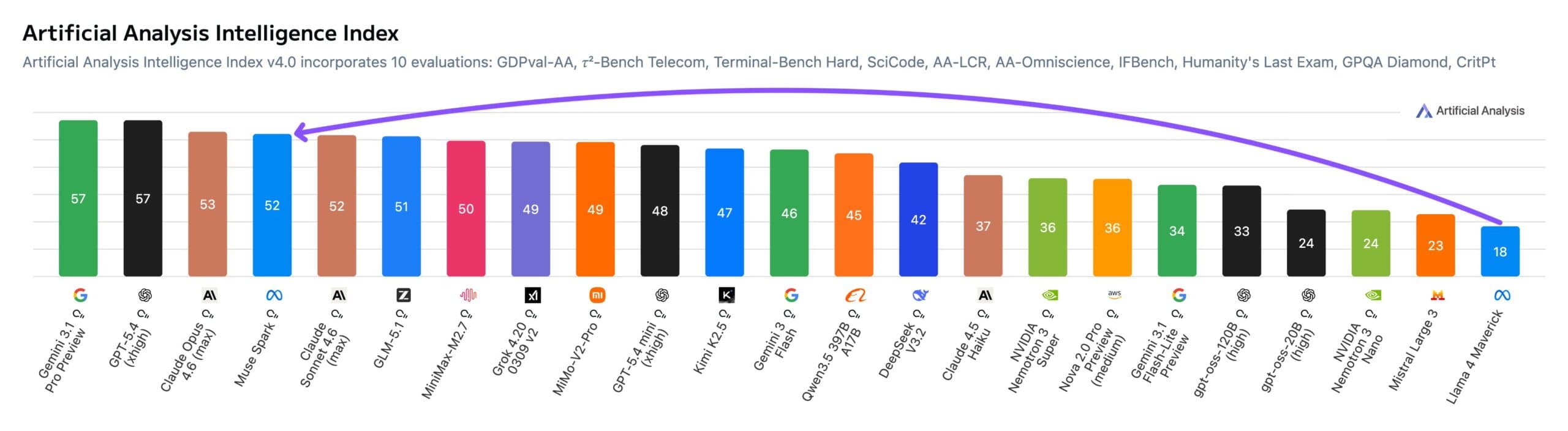
- The model has achieved a top-5 ranking on the Artificial Analysis Intelligence Index
- Muse Spark is not open-source, marking a significant departure from Meta's previous strategy
In This Article
- What is Muse Spark?
- How Does Muse Spark Perform?
- A New Era for Meta: The End of Open-Source?
- The AI Landscape: How Does Muse Spark Fit In?
- What's Next for Muse Spark and Meta?
- Expert Insights: What Do the Experts Think?
What is Muse Spark?
Meta's latest innovation, Muse Spark, is a native multimodal reasoning model that's designed to push the boundaries of artificial intelligence. With its ability to use tools, reason visually, and orchestrate multiple agents, Muse Spark is an exciting development in the world of AI.
- Muse Spark is the first model in the new Muse family from Meta's Superintelligence Labs
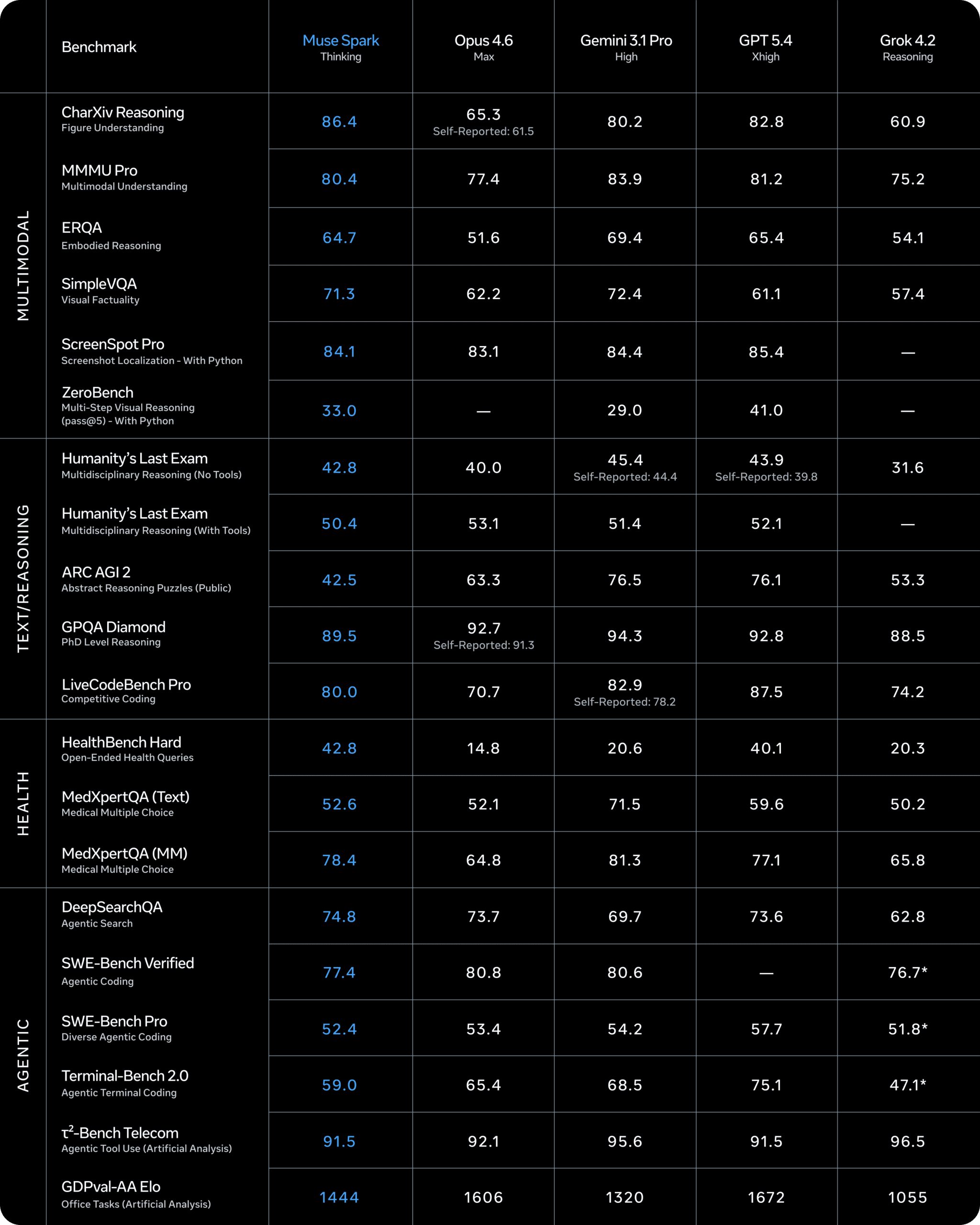
- The model is capable of achieving competitive numbers in multimodal perception, reasoning, and health applications
7/ this is step one. bigger models are already in development with infrastructure scaling to match. private api preview open to select partners today, with plans to open-source future versions. incredibly proud of the MSL team. excited for what’s to come!
— Alexandr Wang (@alexandr_wang) April 8, 2026

How Does Muse Spark Perform?
So, how does Muse Spark stack up against the competition? According to independent benchmarking service Artificial Analysis, Muse Spark has achieved a score of 52 on the Intelligence Index, putting it in the top 5 across all models tested.
- Muse Spark has outperformed previous Meta models, such as Llama 4 Maverick and Scout
- The model has achieved strong numbers in scientific reasoning and multimodal tasks

A New Era for Meta: The End of Open-Source?
One of the most significant aspects of Muse Spark is its departure from Meta's traditional open-source strategy. For the first time, Meta is not making its model publicly available, at least not yet.
- Meta's AI chief, Alexandr Wang, has stated that the company has plans to open-source future versions of its models
- The decision to keep Muse Spark closed-source may be a sign of a new era for Meta's AI development
The AI Landscape: How Does Muse Spark Fit In?
With the release of Muse Spark, Meta is entering a highly competitive landscape dominated by players like OpenAI and Anthropic. But how does Muse Spark fit into this ecosystem, and what does it mean for the future of AI?
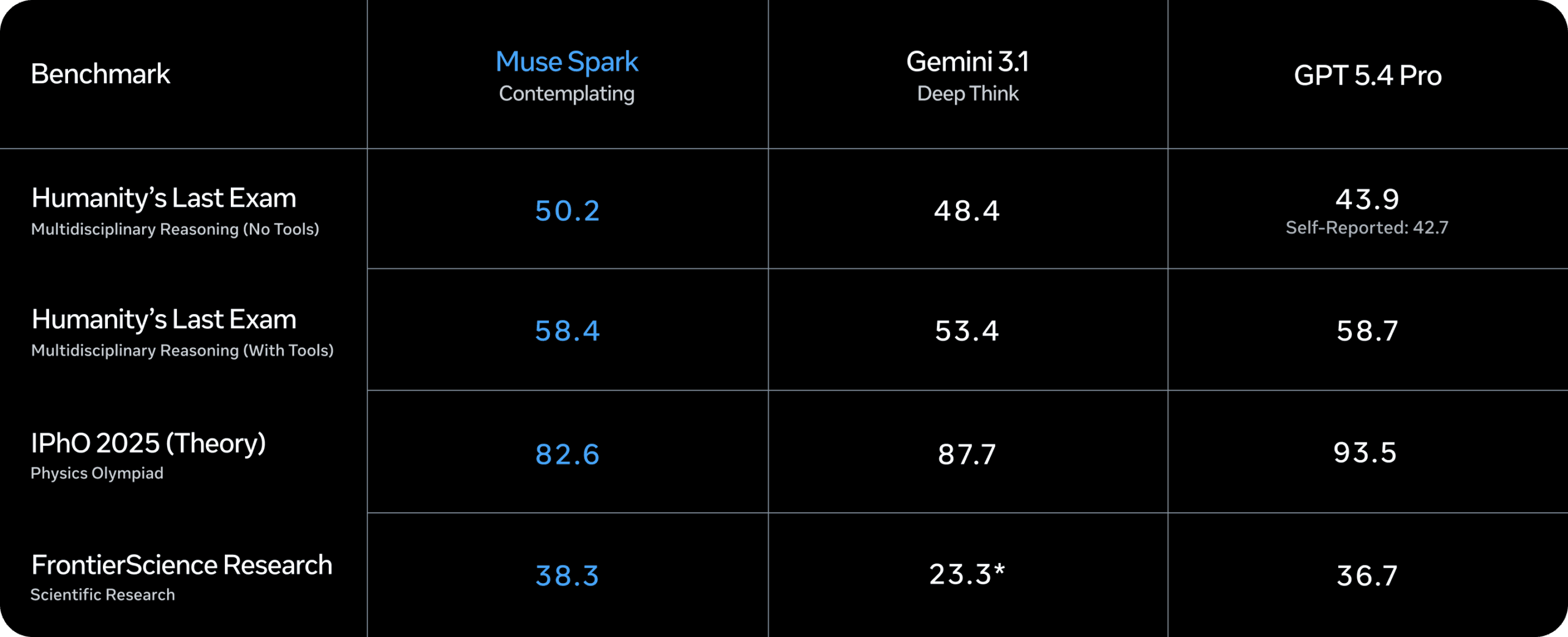
- Muse Spark is designed to go head-to-head with deep reasoning features in frontier models like Gemini Deep Think and GPT Pro
- The model's performance is likely to be closely watched by the AI community, with many wondering how it will impact the development of future models
What's Next for Muse Spark and Meta?
As Muse Spark continues to make waves in the AI community, the question on everyone's mind is: what's next? Will Meta continue to develop and improve its model, and how will it impact the broader AI landscape?
- Meta's enormous spending on AI infrastructure and specialized talent is likely to pay off in the long run
- The company's decision to keep Muse Spark closed-source may be a strategic move to protect its intellectual property and gain a competitive edge
Expert Insights: What Do the Experts Think?
We spoke to experts in the field to get their take on Muse Spark and its implications for the future of AI. While some are excited about the model's potential, others are more cautious, highlighting the need for ongoing development and refinement.
- According to AI expert Matthias Bastian, Muse Spark is a significant development in the field of AI
- Bastian notes that the model's performance is impressive, but there are still gaps in its capabilities, particularly in agentic and coding tasks
“We have plans to open-source future versions.”
— Alexandr Wang, AI Chief
Final Thoughts
As the AI landscape continues to evolve, one thing is clear: Muse Spark is a game-changer. With its unparalleled capabilities and performance, Meta is poised to make a significant impact on the world of AI. As we look to the future, it will be exciting to see how Muse Spark continues to develop and improve, and what implications it will have for the broader AI community.
Sources & Credits
Originally reported by The Decoder — Matthias Bastian
Manaal Khan
Tech & Innovation Writer
Produced with AI assistance and reviewed by the Logicity editorial team. Learn more in our Editorial Policy.




