Key Takeaways

- Meta is investing $900 million in Indian fintech CRED, valuing the company at $4.5 billion
- CRED founder Kunal Shah will become WhatsApp's global CEO, the first Indian startup founder in such a role
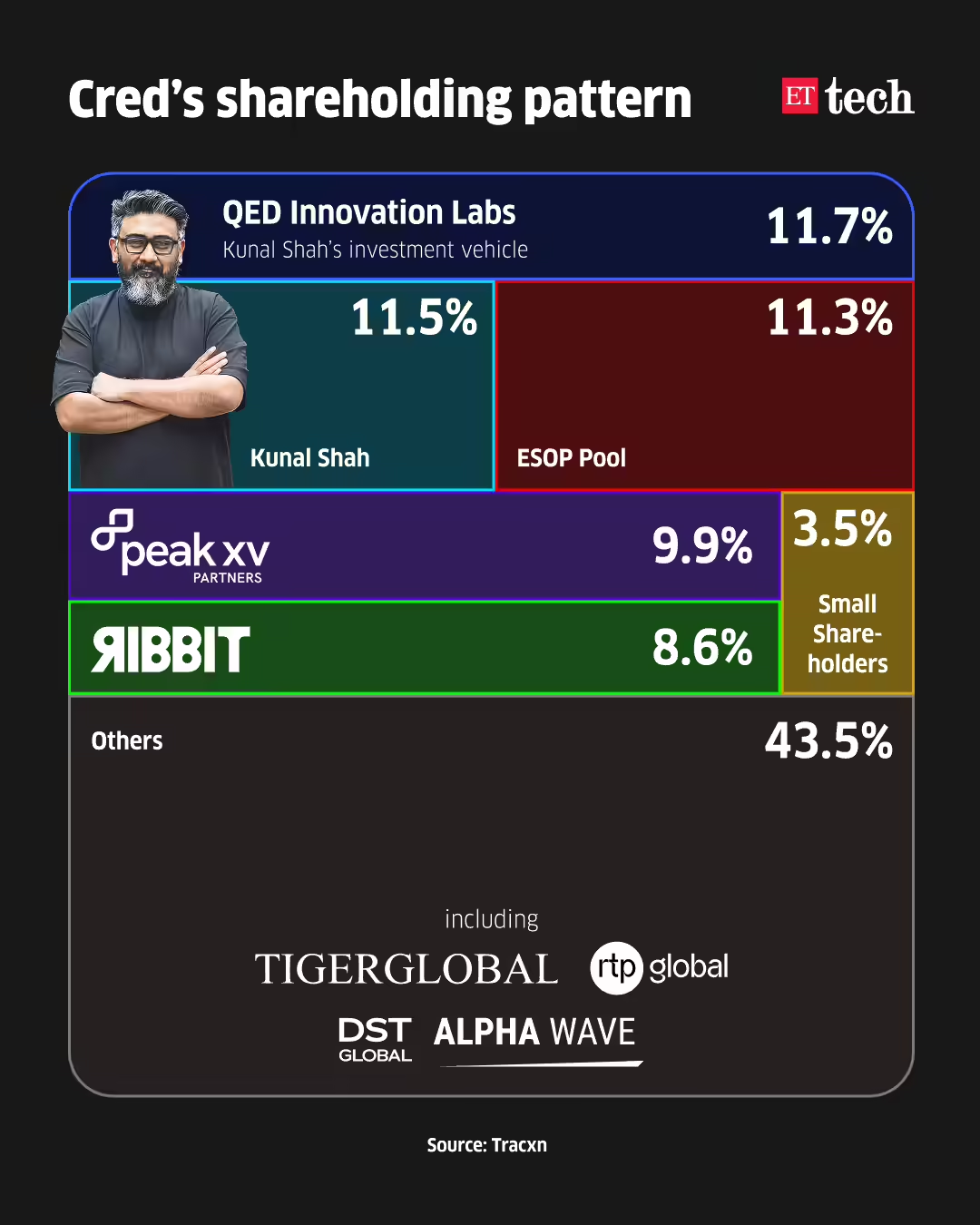
- Shah retains less than 20% stake in CRED; Miten Sampat takes over as interim CEO
Meta is investing $900 million in Indian fintech startup CRED, and the deal comes with an unusual twist: CRED founder Kunal Shah will leave his own company to become the global CEO of WhatsApp. Shah replaces Will Cathcart and takes over a messaging platform with 3 billion users worldwide, 500 million of them in India.
This is the first time an Indian startup founder has stepped into a global technology leadership role at a company of WhatsApp's scale. The appointment signals Meta's intensifying focus on India as it looks to embed payments and commerce deeper into WhatsApp.
How the $900 million deal breaks down
The funding round totals approximately ₹8,550 crore. Of this, $500 million flows directly into CRED as primary capital. The remaining $400 million goes to existing shareholders through a secondary sale, giving early investors and team members a chance to liquidate roughly 15-20% of their stakes.
CRED will also receive ad credits worth $100 million for use on Meta platforms, according to a person familiar with the deal terms. Post-investment, CRED's valuation sits at around ₹43,239 crore, or $4.5 billion.
The secondary structure matters. "Early and large investors will be given preference to sell," said a person with knowledge of the transaction. This provides liquidity in a market where fintech exits have been scarce, while Meta secures a strategic position on CRED's cap table.
Why is Meta betting on CRED and Kunal Shah?
WhatsApp Pay has struggled to gain meaningful traction in India despite the country being WhatsApp's largest market. PhonePe and Google Pay dominate UPI payments with combined market share exceeding 85%. CRED, meanwhile, has built a premium user base of credit card holders and expanded into merchant payments, lending, and credit management.
By installing Shah as WhatsApp CEO, Meta gets someone who understands Indian payments infrastructure and consumer behavior. Shah previously founded FreeCharge, which he sold to Snapdeal for approximately $400 million in 2015. His track record building payments products in India is hard to match.
“The delta between WhatsApp today and its full potential is massive.”
— Kunal Shah, incoming WhatsApp CEO, on X
Mark Zuckerberg, announcing the appointment on Facebook, said Shah brings "a builder mentality and global perspective" suited to running the world's largest messaging app. The statement hints at ambitions beyond India, using WhatsApp as a commerce and payments platform globally.
What happens to CRED now?
Shah joined Meta's global leadership team on Monday and exited CRED immediately. He is giving up his board seat but retains a personal shareholding of less than 20% in the Bengaluru-based startup.
Miten Sampat takes over as interim CEO with immediate effect. Sampat has led strategy and finance at CRED since 2020, making him an internal hire who knows the business intimately. Whether he remains permanent CEO or a search begins externally is not yet clear.
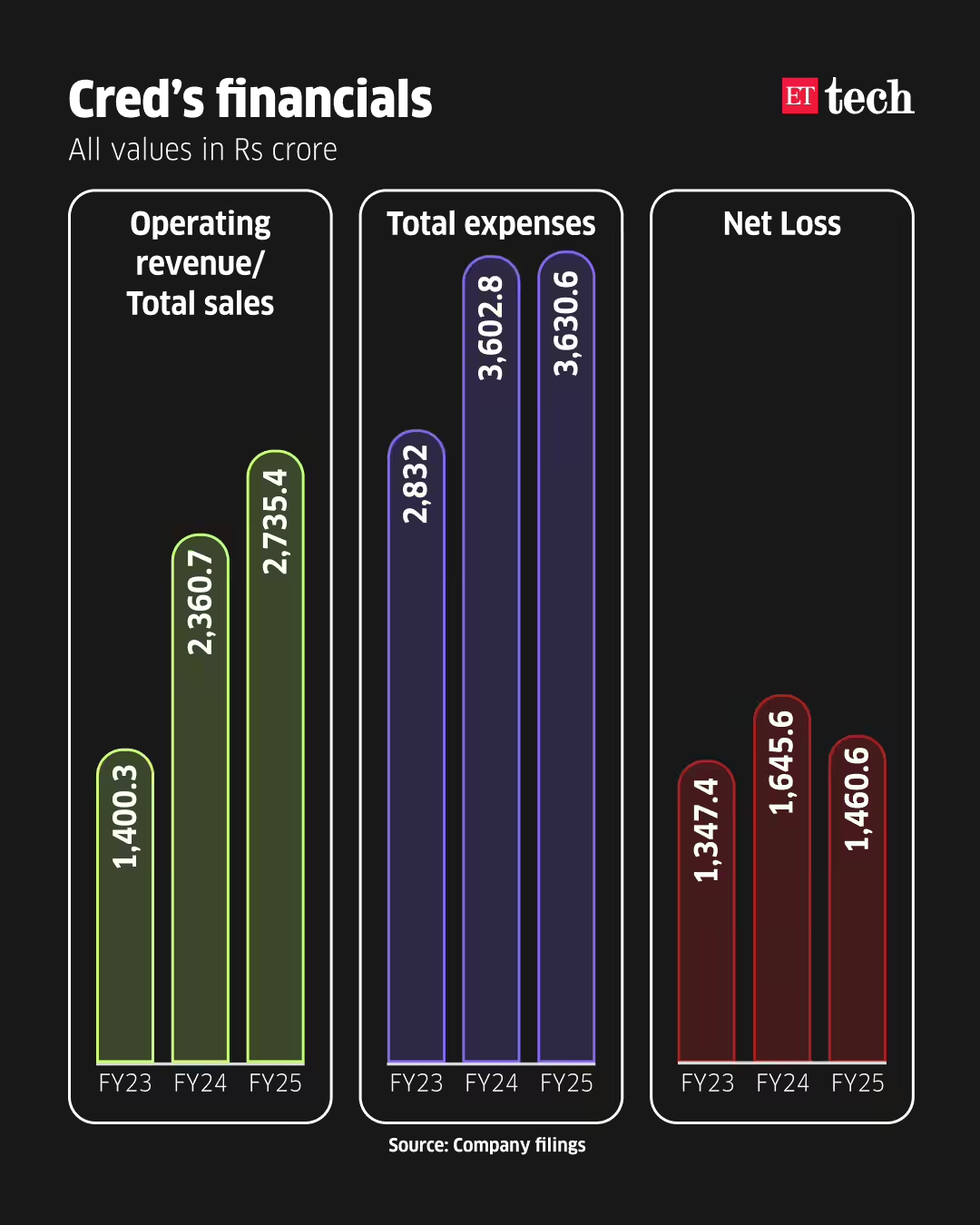
For CRED, the deal provides two things: fresh capital and a strategic partner. The $500 million primary investment gives the company runway for its next growth phase. The Meta relationship could unlock distribution through WhatsApp and advertising leverage on Instagram and Facebook.
The bigger picture for Indian startups
Shah's appointment carries symbolic weight. Indian founders have built billion-dollar companies, but global executive roles at major American tech firms have remained rare. Sundar Pichai at Google and Satya Nadella at Microsoft rose through corporate ranks over decades. Shah is making the jump directly from his own startup to a top job at Meta.
The move also reflects how central India has become to global tech strategy. WhatsApp's 500 million Indian users represent its biggest single-country base. If Meta can crack commerce and payments in India through WhatsApp, the playbook could extend to Brazil, Indonesia, and other large markets.
The $4.5 billion valuation for CRED marks a decrease from its 2022 peak of $6.4 billion. That drop mirrors the broader correction in fintech valuations globally. Still, attracting Meta as a strategic investor at this scale shows continued confidence in CRED's business model and user base.
Logicity's Take
This deal is as much about talent acquisition as it is about CRED itself. Meta has struggled with WhatsApp monetization for years, and hiring Shah is an admission that the company needs someone who has actually built payments products in India, not just managed them from California. The real test comes in 18 months: can Shah get WhatsApp Pay past 5% market share in India, or does the structural advantage of UPI apps like PhonePe prove insurmountable?
Frequently Asked Questions
Who is replacing Kunal Shah as CRED CEO?
Miten Sampat, who has led strategy and finance at CRED since 2020, is taking over as interim CEO with immediate effect.
How much is CRED valued at after the Meta investment?
CRED is valued at approximately $4.5 billion (₹43,239 crore) post-money following Meta's $900 million investment.
Does Kunal Shah still own shares in CRED?
Yes, Shah retains a personal shareholding of less than 20% in CRED, though he has given up his board seat.
Who did Kunal Shah replace as WhatsApp CEO?
Shah replaces Will Cathcart, who had been leading WhatsApp since 2019.
What is Meta getting from this CRED investment?
Meta gains a strategic position in one of India's prominent consumer fintech startups, plus it acquires Kunal Shah's expertise to lead WhatsApp's global commerce and payments strategy.
Related coverage on messaging platforms and Indian regulatory dynamics
Need Help Implementing This?
If you're building fintech products or navigating payments infrastructure in India, our team tracks the regulatory and competitive landscape closely. Reach out to discuss how these market shifts affect your roadmap.
Source: Tech-Economic Times / ET
Huma Shazia
Senior AI & Tech Writer
Produced with AI assistance and reviewed by the Logicity editorial team. Learn more in our Editorial Policy.




