Key Takeaways

- Meta is investing $900 million in Cred, valuing the fintech at $4.5 billion post-money
- Kunal Shah leaves his operating role at Cred to become WhatsApp's global CEO
- Indian startups are shifting IPO strategy toward fresh issues over large OFS exits
Kunal Shah, founder of fintech platform Cred, is stepping down from day-to-day operations to become WhatsApp's global CEO. Meta announced on Monday it will invest Rs 8,550 crore (roughly $900 million) in Cred, marking one of the largest financing deals for an Indian fintech company. The investment values Cred at $4.5 billion post-money.

Will Cathcart, who led WhatsApp for seven years, is stepping down. Meta CEO Mark Zuckerberg confirmed Cathcart will move into a new role within Meta and introduced Shah as his successor. Cathcart wrote on social media that WhatsApp is "in the strongest position it's ever been" and that felt like "the right moment to step back."
What does the Meta-Cred deal include?
The $900 million investment breaks down into two parts: $400 million in secondary stake sales and $500 million in primary capital. Meta is also throwing in $100 million in ad credits. The company joins Cred's cap table as a minority investor.
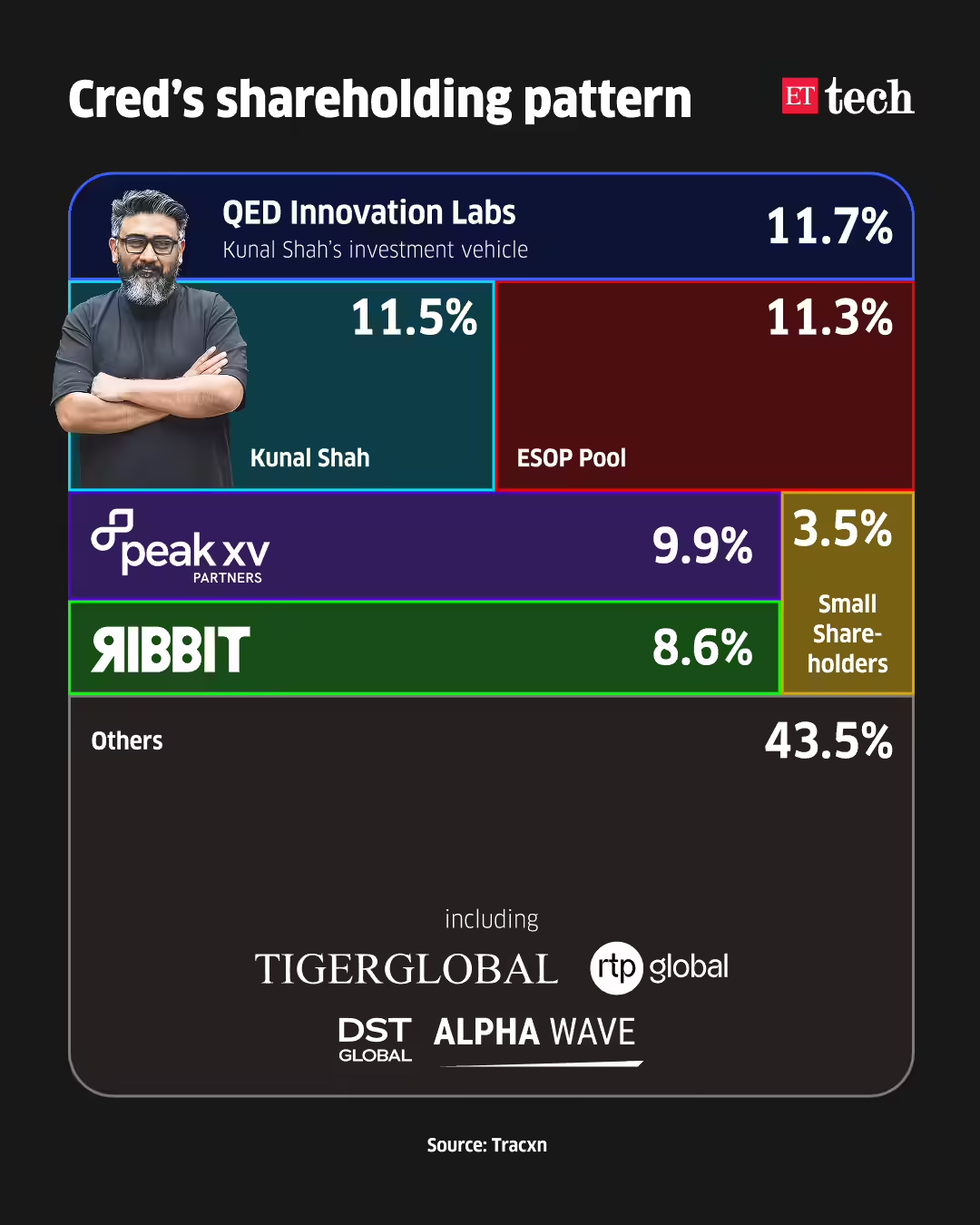
Shah retains his personal stake in Cred, though his holding has dipped below 20%. He remains the largest individual shareholder. Miten Sampat, who has been heading strategy and finance since 2020, takes over as interim CEO.
“I am stepping back and @miten steps in as interim CEO, partnered with an incredibly talented team. He has been heading strategy and finance and suffering me since 2020. I'm stepping away from the operating role and will continue as a shareholder. My commitment doesn't change. Just the role.”
— Kunal Shah on X
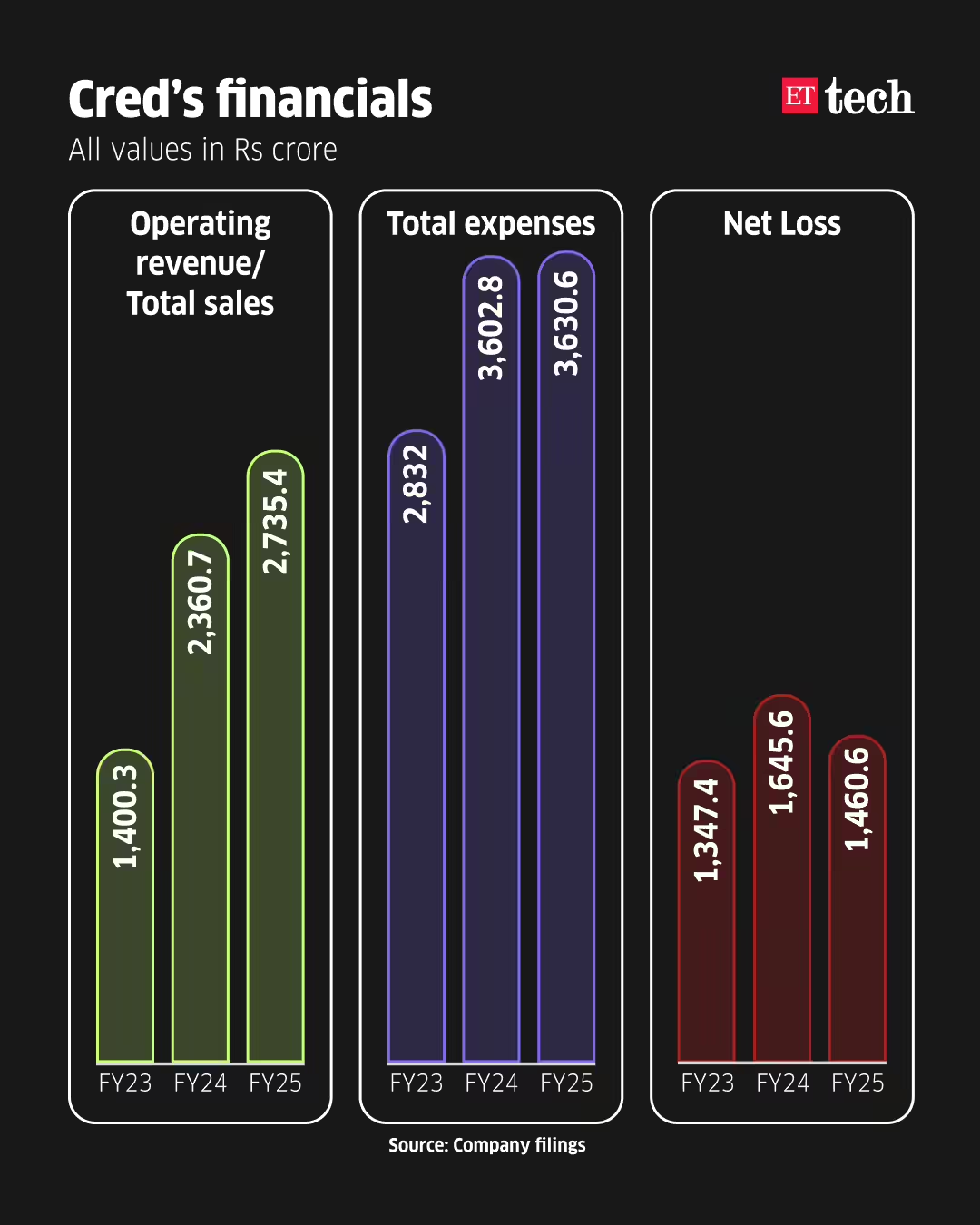
This deal follows a turbulent period for Cred's valuation. The company last raised Rs 617 crore in June 2025 at a $3.5 billion valuation, a 45% cut from its $6.4 billion peak in 2022. The new Meta investment represents a significant rebound.
Why did Meta pick Shah for WhatsApp?
Meta's Chris Cox addressed this directly, stating "Kunal was the clear choice." Shah built FreeCharge into one of India's leading digital payments platforms before selling it to Snapdeal for approximately $400 million in 2015. With Cred, he captured India's premium credit card users, building a base of over 11 million high-credit-score consumers.
India is WhatsApp's largest market, with over 500 million users. The platform has been pushing deeper into payments through WhatsApp Pay and expanding business communications. Shah's fintech background and understanding of Indian consumer behavior makes the appointment strategic, not just flattering.
How are Indian startups changing their IPO playbook?
The Meta-Cred deal arrives as India's young, loss-making startups are rewriting how they approach public markets. They are listing with smaller exit windows for existing shareholders and larger asks for growth capital.

Zepto's proposed Rs 8,010-crore fresh issue is the latest example. The quick commerce firm joins Ola Electric, PhysicsWallah, and Curefoods in positioning IPOs as growth capital rather than cash-out events for early backers.
An ET analysis of 40-plus venture-backed companies shows the shift clearly. Seven of ten new-age IPOs in 2021-22 had offer-for-sale (OFS) components above 50%, with a median OFS share around 80%. The newer loss-making cohort is tilting heavily towards fresh issues.
Public investors are no longer shunning loss-making startups outright. But they frown on large exits from firms still burning cash. Bigger OFS components still work for scaled, profitable platforms like Groww, Lenskart and Urban Company. The test for everyone else is sharper: public markets will fund growth, but only with valuation discipline and a credible profitability roadmap.
What is NPCI doing about UPI subscription sprawl?
In related payments infrastructure news, the National Payments Corporation of India (NPCI) is building a feature that will let users see all their UPI e-mandates across third-party payment applications in one place.

NPCI is developing an application programming interface (API) that all UPI apps can plug into. The catch: users will still need to visit the original app where a mandate was created to modify or cancel it. The feature addresses growing consumer confusion as subscription services proliferate across multiple payment apps.
What does this mean for Cred's future?
Cred now has Meta's backing, a $4.5 billion valuation, and fresh capital to deploy. But it also loses its founder's daily involvement. Miten Sampat's interim appointment suggests the company is buying time to find or groom a permanent CEO while Shah focuses on WhatsApp.
The $100 million in ad credits points to deeper integration possibilities. Cred's premium user base could be valuable for Meta's advertising business in India. WhatsApp's payment ambitions and Cred's credit card expertise might intersect down the line, though neither company has announced specific integration plans.
Frequently Asked Questions
Who is replacing Kunal Shah as Cred CEO?
Miten Sampat, who has led strategy and finance at Cred since 2020, is taking over as interim CEO. Shah remains a shareholder but is stepping away from operating responsibilities.
How much is Meta investing in Cred?
Meta is investing approximately $900 million, split between $400 million in secondary stake sales, $500 million in primary capital, and $100 million in ad credits.
What is Cred's current valuation after the Meta deal?
The transaction values Cred at $4.5 billion post-money, up from the $3.5 billion valuation in its June 2025 funding round.
Why is Will Cathcart leaving WhatsApp?
Cathcart said WhatsApp is in its strongest position ever, making it the right moment to step back. He will move into a new role within Meta rather than leaving the company.
What is the new IPO strategy for Indian startups?
Loss-making startups are prioritizing fresh issues over offer-for-sale components, using IPO proceeds for growth capital rather than early investor exits.
Logicity's Take
This deal reveals Meta's India strategy more than it does Cred's future. By placing a founder with deep fintech expertise at WhatsApp's helm, Meta signals it sees payments, not just messaging, as WhatsApp's growth engine. Shah's job is to make WhatsApp indispensable to Indian commerce, not just Indian communication. Whether Cred thrives without its founder's operational focus is a separate question with a less certain answer.
Another significant fintech funding story with AI and financial services overlap
Need Help Implementing This?
Navigating fintech strategy or understanding how leadership changes impact valuations? Reach out to our team at Logicity for analysis tailored to your business context.
Source: Tech-Economic Times
Huma Shazia
Senior AI & Tech Writer
Produced with AI assistance and reviewed by the Logicity editorial team. Learn more in our Editorial Policy.




