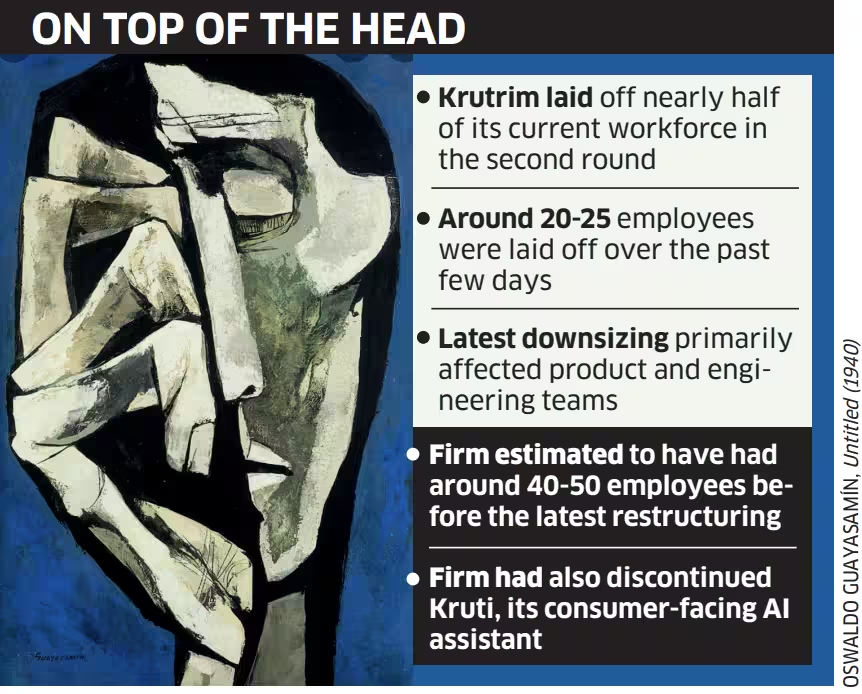
Bhavish Aggarwal's AI startup Krutrim has laid off 20 to 25 employees, roughly half its remaining workforce, in its second round of cuts this year. The restructuring follows the company's decision to shelve plans for an indigenous foundation model and custom AI chips, pivoting instead to cloud infrastructure and enterprise services.

Sources told the Economic Times that the fresh cuts hit product and engineering teams. Earlier rounds had already trimmed sales, go-to-market, and business operations staff. Krutrim Cloud and Maps are now the company's main products.
What employees say about pending payments
Meta to lay off 10,000 employees in second round of job cuts
Current staff allege that reimbursements for travel, hotel stays, and other work expenses have been pending for nearly five months. Former employees claim delays in full-and-final settlements, with some reporting payments arrived in instalments rather than lump sums.
The allegations paint a picture of a company tightening cash management as its ambitious AI roadmap shrinks. Krutrim has not publicly addressed the reimbursement claims.
Revenue reality: 90% from Ola Group
Krutrim said in May that its FY26 revenue crossed Rs 300 crore and that it had turned profitable. But a person familiar with the matter told the Economic Times that around 90% of that revenue came from Ola Group companies. External customers contributed the rest.
That concentration raises questions about the sustainability of Krutrim's profitability claim. Inter-company revenue can be adjusted or redirected; external contracts cannot.
Pressure across the Ola Group
The restructuring comes as Aggarwal's broader Ola Group faces headwinds. Ola Electric has lost market share over the past year. Its shares have fallen more than 50% since its stock market debut in 2024, amid regulatory scrutiny and operational challenges.
Krutrim raised $50 million at a reported $1 billion valuation in early 2024. Whether that valuation holds after two rounds of layoffs and a narrowed product focus is unclear.
Logicity's Take
Krutrim's pivot from building foundation models and chips to selling cloud services is a major scope reduction, not a strategic refinement. The 90% internal revenue figure suggests the company has not yet found product-market fit with outside customers. For startups watching this space, the lesson is clear: ambitious AI roadmaps require external validation, not just internal consumption, to survive funding droughts.
Meanwhile: PhonePe's scale, Paytm's profits
In other fintech news, FY26 results from PhonePe and Paytm show that UPI leadership does not automatically convert to profitability.
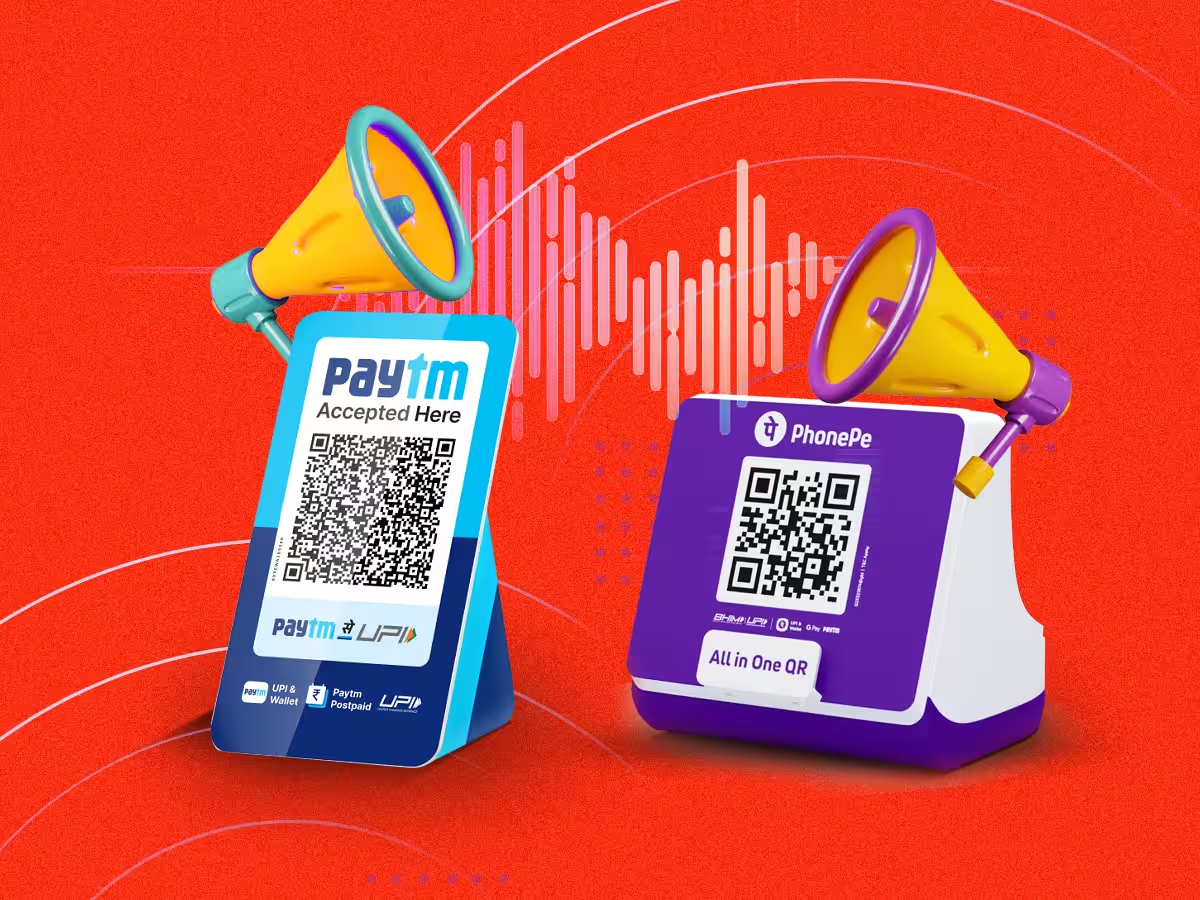
PhonePe remains India's largest consumer payments platform, accounting for 46.15% of UPI volumes in June. But it posted a Rs 2,792 crore loss for FY26 as it continued investing in growth. Paytm, with roughly one-sixth of PhonePe's UPI share, swung to a Rs 552 crore profit as expenses declined.
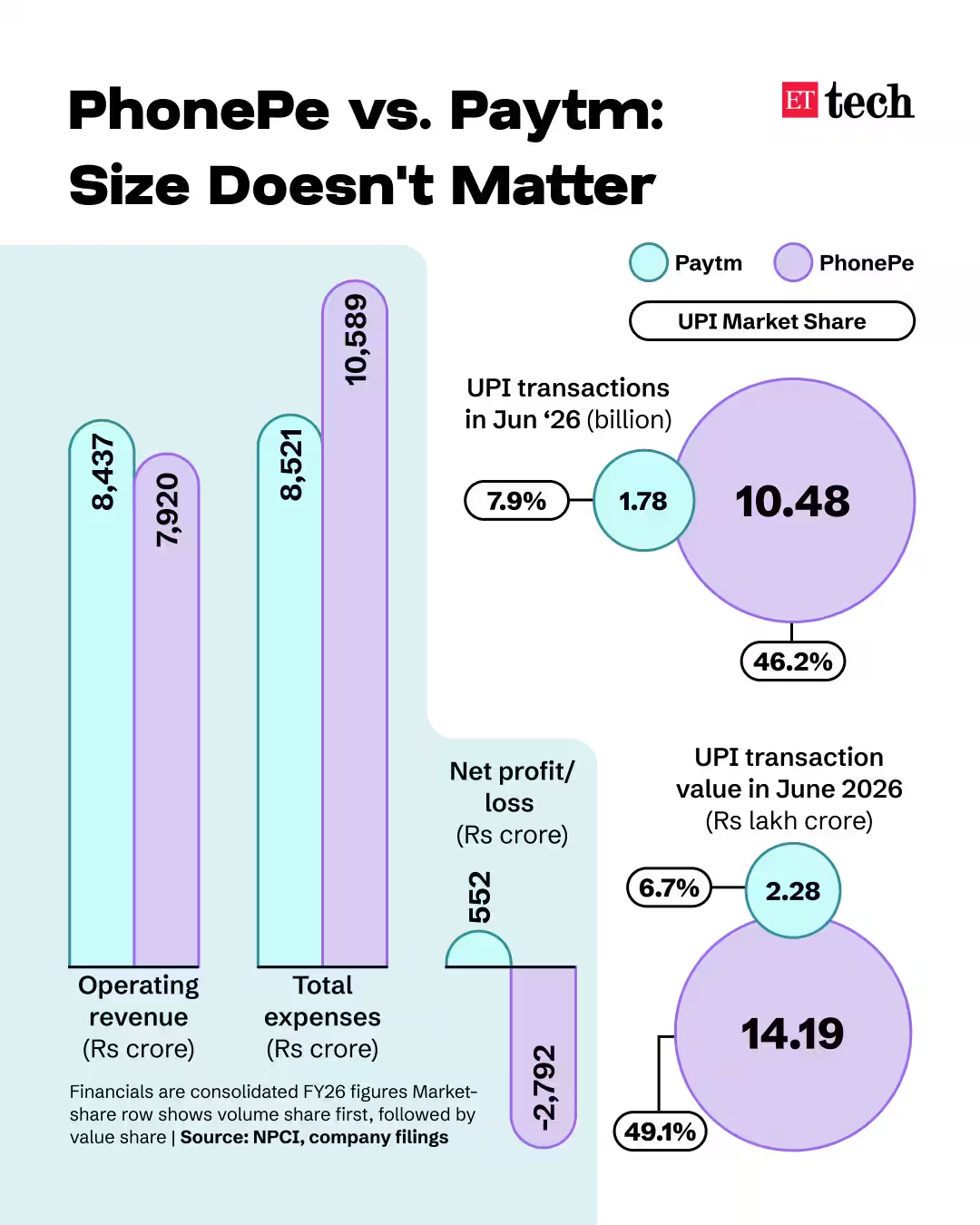
The two generated similar revenue: Rs 8,437 crore for Paytm, Rs 7,920 crore for PhonePe. Paytm's financial-services distribution business grew 52% and now contributes nearly a third of its revenue. Its 15.1 million merchant subscriptions provide recurring device income and support loan distribution.
PhonePe must scale lending, insurance, wealth, and merchant services to monetise its volume lead. Paytm must sustain its new profitability while rebuilding consumer-payment share.
Temple eyes $500 million valuation
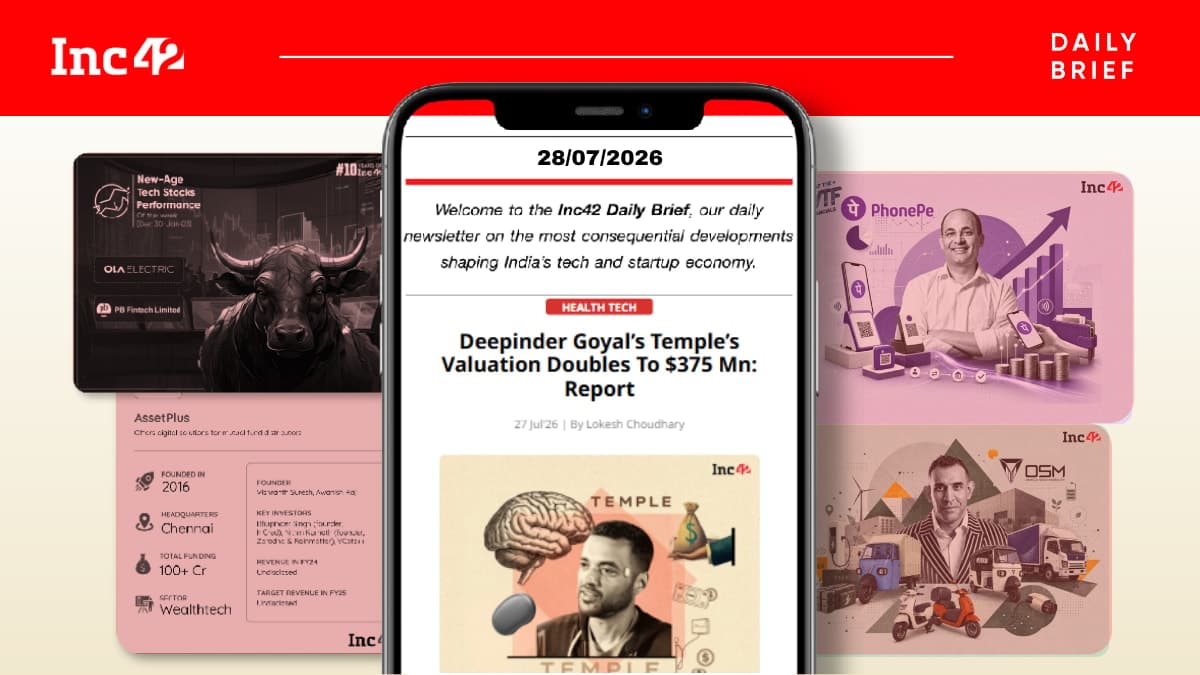
Separately, Zomato founder Deepinder Goyal's wearable startup Temple is preparing to raise fresh funding at a $500 million valuation, sources told the Economic Times.
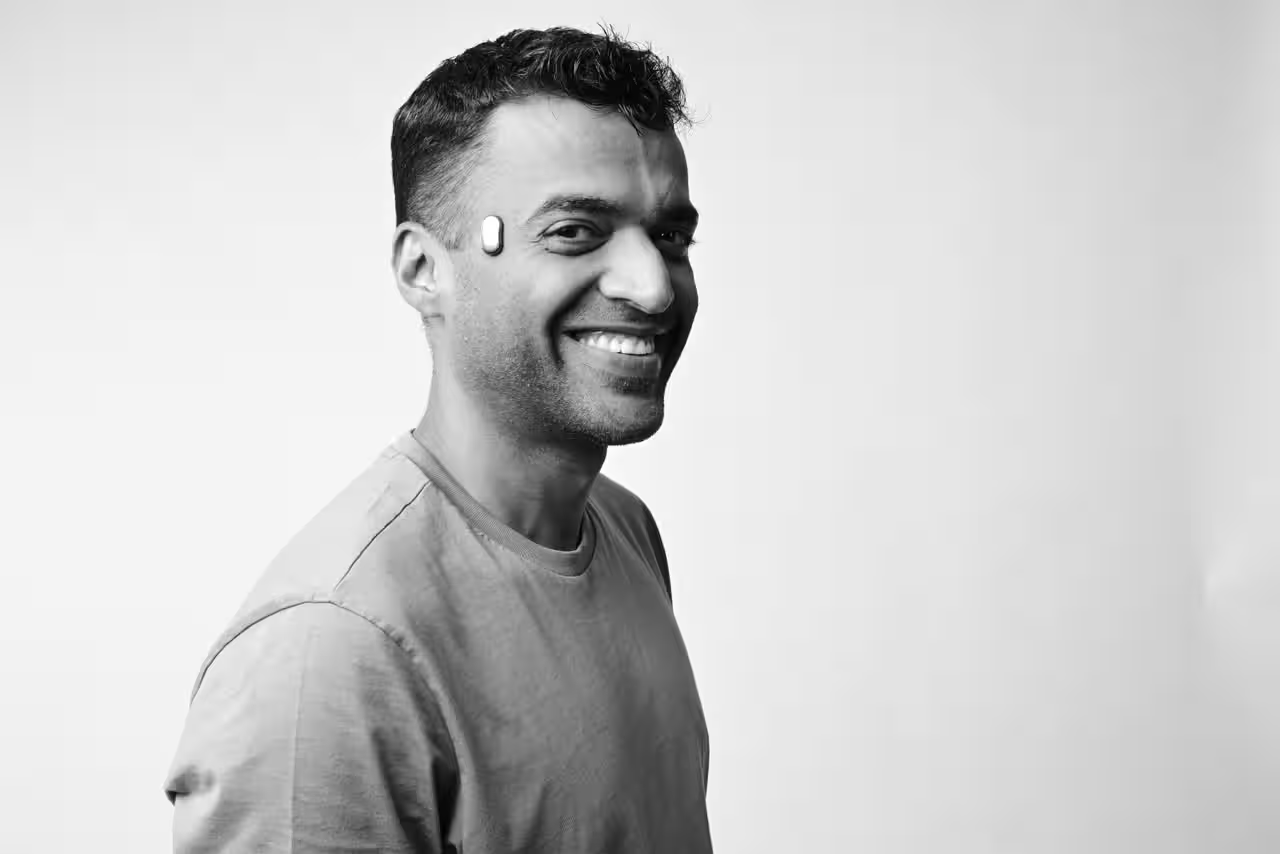
"We are seeing strong interest from external investors at a $500 million valuation. Before we close the next round, I want some of this value to reach the people who created it," Goyal wrote in a memo to staff. Temple has launched a partial ESOP buyback at a $375 million valuation; eligible employees can sell up to 25% of their vested options.
The company's first health wearable is expected to launch at Rs 75,000 to Rs 80,000. The device, worn on the temples, measures blood flow in the brain. The price includes lifetime access to Temple's health platform and a lifetime supply of medically approved adhesive tapes.
Full coverage of Temple's funding round and product details
Need Help Implementing This?
If you're building AI products or evaluating cloud infrastructure for your startup, reach out to Logicity's advisory network. We connect founders with technical experts who have shipped at scale.
Source: Tech-Economic Times
Huma Shazia
Senior AI & Tech Writer
Produced with AI assistance and reviewed by the Logicity editorial team. Learn more in our Editorial Policy.