Key Takeaways
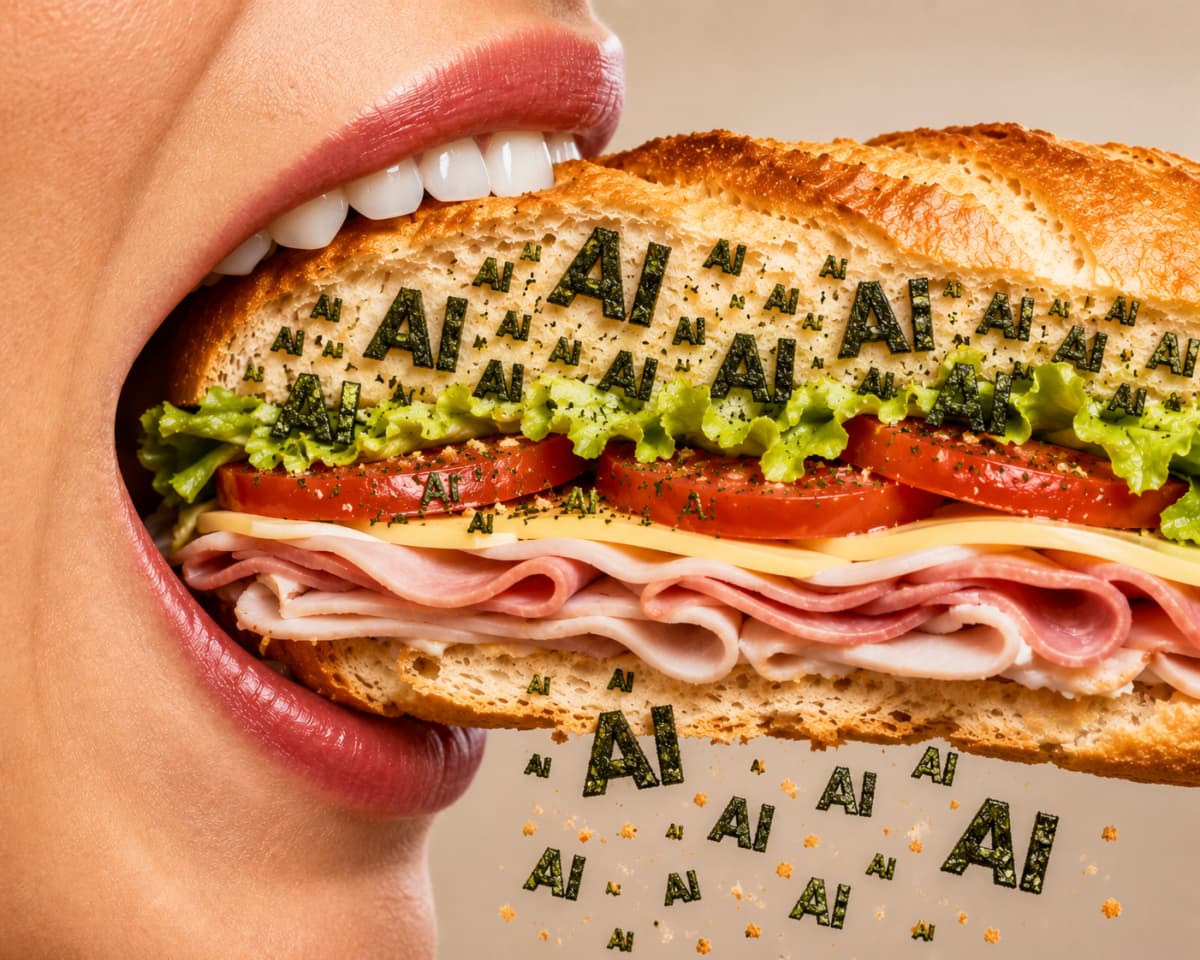
- Jersey Mike's IPO documents mention AI 22 times despite the company selling submarine sandwiches
- The AI references appear mainly in boilerplate risk warnings, not core business strategy
- This trend reflects broader pressure on all companies to signal AI relevance to investors
Jersey Mike's, the submarine sandwich chain with Danny DeVito as its celebrity spokesperson, filed IPO documents that reference artificial intelligence or "AI" 22 times. The company sells sandwiches. It does not sell AI software. Yet here we are.
The filing, spotted and analyzed by TechCrunch's Julie Bort, offers a sharp illustration of how far AI hype has spread beyond the technology sector. When a franchise known for its cold cuts feels compelled to pepper its S-1 with AI mentions, investors should probably start asking harder questions about what "AI company" even means anymore.
What exactly does Jersey Mike's say about AI?
The short answer: not much of substance. According to TechCrunch's analysis, the AI references appear primarily in investor risk warnings. The company offers only a vague gesture toward actual usage: "We are beginning to use AI Technologies in our business." No specifics. No product descriptions. No explanation of what AI-driven sandwich innovation might look like.
In fairness, Jersey Mike's operates a large franchise network that depends on software and data systems. "Software" appears 52 times in the filing. "Data" shows up 112 times. These mentions make sense for a company coordinating thousands of locations. But the AI language reads like boilerplate, inserted perhaps because lawyers and bankers now expect it.
Here's a telling comparison from the filing: "lightning" appears zero times. "Weather" gets five mentions. Yet in 2021, a Jersey Mike's location in Texas was actually struck by lightning and damaged. The risk of a lightning strike hitting a franchise location has already materialized. The risk of an AI disaster at a sandwich shop remains theoretical.
Why are non-tech companies stuffing AI into filings?
Investor appetite. That's the simple answer. Public market investors have rewarded AI exposure aggressively, and companies have noticed. The same dynamic plays out in private markets, where non-AI startups raising venture capital now routinely sprinkle AI references into their pitch decks.
TechCrunch points to Bending Spoons as another example. The company's business model involves buying aging, decidedly non-AI software products and rehabilitating them. But its public debut still leaned into AI positioning. The incentive structure is clear: mention AI, get a valuation bump. Don't mention it, leave money on the table.
The boilerplate risk warnings about AI might also serve a legal function. Starbucks recently scrapped an AI-powered inventory management tool that, according to reports, couldn't count properly. If your competitor's AI project fails publicly, your lawyers probably want some protective language in your filings, even if your own AI usage amounts to an email auto-complete feature.
What does this signal about the AI market cycle?
Every technology hype cycle follows a similar arc. Early believers build real products. Then the marketing language spreads far beyond actual technical capability. By the time sandwich shops mention AI in their SEC filings, we're deep into the expansion phase where the term has lost most of its informational value.
This doesn't mean AI itself is overhyped in absolute terms. Large language models, computer vision, and automation tools are producing real productivity gains in specific applications. But the label "AI company" now covers everything from frontier labs training hundred-billion-parameter models to sandwich franchises with a CRM system.
For investors and executives, the practical takeaway is straightforward: ignore the AI mentions and ask what the technology actually does. A company that can't explain its AI usage in concrete terms probably doesn't have AI usage worth discussing.
Logicity's Take
The Jersey Mike's filing is funny, but it reflects a real problem for tech decision-makers: the term "AI" has become so diluted that it communicates almost nothing. When evaluating vendors, partners, or acquisition targets, CTOs should demand specifics. What model architecture? What training data? What measurable outcome? Companies with genuine AI capabilities can answer these questions. Companies riding the hype wave cannot. The signal-to-noise ratio in AI marketing has collapsed, and the only defense is technical due diligence.
The broader pattern in 2024 and 2025 IPOs
Jersey Mike's isn't an outlier. Industry analyses suggest that over 75% of S-1 filings now reference AI or artificial intelligence somewhere in the document. Some of these references describe core products. Many are risk disclosures or vague strategy statements that add no substance.
The pattern resembles the late-1990s phenomenon where companies added ".com" to their names regardless of internet relevance. Back then, a beverage company or a flooring manufacturer could boost its stock price simply by associating with the web. The hangover came when investors realized the suffix didn't confer business model advantages.
We're not predicting an imminent AI crash. The underlying technology has more substance than most 1999-era dot-com business plans. But the gap between AI as a marketing term and AI as a technical capability has grown wide enough that the label alone tells you little about a company's actual position.
Frequently Asked Questions
How many times does Jersey Mike's IPO mention AI?
The S-1 filing references artificial intelligence or "AI" 22 times, primarily in risk warning sections rather than core business descriptions.
Does Jersey Mike's actually use AI in its business?
The filing states only that the company is "beginning to use AI Technologies" without specifying any particular applications or products.
Why do non-tech companies mention AI in IPO filings?
Investor appetite for AI exposure has created pressure on all public companies to signal relevance to the technology, even when it's not central to their business model.
Is the AI hype cycle similar to the dot-com bubble?
The pattern of unrelated companies adopting tech terminology for investor appeal is similar, though the underlying AI technology has more demonstrated capability than many 1999-era internet business plans.
For context on what substantive enterprise AI investment actually looks like
Need Help Implementing This?
Building AI capabilities that matter requires more than marketing language. Logicity works with CTOs and engineering leaders to separate real AI opportunities from hype. Contact us to discuss your technical strategy.
Source: TechCrunch / Julie Bort
Manaal Khan
Tech & Innovation Writer
Produced with AI assistance and reviewed by the Logicity editorial team. Learn more in our Editorial Policy.




