Key Takeaways
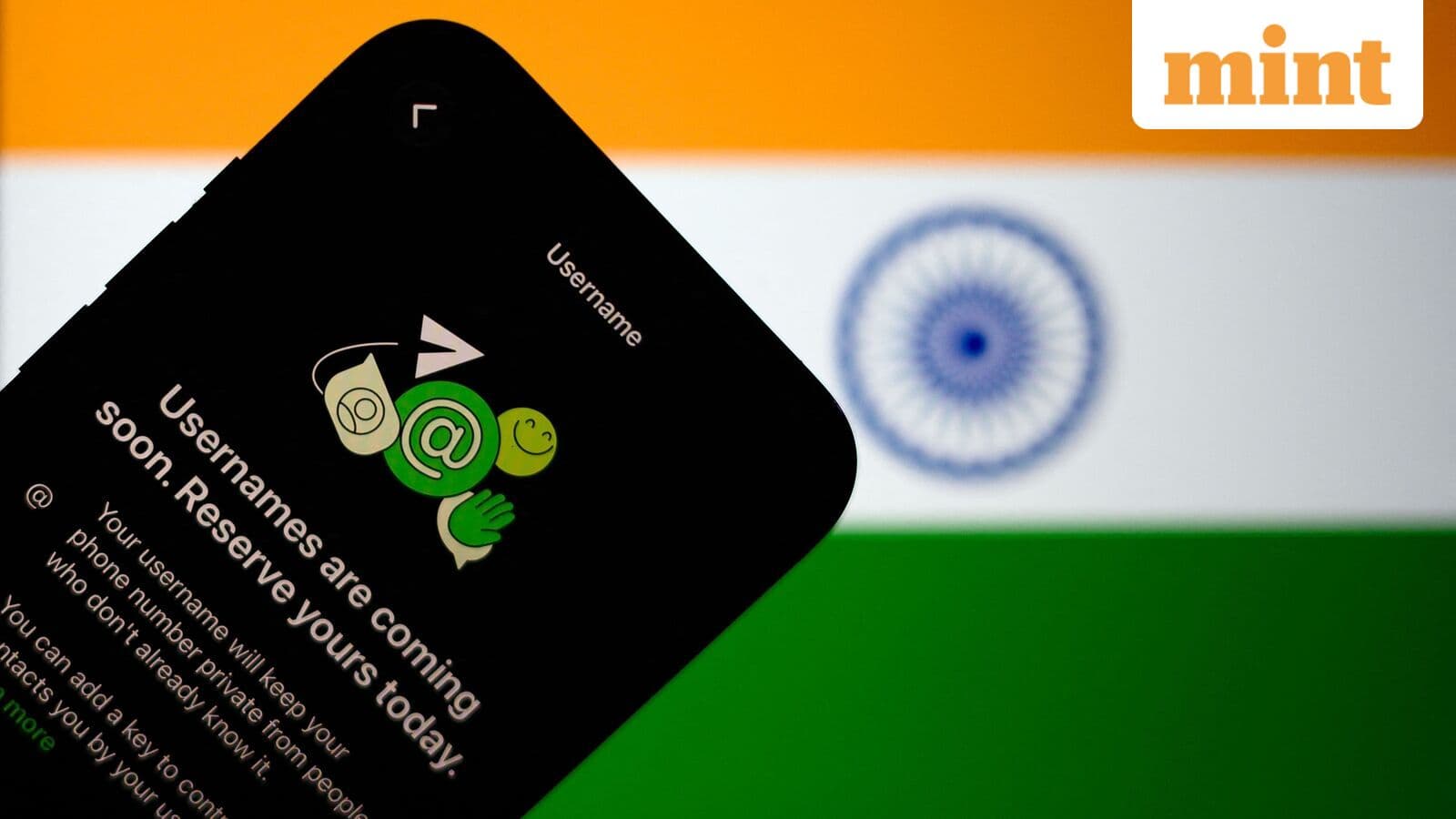
- India's IT ministry directed Meta to halt WhatsApp's username feature over impersonation and cyberfraud concerns
- Zoho's messaging app Arattai preemptively removed its username feature following the regulatory pressure
- Signal and Telegram also received government queries about how they handle fraud risks with username-based accounts
India's Ministry of Electronics and Information Technology has directed Meta to stop rolling out WhatsApp's new username feature, citing risks of impersonation and cyberfraud. The move affects WhatsApp's largest market, where the app has over 500 million users. Hours after the government intervention, Zoho's messaging platform Arattai announced it would remove its own username-based account feature entirely.
The username feature, announced earlier this week, would let WhatsApp users reserve handles and connect with others without sharing phone numbers. Users have started receiving notifications to reserve their usernames, but the global rollout is now stalled, at least in India.
Why is the government blocking this?
Phone numbers have always been WhatsApp's identity layer. When you message a business or join a group, your number is visible. This creates friction but also accountability. A scammer using a phone number can, in theory, be traced. A username offers no such link.
The government's concern is straightforward: usernames make impersonation trivially easy. Someone could create an account with a handle like @HDFC_Support or @SBI_HelpDesk and phish users without any verifiable connection to the real institution. India already loses an estimated ₹1,000 crore annually to cyberfraud. Regulators don't want to hand scammers a new tool.
Cyber law expert Pawan Duggal told ANI that WhatsApp must ensure the feature complies with the Information Technology Act 2000, the Digital Personal Data Protection Act 2023, and the DPDP Rules 2025. "The concern of the government is very clear: it does not want Indians to be made guinea pigs in the laboratories of big tech companies," Duggal said.
Telegram and Signal already offer this. Why target WhatsApp?
They do, and the government has not ignored them. After issuing its directive to Meta, MeitY also sought explanations from Signal and Telegram on how they address fraud, impersonation, and misuse associated with username-based connections.
The difference is scale. WhatsApp dominates Indian messaging with roughly 95% of smartphone users on the platform. Telegram and Signal are niche by comparison. A vulnerability on WhatsApp affects the entire digital communication fabric of the country.
What Zoho's Arattai move signals
Arattai, the messaging app from Zoho CRM's parent company, announced on July 3 that it would remove username-based accounts. The timing, one day after the WhatsApp directive, is not coincidental. Indian platforms are reading the regulatory mood.
Disclosure
Some links in this post are affiliate links — Logicity earns a commission if you sign up, at no extra cost to you. We only link products we have used or actively recommend.
For Zoho, the calculus is simple. Fighting regulators over a messaging feature is not worth the distraction when your core business is enterprise software. Better to comply early and avoid becoming an example.
The privacy trade-off
Usernames are genuinely useful for privacy. Prof. Sajith Narayanan from Flame University's Centre of Digital Advancement explained the current problem: "Being in a large group carried the same quiet cost, since a person's number stayed visible to everyone in the group." You join a neighborhood community group, and suddenly 200 strangers have your phone number.
Usernames fix this. You could share a handle with a delivery driver or a one-time vendor without giving them permanent access to your personal number. For women, this alone is a significant safety improvement.
But the same privacy that protects you as a sender makes you vulnerable as a receiver. "A username from an unknown sender offers little insight into who is actually behind the message, making trust more difficult to establish," Narayanan said.
Business implications
For businesses and creators, usernames would have been a win. A memorable @BrandName handle is searchable, shareable, and professional. It turns a WhatsApp account into something closer to a social media presence.
The phone number, as Narayanan noted, "was the customer's proof that a real shop actually exists." Usernames would have shifted identity from the phone number to the brand itself. That transition now sits in regulatory limbo.
Companies relying on WhatsApp for customer communication through tools like HubSpot, Salesforce, or Freshsales will need to watch how this plays out. If usernames eventually roll out with verification requirements, integrating verified business handles into CRM workflows could become a priority.
What happens next
Meta has not publicly responded to the directive. The company could negotiate with MeitY on safeguards, perhaps mandatory verification for business accounts, or rate limits on new username creation. It could also simply delay the India rollout while proceeding elsewhere.
The government's position is clear: traceability matters more than convenience. Whether that principle holds as privacy expectations shift among younger users remains an open question.
Logicity's Take
India's intervention is conservative but defensible. The fraud risk is real, and WhatsApp's scale makes any vulnerability systemic. The better path forward is conditional rollout: verified usernames for businesses, optional usernames for individuals who complete additional identity checks. Signal and Telegram escaped scrutiny partly because their user bases skew toward privacy-conscious early adopters who accept the trade-offs. WhatsApp's mainstream audience does not have that context, and regulators are right to account for that gap.
Frequently Asked Questions
Can I still reserve my WhatsApp username?
Users are receiving prompts to reserve usernames, but the feature is not active in India. Reserving a name does not mean you can use it yet.
Will WhatsApp usernames ever launch in India?
Unclear. Meta must address government concerns about impersonation and fraud before proceeding. Negotiations or compliance measures could enable a future rollout.
Does Telegram still allow usernames in India?
Yes, but the government has asked Telegram to explain its fraud-prevention measures. No directive to remove the feature has been issued yet.
What data protection laws apply here?
The IT Act 2000, Digital Personal Data Protection Act 2023, and DPDP Rules 2025 all govern how platforms handle user identity and personal data in India.
Another case where messaging platform security intersects with regulatory and political concerns.
Need Help Implementing This?
If you're building customer communication workflows that depend on WhatsApp or other messaging platforms, regulatory shifts like this can disrupt your roadmap. Logicity helps teams audit their messaging stack and plan for compliance changes. Reach out to discuss your setup.
Source: mint / Gulam Jeelani
Manaal Khan
Tech & Innovation Writer
Produced with AI assistance and reviewed by the Logicity editorial team. Learn more in our Editorial Policy.




