Key Takeaways
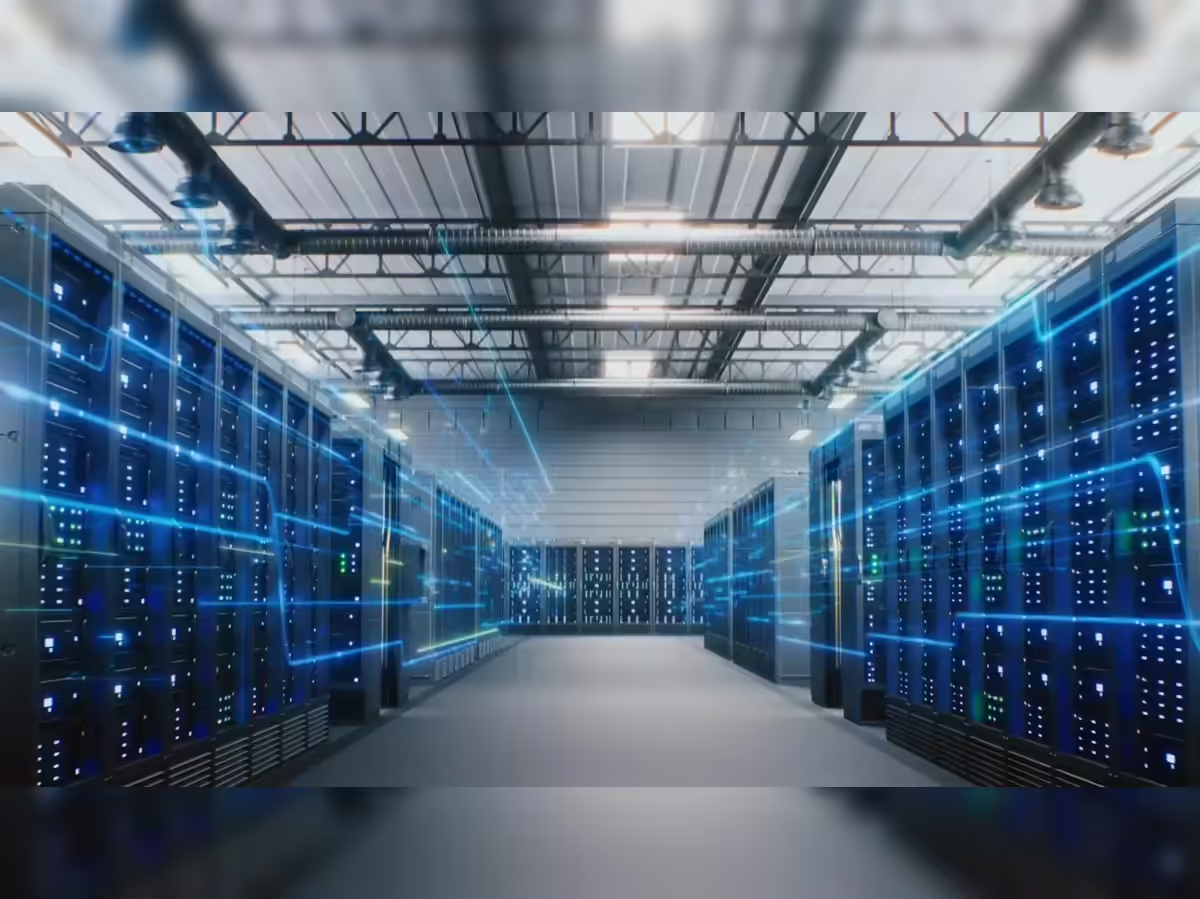
- IFC commits $371 million to Sify Technologies for two new data centers in Navi Mumbai and Chennai
- The facilities will have 103 MW combined capacity and target IGBC Platinum certification
- India's data center capacity is expected to grow from 1,500 MW to 9,000 MW by 2030
The International Finance Corporation, the World Bank's private sector arm, is putting $371 million behind Sify Technologies to build two data centers designed for AI workloads. The facilities in Navi Mumbai and Chennai will add 103 MW of capacity to India's strained digital infrastructure.
The deal, announced Thursday, breaks down into a $71 million direct loan to Sify Infinit Spaces Limited, a wholly owned Sify subsidiary, plus $300 million in debt mobilization. That structure lets IFC bring in additional lenders while keeping direct skin in the game.
Why is IFC betting on India's data center build-out?
The numbers tell the story. India generates and consumes a disproportionate share of global data, roughly 20% of worldwide data consumption, but its installed data center capacity lags far behind. With 1.2 billion mobile subscribers and over a billion internet users, the gap between demand and infrastructure keeps widening.
IFC's Vikram Kumar, Regional Industry Director for Infrastructure in Asia Pacific, framed it directly: the investment will "strengthen and expand the country's digital ecosystem, support the growing demand for cloud and AI services, and boost digital inclusion."
Industry estimates project India's data center capacity will jump from 1,500 MW today to somewhere around 9,000 MW by 2030. That sixfold increase means the sector's share of national power consumption will climb from under 1% to roughly 3%.
What makes these data centers different?
Sify isn't building generic server farms. The two new facilities are designed specifically for AI workloads, which demand different cooling, power density, and interconnect architectures than traditional cloud or colocation setups. AI inference and training clusters generate far more heat per rack than standard compute.
Both data centers will incorporate advanced energy-efficient cooling systems and run on renewable energy, according to IFC. The facilities target Indian Green Building Council Platinum certification, the highest sustainability rating available.
This matters because data centers are becoming major power consumers. If the sector hits 3% of India's electricity demand by 2030, efficiency and renewable sourcing become regulatory and reputational necessities, not nice-to-haves.
Where does Sify stand in India's data center market?
Sify Technologies has been in the Indian market since 1998, long before the current data center gold rush. The company currently operates 14 data centers across the country, serving both Indian enterprises and global hyperscalers looking for local presence.
The hyperscaler connection is important. AWS, Google Cloud, and Microsoft Azure all need local data center partners in India, and they tend to sign long-term contracts with operators who meet their technical and sustainability standards. Sify's IGBC Platinum target aligns with the ESG requirements these hyperscalers impose on their supply chain.
Navi Mumbai and Chennai are strategic choices. Both cities have strong fiber connectivity, stable power grids, and proximity to major enterprise customers. Chennai, in particular, has emerged as a data center hub because of its submarine cable landing stations connecting India to Singapore and the broader Asia-Pacific region.
The broader context: India's data localization push
India's data localization rules require certain categories of data, particularly financial and personal data, to be stored within the country's borders. This regulatory push has forced both domestic companies and multinationals to invest in local infrastructure rather than route traffic through Singapore or other regional hubs.
The World Bank Group's Country Partnership Framework for India specifically calls out resilient infrastructure and productivity gains as priorities. IFC positions this investment as supporting both goals, building physical infrastructure while enabling the digital services that drive productivity.
The climate angle is also explicit. IFC characterizes the deal as supporting climate mitigation by financing greenfield data centers built to international energy efficiency standards from the ground up. Retrofitting existing facilities for efficiency is far more expensive than designing it in from the start.
What this signals for the Indian data center sector
IFC investments often serve as validation for other institutional investors. When the World Bank's private sector arm commits $371 million to a sector, it signals to pension funds, sovereign wealth funds, and infrastructure investors that the risk-return profile meets institutional standards.
The $300 million debt mobilization component is designed to do exactly this. IFC uses its relationships and due diligence to bring in additional capital that might not have entered the market otherwise.
For Sify, the deal provides growth capital without significant equity dilution. Debt financing at institutional rates lets the company expand aggressively while preserving ownership structure.
Logicity's Take
IFC's bet on Sify reflects a broader shift in how development finance institutions view digital infrastructure. Data centers are no longer just tech assets; they're critical infrastructure on par with ports and power plants. The AI-ready specification is particularly telling. IFC is betting that India won't just consume data but will become a significant AI compute market, whether for domestic startups, global tech companies running inference locally, or enterprises deploying AI across Indian operations.
Frequently Asked Questions
How much is IFC investing in Sify Technologies?
IFC has committed $371 million total, consisting of a $71 million direct loan and $300 million in debt mobilization through additional lenders.
Where will Sify build the new data centers?
The two new data centers will be located in Navi Mumbai and Chennai, with a combined capacity of 103 MW.
What does AI-ready mean for a data center?
AI-ready data centers are designed with higher power density, advanced cooling systems, and network architectures optimized for AI training and inference workloads, which generate more heat and require faster interconnects than traditional computing.
How big is India's data center market expected to grow?
India's data center capacity is projected to grow from 1,500 MW currently to approximately 9,000 MW by 2030, representing a sixfold increase.
What sustainability standards will the new facilities meet?
Both data centers will target Indian Green Building Council (IGBC) Platinum certification and will incorporate renewable energy and advanced energy-efficient cooling systems.
For more on how AI infrastructure is intersecting with policy and regulation
Need Help Implementing This?
If you're evaluating data center partners, cloud migration strategies, or AI infrastructure investments in India, our team can help you navigate the landscape. Contact us for advisory support on digital infrastructure decisions.
Source: Tech-Economic Times / ET
Manaal Khan
Tech & Innovation Writer
Produced with AI assistance and reviewed by the Logicity editorial team. Learn more in our Editorial Policy.




