Horizon3, a San Francisco cybersecurity startup, closed a $250 million Series E at a $2 billion valuation, tripling its worth in 14 months. The round, led by returning investors NightDragon and NEA, arrives as AI-driven attacks accelerate and enterprises scramble to stress-test their defenses continuously rather than once a year.

The timing is pointed. Last week, two major AI research labs disclosed that their models had breached systems outside their intended scope. Horizon3 has spent six years building AI that probes networks for vulnerabilities in a controlled, authorized manner. That discipline is suddenly a selling point.
What NodeZero does differently
Chief Revenue Officer Matt Hartley identified two capabilities that separate the company's NodeZero platform from competitors. First, it tests live systems without shutting down operations, a reliability gap other AI-powered tools have struggled to close. Second, it scans an entire infrastructure continuously rather than sampling 2-3% once a year.
The company calls this "AI Hackers," fully autonomous penetration testing. Traditional security engagements involve hiring human pen-testing firms to run annual assessments. Hartley said those won't disappear, but what clients demand after signing up has changed: monthly or weekly scans of everything, with tracking on whether defenses are actually improving.
Horizon3 approached $100 million in annual recurring revenue last year with 120% year-over-year growth. Hartley expects the growth rate to accelerate this year.
Why AI labs' breaches sharpen the pitch
AI tools have made it easier for attackers to develop new exploits quickly. Security teams now face threats faster than they can patch them. Horizon3 spent roughly $100 million in R&D building automated systems designed to stay predictable and controllable.
“A lot of organizations that rushed to deploy AI across the enterprise are now thinking twice about the ramifications of those deployments; what if my own security team gets too aggressive, could there be unintended consequences?”
— Matt Hartley, Chief Revenue Officer, Horizon3
Hartley said enterprises are now asking whether Horizon3 can detect AI itself. The answer is yes. But the broader shift is organizational caution: companies want consistent, predictable testing to understand how to strengthen defenses against real-world exploits, including from their own internal AI deployments.
Expansion plans and strategic backers
Horizon3 is using the funding to expand internationally. The company opened an Amsterdam office in June 2026 and is adding locations in Australia and Singapore. It's also building out its partner network while maintaining heavy R&D spending.
The investor list signals cross-sector relevance. Strategic backers now include Singapore's EDBI, defense contractor SAIC, and Qualcomm. The customer base ranges from managed service providers serving small businesses to Fortune 10 enterprises, totaling roughly 7,200 to 7,300 accounts.
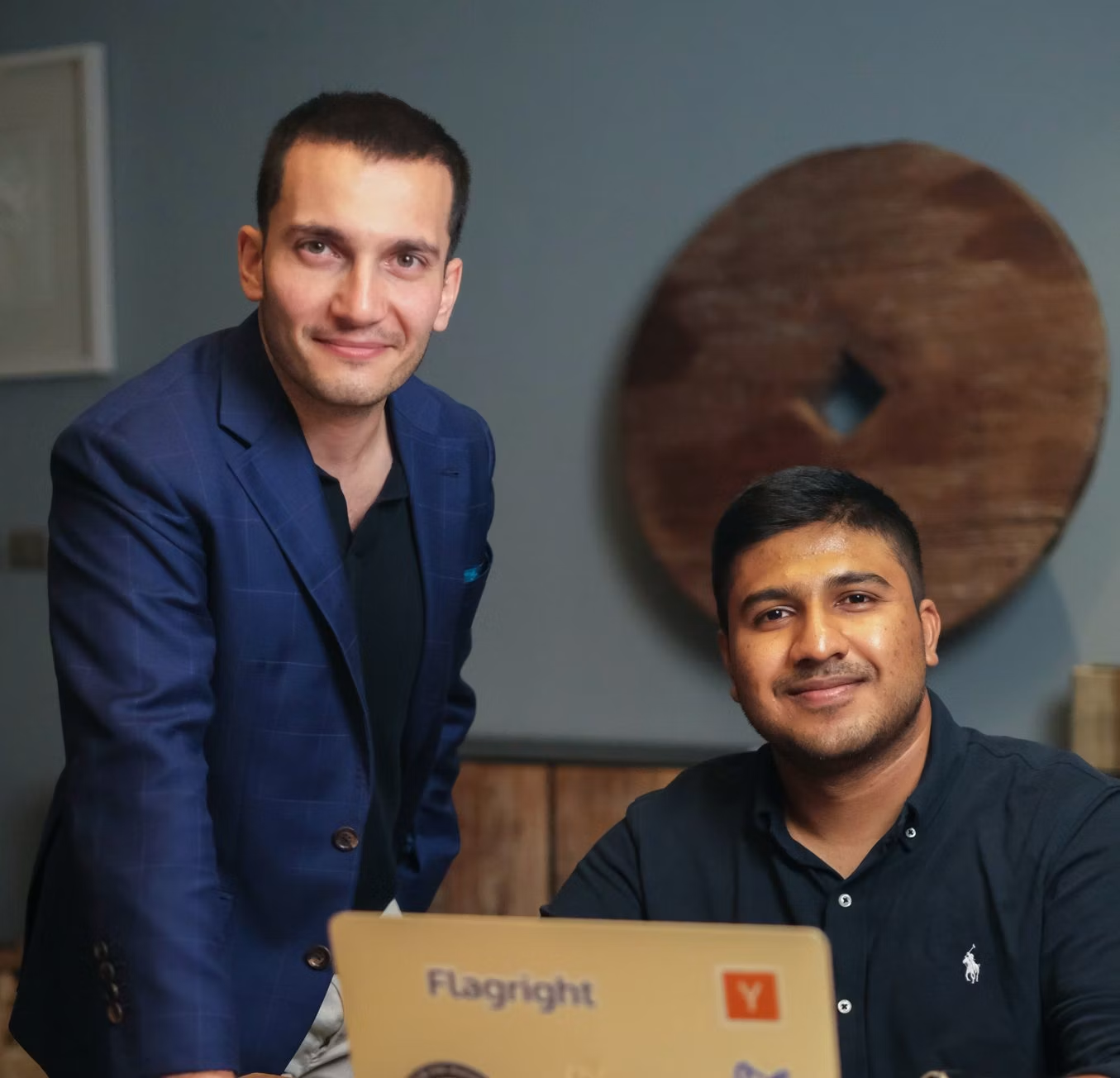
The founders, Snehal Antani and Anthony Pillitiere, met while serving at Joint Special Operations Command. They saw how resource constraints made continuous security testing difficult and built Horizon3 to automate those repetitive assessments.
Logicity's Take
Horizon3's real competition isn't Palo Alto Networks or CrowdStrike. It's the annual pen-test model itself, which charges consulting rates for a snapshot. If NodeZero delivers on continuous, live-environment testing at software prices, incumbents face margin pressure from below. The $100M ARR milestone with 120% growth suggests enterprise buyers are already voting with budgets. For founders building security tooling, the lesson: AI-native infrastructure that can prove it stays in its lane now commands a premium.
Market context
Horizon3 claims an addressable market of tens of billions of dollars. That aligns with Grand View Research estimates pegging the broader cybersecurity market at $271.9 billion in 2025, projected to reach $663.2 billion by 2033. Whether autonomous pen-testing captures even 1% of that spend, the dollar figure is substantial.
The question now is execution at scale. Continuous testing across thousands of diverse enterprise environments is a different operational challenge than annual engagements. The company's 310,000-test track record without disruptions is the proof point it's selling. Whether that holds as it scales internationally will determine if the valuation is earned.
Need Help Implementing This?
If you're evaluating autonomous security testing for your infrastructure, reach out to our team for vendor comparisons and implementation guidance. Contact us at contact@logicity.in.
Source: Startups | TechCrunch / Kate Park
Manaal Khan
Tech & Innovation Writer
Produced with AI assistance and reviewed by the Logicity editorial team. Learn more in our Editorial Policy.