Key Takeaways
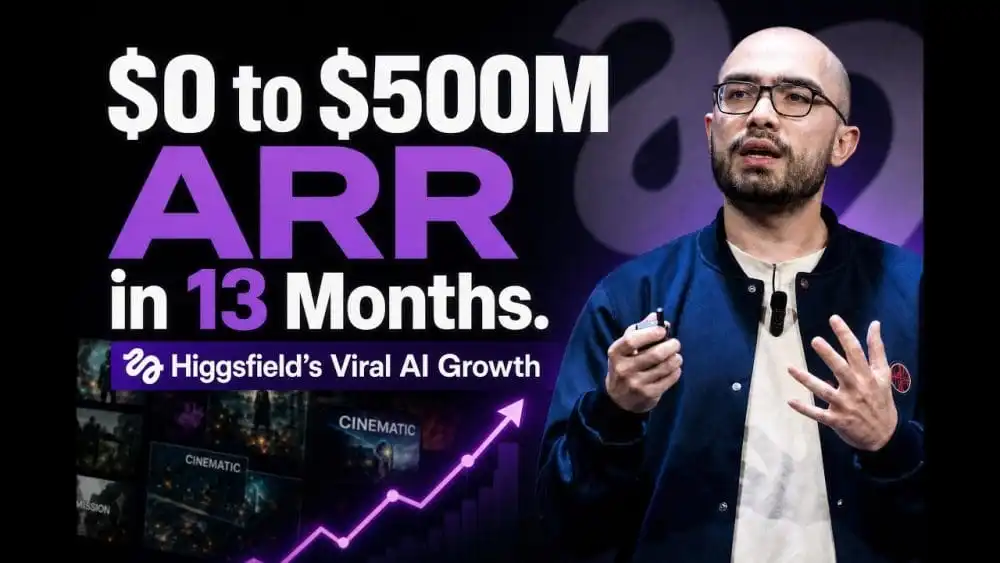
- Higgsfield grew from $200M to $500M ARR in roughly six months, reaching cash-flow positive status
- The company runs $8.3M ARR per engineer, roughly 4x the typical SaaS benchmark of $2M
- They pivoted from a single proprietary model to multi-model aggregation within weeks of launch
Higgsfield crossed $500M in annualized revenue in June, up from $200M at the end of 2024. The AI video platform launched in March 2024, meaning it took roughly 15 months to hit half a billion. The company is cash-flow positive and runs on about 60 engineers.
CEO Alex Mashrabov shared the operational details at a recent SaaStr event, where founder Jason Lemkin interviewed him as both a customer and early investor through SaaStr Fund. The numbers paint a picture of efficiency that defies typical AI startup economics.
How does Higgsfield run $8M+ per engineer?
The math is stark. At $500M ARR with 60 engineers, Higgsfield generates roughly $8.3M per engineer. The SaaS benchmark sits around $2M. That's a 4x multiple against companies with decades of operational refinement.
Mashrabov credits a deliberate structural choice. The company employs about 150 people total, with half in engineering and half in a large creative team. The creative side isn't an afterthought. Higgsfield paired engineers directly with 70-plus filmmakers and commercial producers, not prompt engineers.
Every tutorial and asset Higgsfield ships runs through their own platform first. The creatives identify where models fail in real production work. Engineers fix those gaps. That feedback loop is the product development cycle.
Mashrabov was direct about where this efficiency breaks down. Vibe coding and web-based tools work fine for shipping features. They don't hold up for deep infrastructure, safety systems, and anti-fraud work. As Higgsfield scaled, they had to grow the engineering team specifically for those problems. His framing: speed gets you to $50M, craftsmanship keeps you there.
Why they abandoned their own model
Higgsfield launched on a proprietary model Mashrabov described as "open source plus plus plus." Within weeks, they realized a new video model was landing almost every week across the industry. No single lab would win every use case.
So they pivoted to aggregation. Today the platform runs Google Veo, Kling, Seedance, and Higgsfield's own models side by side. Users fire the same prompt across three models simultaneously and pick the winner. The product got more complex on the surface but far more powerful in practice.
This raises the "thin wrapper" question that haunts every AI startup. Mashrabov's answer: almost every software company will eventually run on AI models it doesn't own. The wrapper framing misses the point.
He sees two moats. First, collaboration and network effects, the same forces that built Figma and Canva. Second, helping brands sell more product. Higgsfield built an MCP integration and launched a marketing agent called Supercomputer that pushes creative directly into Meta and other ad networks.
5x Canva's price, and customers pay it
The average Higgsfield customer spends around $1,000 per year. Canva averages about $200. That's 5x the annual contract value against a company with a decade head start and massive scale.
Higgsfield is nearly doubling ACV every quarter as they move upmarket. Lemkin, who uses both products, laid out the value calculation plainly: the alternative to a video he makes in 60 seconds is hiring an agency, waiting two weeks, getting something mediocre, paying thousands, and probably deleting it anyway.
About 40% of usage now runs through higher-level workflows. The pricing structure pushes users toward these richer features rather than raw model access, which keeps margins healthy despite the underlying compute costs.
The fundraising context
Higgsfield is reportedly in talks to raise at a $5B valuation. When Mashrabov sat down for the interview, the run rate was $300M. Sixty days later it crossed $500M. That velocity explains the valuation expansion.
Mashrabov isn't a first-timer. He sold AI Factory to Snap for $166M and ran generative AI there before starting Higgsfield. The prior exit gives context for the operational discipline. Cash-flow positive at this growth rate isn't accidental.
What this means for the AI tooling market
The Higgsfield trajectory suggests a few things about where AI applications are heading. First, vertical focus beats horizontal ambition. Higgsfield does video for marketing. They don't try to be everything to everyone.
Second, model-agnostic platforms may win over proprietary model developers. If a better model drops tomorrow, Higgsfield adds it. Companies locked into their own models face a different calculus.
Third, creative professionals embedded in engineering teams isn't a nice-to-have. For tools that produce creative output, that feedback loop appears to be load-bearing infrastructure.
Logicity's Take
The $8M per engineer figure deserves scrutiny. Most AI startups burn cash on compute; Higgsfield runs cash-flow positive. The difference likely comes from their workflow-first pricing. Charging for high-level marketing workflows rather than raw model calls keeps margins healthy. For SaaS founders watching the AI space, this points to a clear pattern: the value layer sits above the model, in the workflow that connects AI output to business outcomes. Whether you're building on OpenAI, Anthropic, or open-source models, the monetization opportunity is in the orchestration and the business-specific integrations, not the model access itself.
Frequently Asked Questions
What is Higgsfield's current ARR?
Higgsfield reached $500M in annualized revenue run rate in June 2025, up from $200M at the end of 2024.
How many employees does Higgsfield have?
About 150 people total, with roughly 60 engineers and 70+ creative professionals including filmmakers and commercial producers.
Is Higgsfield profitable?
Yes, the company is cash-flow positive despite its rapid growth, which is unusual for AI startups at this scale.
What AI models does Higgsfield use?
Higgsfield aggregates multiple models including Google Veo, Kling, Seedance, and their own proprietary models. Users can run the same prompt across multiple models simultaneously.
What is Higgsfield's valuation?
The company is reportedly in talks to raise at a $5B valuation as of the latest reports.
Need Help Implementing This?
Building an AI-powered product and wondering how to structure your team for efficiency? Or figuring out your model strategy? Reach out to us at Logicity. We track the operational playbooks behind the fastest-growing AI companies and can help you benchmark your approach.
Source: SaaStrAI
Manaal Khan
Tech & Innovation Writer
Produced with AI assistance and reviewed by the Logicity editorial team. Learn more in our Editorial Policy.