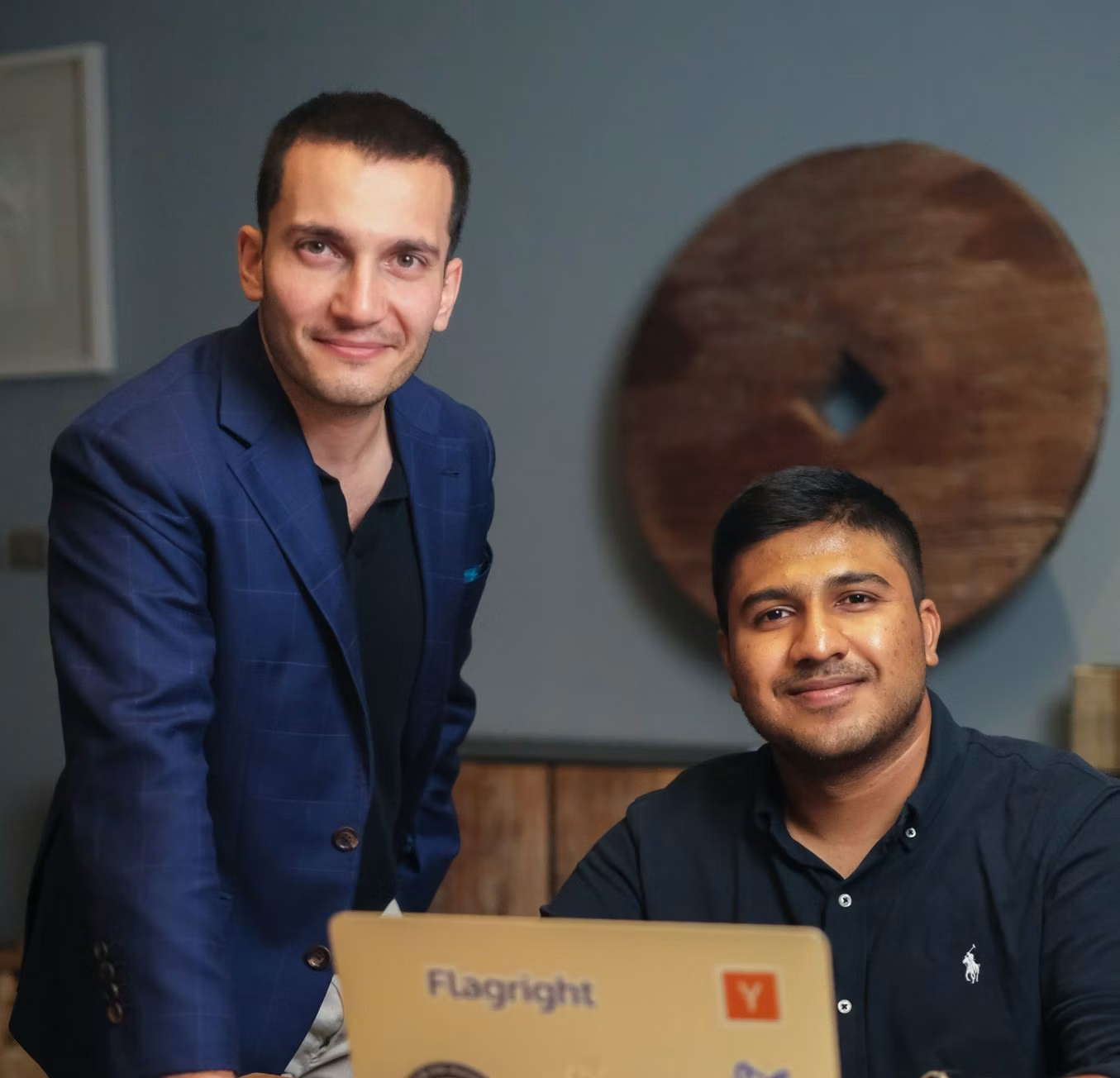
Key Takeaways
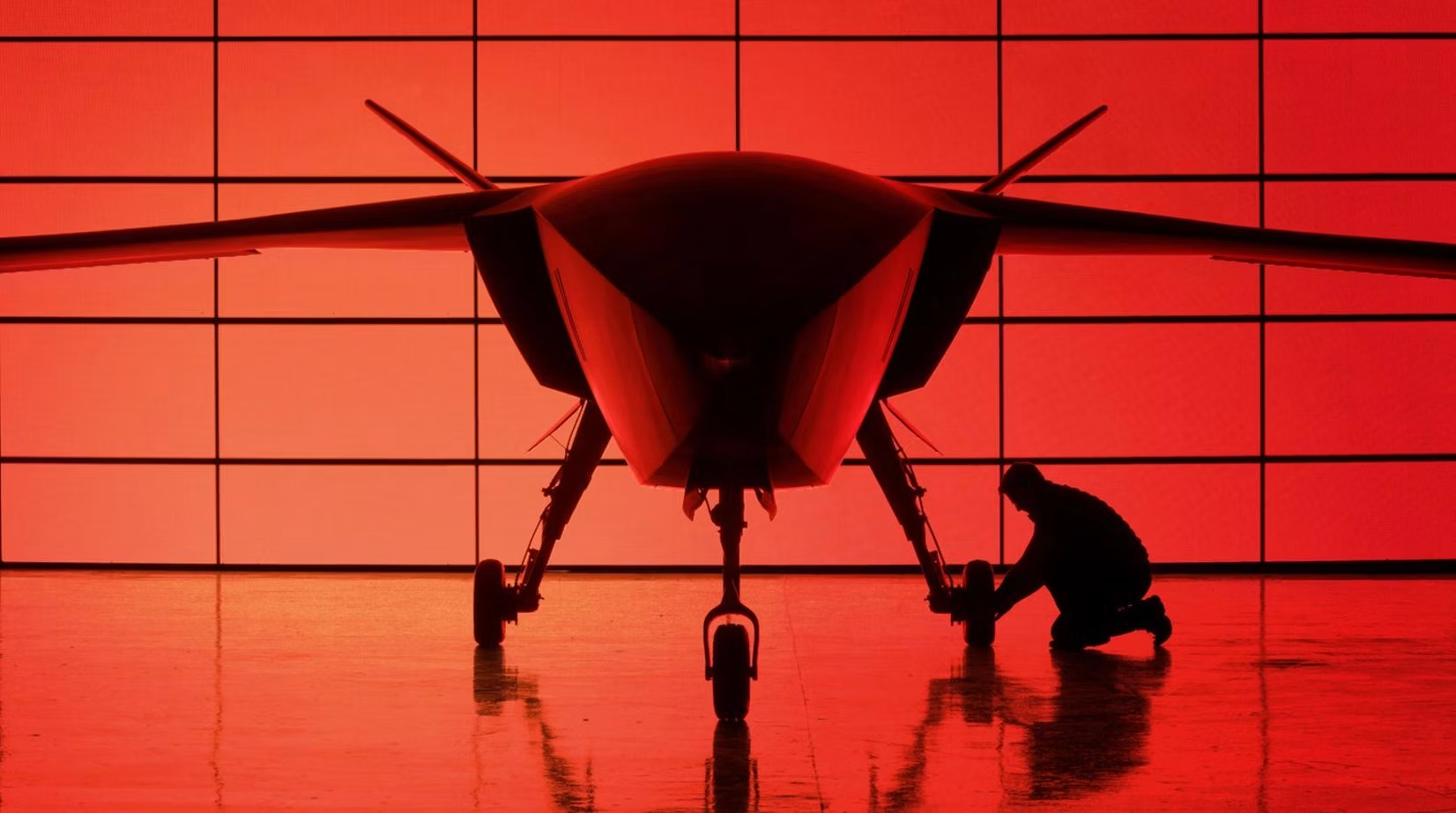
- Helsing raised $1.8 billion at an $18 billion valuation, one of Europe's largest startup rounds ever
- The company has pivoted from pure AI software to hardware including autonomous strike drones and underwater surveillance systems
- Despite global investors, Helsing remains under European control with no US government contracts
Helsing, the Munich-based defense AI company, has raised $1.8 billion in a Series E round that values the business at $18 billion. Goldman Sachs Alternatives, Lightspeed Venture Partners, JPMorgan Chase, Dragoneer Investment Group, and Iconiq participated. The round ranks among the largest funding events in European startup history.
Founded in 2021, Helsing started as a battlefield AI software company. It no longer fits that description. Over the past two years, the company has pushed hard into hardware: autonomous strike drones, AI pilot software, and underwater surveillance gliders. That shift, co-founder Gundbert Scherf told Sifted earlier this year, came from customers who wanted AI capabilities deployed faster in the field.
What Helsing actually builds now
The company unveiled its HX-2 autonomous strike drone and committed to delivering thousands of units to Ukraine. In the UK, Helsing announced a £350 million investment to build a manufacturing facility in Plymouth for its AI-powered underwater surveillance gliders. The original software platform remains part of the business, but it's no longer the main event.
Helsing works with Germany, Estonia, the UK, and Ukraine. It has repeatedly emphasized that despite the global investor roster, it remains under European control. The company calls itself "transatlantic" but holds no US government contracts.
Why investors are piling into defense tech
Helsing said investor demand significantly exceeded the capital available in this round. The valuation jumped from €12 billion (roughly $13.7 billion) in 2024 to $18 billion now, a 31% increase in about a year.
The timing aligns with a broader shift in European defense posture. Governments across the continent are increasing military spending and pursuing what officials call "technological sovereignty", reducing dependence on American suppliers. For VCs, defense tech has moved from a niche bet to a mainstream allocation.
Lightspeed's involvement signals how far US investors are willing to go in backing European defense companies, even when those companies explicitly stay outside the American defense contracting system. Goldman Sachs and JPMorgan joining the cap table adds institutional heft that most European defense startups have struggled to attract.
The European sovereignty angle
Helsing's insistence on European ownership isn't just branding. It's a selling point to governments wary of depending on US tech companies that might face export restrictions or shifting political priorities. The company operates across Germany, the UK, and France, tailoring its products to each national defense establishment.
The new funding will go toward accelerating AI platform development for European and allied armed forces. That language leaves room for NATO partners outside Europe, but the core thesis remains: Europe needs its own defense AI stack.
Four years to $18 billion
Helsing reached this valuation in roughly four years. Scherf, a former German defense ministry official, co-founded the company with Torsten Reil, who previously sold AI company NaturalMotion to Zynga for $527 million. Russia's invasion of Ukraine in 2022 accelerated both government interest and investor appetite for the category.
The pivot from software to full-stack defense company (software, drones, underwater systems) mirrors a pattern from other sectors. Pure software businesses often find hardware margins more defensible, even if the operational complexity multiplies. For Helsing, hardware also provides the integration layer that makes its AI useful in actual combat scenarios.
Logicity's Take
Helsing's round validates a bet that was contrarian three years ago: European defense tech can attract global capital without ceding European control. For startup founders, the lesson isn't to build drone companies. It's that government-adjacent markets (defense, infrastructure, healthcare) can move faster than expected when geopolitical conditions shift. The software-to-hardware evolution also matters. Helsing found that customers wanted integrated systems, not just AI tools. That's a pattern worth watching across other regulated industries where buyers prefer single-vendor accountability.
Frequently Asked Questions
Who invested in Helsing's $1.8 billion round?
Goldman Sachs Alternatives, Lightspeed Venture Partners, JPMorgan Chase, Dragoneer Investment Group, and Iconiq participated in the Series E.
What does Helsing build?
Helsing develops autonomous strike drones (including the HX-2), AI pilot software, underwater surveillance gliders, and battlefield AI software platforms for European governments.
Does Helsing work with the US government?
No. Helsing has no US government contracts and emphasizes it remains under European control despite having global investors.
How did Helsing's valuation change?
Helsing's valuation rose from approximately $13.7 billion (€12 billion) in 2024 to $18 billion in 2025, a 31% increase.
Which countries does Helsing work with?
Helsing has contracts with Germany, Estonia, the UK, and Ukraine. It operates facilities across Germany, the UK, and France.
Need Help Implementing This?
Building in defense, government, or other regulated markets? Reach out to our team for strategic guidance on navigating complex procurement cycles and positioning for institutional capital.
Source: Sifted
Huma Shazia
Senior AI & Tech Writer
Produced with AI assistance and reviewed by the Logicity editorial team. Learn more in our Editorial Policy.