Key Takeaways
- HealthQuad raised Rs 550 crore first close for Fund III, targeting Rs 1,700 crore total with a Rs 2,500 crore greenshoe option
- The fund's first investment goes to Lifesigns, an AI-powered remote patient monitoring platform
- HealthQuad will focus exclusively on technology-led healthcare models while Quadria handles traditional healthcare PE deals
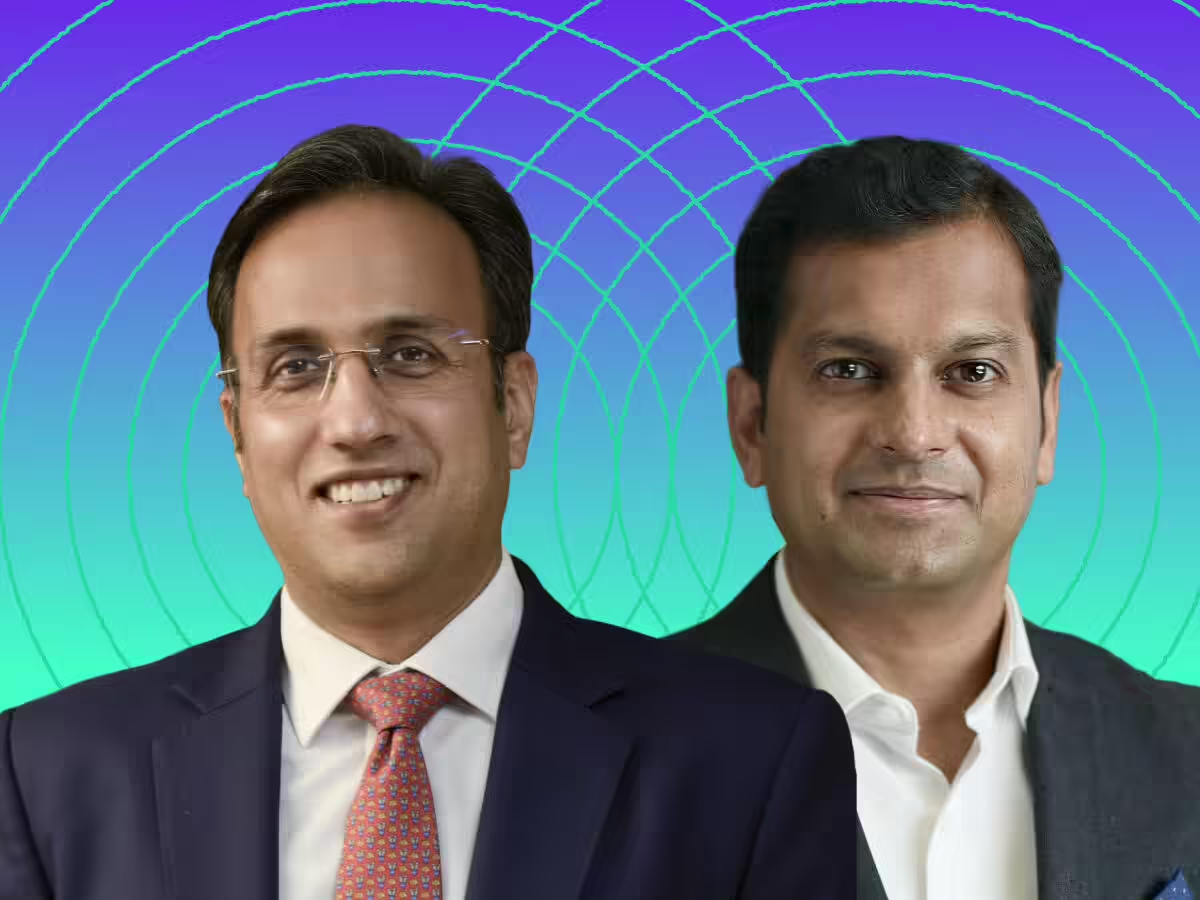
HealthQuad, the Quadria-backed healthcare venture capital firm, has raised Rs 550 crore in first-close commitments for its third fund. The firm targets Rs 1,700 crore total, with a greenshoe option that could push the corpus to Rs 2,500 crore. Sunil Thakur, HealthQuad cofounder and Quadria Capital partner, told the Economic Times the fund expects to close by mid-2026.
The commitments came from existing limited partners, both domestic and global, plus new investors. HealthQuad has already deployed capital from the new fund. Its first investment: Lifesigns, an AI-powered platform for remote patient monitoring.
What will HealthQuad Fund III invest in?
The fund will back early-growth companies across healthtech, medtech, biopharma technology, and new healthcare delivery models. Thakur drew a clear line between HealthQuad and its parent. Quadria Capital will pursue conventional healthcare assets like hospitals, eye care chains, dialysis centers, and pharma manufacturing. HealthQuad gets everything technology-led.
“Quadria is going to support the conventional form of healthcare. HealthQuad is going to support the new-age healthcare model.”
— Sunil Thakur, Cofounder, HealthQuad
The split makes sense. Technology-led healthcare companies require different board expertise, longer runways, and tolerance for regulatory uncertainty. They also have different exit profiles. HealthQuad partner Rahul Agarwal emphasized that the fund operates as a standalone strategy with its own LP base, investment focus, and team, though it benefits from Quadria's healthcare network across India and Southeast Asia.
How does HealthQuad approach AI healthcare bets?
Agarwal said the fund will only back "clinical grade AI" that has been approved or validated by Indian, US, or European regulators. The bar is high: the technology must also be trusted by clinicians and healthcare enterprises, not just impressive in demos. Asset-light AI models can expand globally more easily than local, asset-heavy businesses. The firm points to portfolio companies Qure.ai and Wysa as proof.
HealthQuad studies companies for two to four years before investing. About 90% of deals are proprietary, meaning the firm finds them rather than competing in auction processes. The investment team works alongside a clinical advisory board and operating experts to evaluate clinical relevance, regulatory compliance, and long-term utility for healthcare enterprises.
“It's a PE approach, and our diligence is also of the same grind and rigour.”
— Sunil Thakur, Cofounder, HealthQuad
What does HealthQuad's track record look like?
The firm launched in 2016 as Quadria's early-growth vehicle. Its first two funds backed more than 18 companies including Qure.ai, Wysa, Redcliffe Labs, GoApptiv, Cureskin, Strand Life Sciences, THB, Ekincare, and Medikabazaar. Thakur and Agarwal declined to share DPI or TVPI metrics, citing confidentiality, but said the fund has returned capital through exits.
The portfolio is not without controversy. Medikabazaar, a B2B medical supplies platform, faced allegations of financial misreporting and an indemnity claim from some investors. The firm did not address this directly in its comments.
Fund III follows organizational changes. Kois and Quadria separated their partnership in HealthQuad in 2025. The platform continues to co-manage Fund I and Fund II, retained most of its original team, and added Agarwal and Namit Chugh to leadership. Fund III is managed by HealthQuad Advisors, fully owned by Quadria Group through Amit Varma, Abrar Mir, and Thakur.
Why raise a healthtech fund now?
The 2020-22 healthtech cycle attracted heavy investor interest. Many digital healthcare startups raised at high valuations. Several later struggled to prove sustainable demand, clinical relevance, or unit economics. Funding dried up.
Agarwal said HealthQuad does not chase transient themes. The firm seeks category leaders, not the 10th or 20th entrant in a crowded segment.
"Alpha returns come from backing market leaders, not the 10th or 20th company in a segment." — Rahul Agarwal, Partner, HealthQuad
The firm positions itself as backing models that assist, supplement, and complement existing healthcare infrastructure rather than replacing traditional care. That framing matters for hospital partnerships and regulatory relationships.
Can Quadria and HealthQuad co-invest?
The short answer: yes, but rarely. Agarwal said Quadria and HealthQuad could invest in the same company at different stages. That is not the platform's design, though. Any such deal would require approvals from limited partners and governance boards on both sides. The separation keeps each fund's mandate clean and avoids conflicts.
Logicity's Take
HealthQuad's regulatory-first AI filter is the real tell. After watching healthtech startups burn cash on consumer apps that never achieved clinical validation, the firm is betting that enterprises and regulators, not consumers, will pick winners. The two to four year study period before investing sounds excessive until you remember Medikabazaar. Slower diligence, fewer blow-ups. Whether that patience produces returns in a sector with long clinical cycles and uncertain reimbursement remains the open question.
Frequently Asked Questions
How much has HealthQuad raised for Fund III?
HealthQuad secured Rs 550 crore in first-close commitments. The target is Rs 1,700 crore, with a greenshoe option that could take the total to Rs 2,500 crore.
What sectors does HealthQuad Fund III target?
The fund focuses on healthtech, medtech, biopharma technology, and new healthcare delivery models. It specifically backs technology-led companies rather than traditional healthcare assets like hospitals or pharma manufacturing.
What is HealthQuad's first investment from Fund III?
Lifesigns, an AI-powered remote patient monitoring platform.
When will HealthQuad Fund III close?
The firm expects to complete fundraising by mid-2026.
What is the relationship between HealthQuad and Quadria Capital?
HealthQuad operates as a standalone strategy with its own LP base and team, but is owned by Quadria Group. Quadria Capital focuses on traditional healthcare PE deals while HealthQuad handles technology-led investments.
Need Help Implementing This?
Tracking healthtech investment trends or building your own healthcare AI strategy? Get in touch with Logicity for expert analysis and implementation guidance on emerging health technology opportunities.
Source: Tech-Economic Times / ET
Manaal Khan
Tech & Innovation Writer
Produced with AI assistance and reviewed by the Logicity editorial team. Learn more in our Editorial Policy.




