Key Takeaways
HCL Tech Issues ₹700 Crore Bonus As Revenue Hits $10 Billion Mark | Power Breakfast
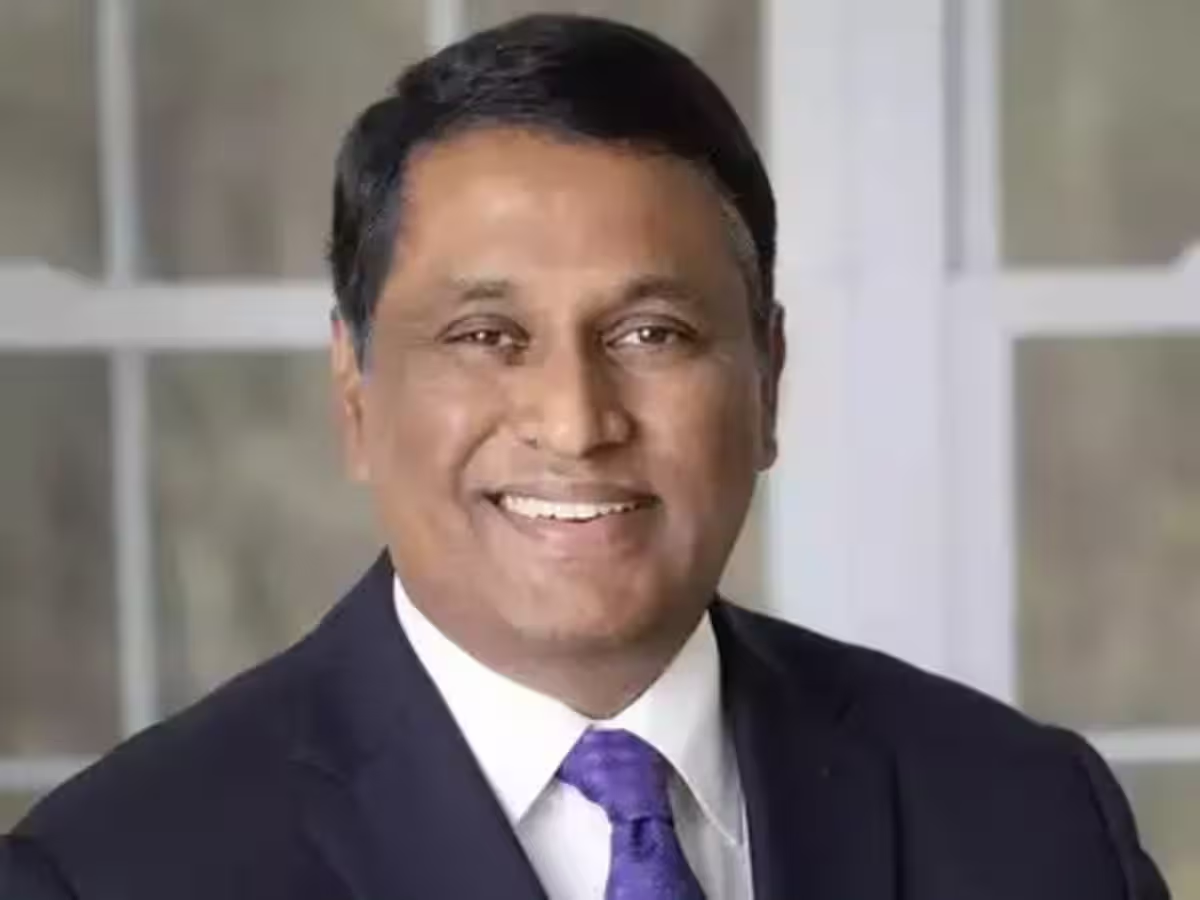
- C Vijayakumar earned $18.13 million (₹175 crore) in FY26, a 67% jump over FY25
- Stock options and long-term incentives made up 74% of his total pay package
- His compensation is 6x higher than TCS CEO and 2x Infosys CEO's package
HCLTech CEO C Vijayakumar took home $18.13 million (roughly ₹175 crore) in the financial year ending March 2026. That's a 67% jump from the previous year, according to the company's annual report released this week.
The surge wasn't from a base salary hike. It came almost entirely from long-term incentives and stock options, which together accounted for ₹129 crore of the total. Strip those out, and his pay rose just 22.86%.
Where the money came from
Vijayakumar draws his salary through HCL America Inc., the company's US subsidiary. His FY26 package breaks down like this:
- Base salary: $2.48 million
- Performance bonus: $2 million
- Benefits and perquisites: $0.31 million
- Long-term incentive (cash): $3.94 million
- RSU perquisite value: $9.40 million
The RSU component alone, $9.4 million, made up 52% of his total compensation. These are restricted stock units that vested and were exercised during the year. When HCLTech's stock price rises, so does the value realized from those options.
How does this stack up against other Indian IT CEOs?
Vijayakumar is now the highest-paid CEO among India's top four IT services companies by a wide margin.
| CEO | Company | FY26 Pay | YoY Change |
|---|---|---|---|
| C Vijayakumar | HCLTech | ₹175 crore | +67% |
| Salil Parekh | Infosys | ₹82.6 crore | +2% |
| Srinivas Pallia | Wipro | ₹49.6 crore | N/A |
| K Krithivasan | TCS | ₹28 crore | +6.3% |
Vijayakumar earns more than double what Infosys's Salil Parekh takes home, and over six times what TCS pays K Krithivasan. The gap is stark. Part of this reflects HCLTech's US-style compensation structure, which leans heavily on equity. TCS and Infosys tie a smaller share of CEO pay to stock performance.
The employee pay ratio tells another story
Vijayakumar's compensation was 291.9 times the median salary at HCLTech. The company employed 170,811 people directly as of March 31, plus another 56,370 in subsidiaries.
Median employee pay rose 5.4% during the year. CEO pay rose 67%. The ratio widened considerably.
This pay gap is not unusual for large global tech firms, but it tends to draw scrutiny in India, where IT services companies employ hundreds of thousands of engineers. Shareholder advisory firms have increasingly flagged CEO-to-median ratios above 200x as a governance concern.
HCLTech's financials in FY26
The CEO pay hike came in a year where profits actually declined. HCLTech reported net profit of ₹16,642 crore for FY26, down 4.3% from ₹17,390 crore the year before. Revenue grew 11.18% to ₹130,144 crore.
So revenue rose, margins compressed, profit fell, and CEO pay jumped. The apparent disconnect is explained by the RSU vesting schedule. Those stock grants were awarded years earlier and happened to vest during FY26. Their value at exercise depends on the stock price, not on that year's financial results.
Logicity's Take
The 67% headline grabs attention, but the structure matters more than the number. Vijayakumar's pay is heavily back-loaded into equity that takes years to vest. That aligns his incentives with long-term shareholders, not quarterly earnings. The real question for boards and investors isn't whether ₹175 crore is 'too much' in absolute terms. It's whether the vesting schedules and performance hurdles attached to these RSUs are rigorous enough. HCLTech's annual report should disclose those conditions. If the hurdles are soft, the pay is a gift. If they're tied to relative TSR or ROIC targets, it's earned. The number alone doesn't tell you which.
Why equity-heavy pay is becoming standard
US-listed tech companies have paid CEOs primarily in stock for decades. Indian IT firms are catching up. The logic is straightforward: tie the CEO's wealth to the stock price, and their interests align with shareholders.
The downside is volatility in reported compensation. A 20% swing in stock price can double or halve the CEO's realized pay from RSUs, even if their cash salary stays flat. That makes year-over-year comparisons noisy.
Vijayakumar has led HCLTech since 2016. Under his tenure, the company completed the $1.8 billion acquisition of IBM's software products business in 2019, a deal that reshaped HCLTech's revenue mix and margins. The stock has roughly tripled since he took over.
Frequently Asked Questions
What is C Vijayakumar's salary at HCLTech?
His total FY26 compensation was $18.13 million (₹175 crore), including base salary, bonuses, and stock options. Base salary alone was $2.48 million.
Why did HCLTech CEO pay jump 67% in FY26?
The increase came from restricted stock units worth $9.4 million that vested during the year, plus a $3.94 million long-term cash incentive. Without these, his pay rose 22.86%.
Who is the highest-paid IT CEO in India?
C Vijayakumar of HCLTech, at ₹175 crore for FY26. He earns more than double the next highest, Salil Parekh of Infosys at ₹82.6 crore.
How many employees does HCLTech have?
As of March 31, 2026, HCLTech had 170,811 permanent employees, plus 56,370 in subsidiaries.
What was HCLTech's profit in FY26?
Net profit was ₹16,642 crore, a 4.3% decline from the previous year. Revenue rose 11.18% to ₹130,144 crore.
Another major Indian tech company's financial turnaround story
Need Help Implementing This?
Building a compensation framework for your leadership team? Logicity can connect you with executive compensation consultants and governance advisors. Reach out to our editorial team for referrals.
Source: Tech-Economic Times / ET
Huma Shazia
Senior AI & Tech Writer
Produced with AI assistance and reviewed by the Logicity editorial team. Learn more in our Editorial Policy.