Key Takeaways
5 Best Google Assistant Speakers for Your Smart Home
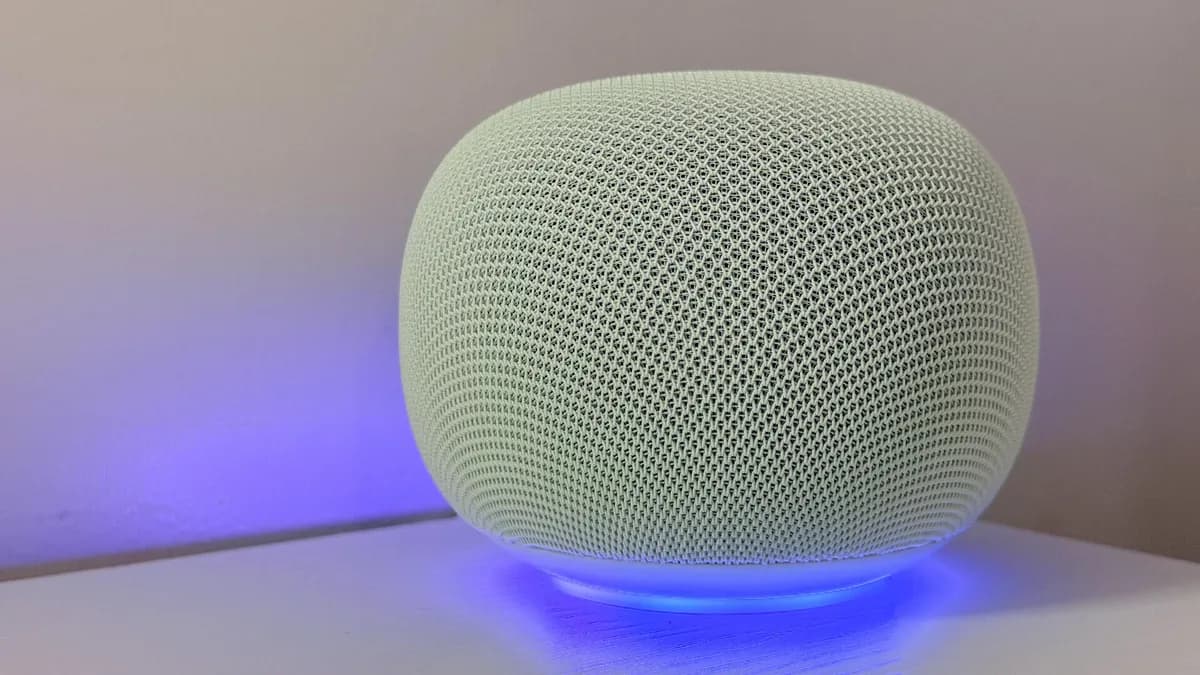
- Sonos Era 100 wins on sound quality with dual tweeters and midwoofer versus Google's single driver
- Google Home Speaker excels at smart home control with Thread 1.3 and Matter support
- The $120 price gap matters most if you prioritize audio fidelity over voice assistant depth
Google's first smart speaker in six years, the $100 Google Home Speaker, now competes directly with the $220 Sonos Era 100. Both serve as voice-controlled hubs for your home, but they make sharply different bets: Google prioritizes Gemini AI and smart home control, while Sonos focuses on audio quality with Alexa baked in. After testing both, the right choice depends on whether you're buying a speaker that talks or one that plays.
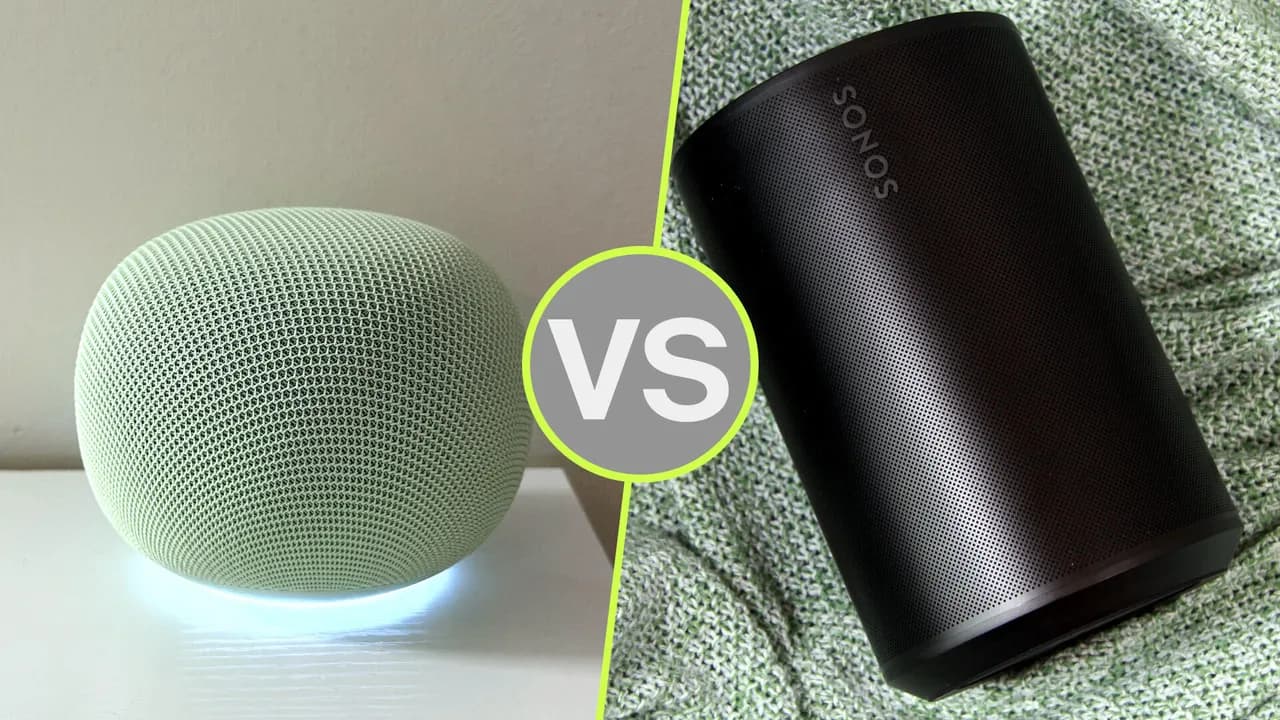
| Feature | Google Home Speaker | Sonos Era 100 |
|---|---|---|
| Price | $100 | $220 |
| Voice Assistant | Gemini for Home | Amazon Alexa |
| Drivers | 1 x 58mm full-range | 2 tweeters + 1 midwoofer + 3 amplifiers |
| Smart Home Hub | Yes (Thread 1.3, Matter) | No (Alexa endpoint only) |
| Connectivity | Wi-Fi 6, Bluetooth 5.4, Thread | Wi-Fi, Bluetooth, AirPlay 2, Line-in |
| Dimensions | 3.4 x 4.2 in | 7.2 x 4.7 x 5.1 in |
Which speaker sounds better?
The Sonos Era 100 wins this one decisively. Its acoustic architecture, dual angled tweeters, a large midwoofer, and three class-D amplifiers, produces a stereo image that fills a room. Bass lands without muddy reverb, and the speaker stays clear at high volume. It performs more like a bookshelf speaker than a typical smart device.
Google's Home Speaker uses a single 58mm full-range driver. That's actually smaller than the 75mm midwoofer in the older $100 Nest Audio. Google traded driver size for other upgrades: Thread 1.3 connectivity, 1GB of RAM, and 4GB of storage. The sound is adequate for podcasts, voice responses, and casual background music, but it won't satisfy anyone who cares about audio fidelity.
If music matters, the $120 premium for Sonos is easy to justify. If the speaker is mostly for timers, weather updates, and controlling lights, the Google handles those tasks fine.
Smart home control: Thread and Matter vs Alexa
Here Google pulls ahead. The Home Speaker works as a Thread 1.3 border router and supports Matter, the new interoperability standard that lets devices from different manufacturers talk to each other. You can connect Thread-based lights, locks, and sensors directly without a separate hub. Google Home becomes the central control point.
The Sonos Era 100 is an Alexa endpoint, not a hub. It can respond to voice commands and control Alexa-compatible devices, but it doesn't act as a mesh coordinator or Matter controller. If you're building out a smart home with Thread devices, the Google speaker saves you from buying additional hardware.
Logicity's Take
The Google Home Speaker is the better buy for anyone deep in Google's ecosystem or building a Matter-based smart home. But Sonos wins if you actually listen to music. At $220, the Era 100 competes with standalone Bluetooth speakers like Bose and JBL on audio quality while adding voice control. Google's speaker competes on integration, not sound. Know which problem you're solving.
Voice assistants: Gemini vs Alexa
Google ships Gemini for Home built into its speaker. Gemini handles conversational queries better than older Google Assistant models, can manage multi-step requests, and integrates with Google services. If you use Google Calendar, Gmail, and Google Photos, the speaker slots in naturally.
Sonos runs Alexa, which has a larger library of third-party skills and deeper integration with Amazon services. For shopping lists, Prime Music, and Alexa routines, the Era 100 fits better. Neither assistant is objectively superior. The right one depends on which company already holds your data.
Connectivity and ecosystem lock-in
Google's speaker supports Wi-Fi 6 dual-band, Bluetooth 5.4, and Thread 1.3. That's a more future-proofed spec sheet. Sonos offers Wi-Fi, Bluetooth, Apple AirPlay 2, and a line-in jack. AirPlay 2 matters if you're in Apple's ecosystem; the line-in matters if you want to plug in a turntable or other analog source.
Both speakers lock you into their respective platforms to some degree. Google's works best with Google Home. Sonos wants you in the Sonos app and, increasingly, the Alexa ecosystem. Neither plays well as a neutral party.
✅ Pros
- • $100 price point undercuts most premium smart speakers
- • Thread 1.3 and Matter support for modern smart home setups
- • Gemini for Home handles complex voice queries
- • Compact form factor (3.4 x 4.2 in)
❌ Cons
- • Single 58mm driver limits audio quality
- • No AirPlay 2 or line-in
- • Locked to Google Home ecosystem
Pros: Best-in-class audio for a smart speaker at this size, AirPlay 2 and line-in expand connectivity options, Dual tweeters and midwoofer deliver real stereo separation, Alexa skills library is extensive. Cons: $220 price is more than double Google's, Not a smart home hub; requires separate Thread/Matter hardware, No Google Assistant option.
Which should you buy?
Buy the Google Home Speaker if you want a smart home hub that happens to play sound. It's $100, supports Thread and Matter, and runs Gemini. For controlling lights, setting reminders, and asking questions, it does the job.
Buy the Sonos Era 100 if you want a speaker that happens to be smart. The $220 price buys audio quality that competes with dedicated music hardware. If your primary use is playing music, the price gap disappears fast.
The speakers serve different masters. Google optimized for intelligence and integration. Sonos optimized for sound. Neither is wrong, but they're not interchangeable.
Frequently Asked Questions
Can the Google Home Speaker play music from Spotify?
Yes. Google Home supports Spotify, YouTube Music, Apple Music, and other major streaming services through Google Home integration.
Does the Sonos Era 100 work with Google Assistant?
No. Sonos dropped Google Assistant support in late 2024. The Era 100 only supports Amazon Alexa and the native Sonos voice assistant.
Can I use both speakers in a stereo pair?
Not together. You can pair two Sonos Era 100s for stereo or two Google Home Speakers within their respective apps, but they don't cross-pair.
Need Help Implementing This?
Setting up smart home automation with Thread or Matter devices? Logicity's team can help you design a connected home that works across ecosystems. Contact us for a consultation.
Source: Latest news
Huma Shazia
Senior AI & Tech Writer
Produced with AI assistance and reviewed by the Logicity editorial team. Learn more in our Editorial Policy.