Key Takeaways
- Google Finance now has its first standalone mobile app, currently Android-only with iOS coming later in 2026
- The app includes AI-powered features like 'key moments' that explain stock price changes and a chatbot for financial research
- The web version offers more features including portfolio imports and AI-generated daily briefings
Google Finance launched its first standalone mobile app this week, arriving on Android two decades after the web service debuted. The iOS version won't ship until later in 2026. The release also marks the full rollout of AI features that had been in beta on the Finance website since May.
For a company that makes mobile operating systems, this timeline is remarkable. Google Finance has existed since 2006, originally running on Flash for its charts and graphs. In that time, Yahoo Finance, Robinhood, and dozens of fintech startups built mobile-first experiences. Google stuck with desktop.
What does the Google Finance app actually do?
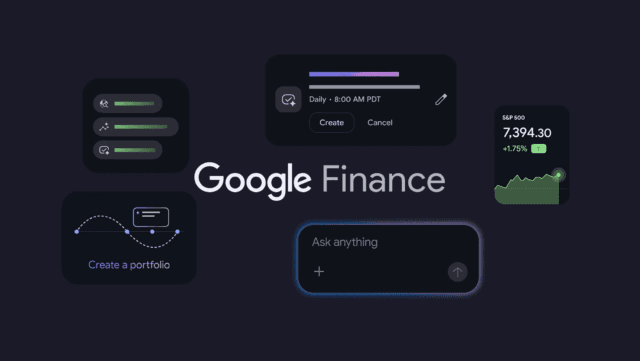
The app mirrors much of the updated web experience. Users can create watchlists, monitor real-time market data, and aggregate financial news in one place. The standout addition is AI integration throughout.
When viewing stock performance graphs, Finance generates what Google calls "key moments", AI-written explanations for why prices moved. A floating "Ask" button at the bottom of the interface opens a chatbot tuned for financial questions. Users can discuss stocks, ask for analysis, and access their conversation history through a dedicated History section.
Google frames the current Android release as a starting point. The company says it will adapt more features from the website to the app over time, which means the mobile experience is deliberately limited at launch.
What's missing from the mobile app?
The web version has capabilities the app lacks. Most notable is the portfolio feature. While the app lets you build a watchlist by searching stock symbols, the website supports full portfolio management. Users can import portfolios from the old Finance interface, upload CSV or PDF files, and get AI-generated insights based on their holdings.
The chatbot on the web has access to your portfolio data. That means it can answer questions specific to your positions, not just general market queries. The app's chatbot doesn't have this capability yet.
The website also includes a research tool that sends periodic updates. Google's example: "Send me a daily pre-market briefing analyzing significant overnight moves across major cryptocurrencies." These notifications will arrive through the mobile app, but you can only set them up on desktop.
Why AI fits finance, for better and worse
Google is leaning hard into AI for this product refresh. The company isn't alone. Financial services have adopted generative AI faster than most industries. Trading algorithms, market analysis, and investment research all increasingly rely on machine learning models.
There's an irony here that Ars Technica's Ryan Whitwam noted in his coverage: many of the market movements that AI tools try to explain are themselves driven by AI trading. You're using one set of models to interpret the behavior of another set of models.
The risk is hallucination. Large language models can confidently generate false information. For casual market watching, that might be harmless. For investment decisions, it could be expensive. Google hasn't detailed what guardrails exist to prevent the chatbot from fabricating financial data.
When is the iOS app coming?
Google says the iOS version will arrive "later this year", meaning sometime before the end of 2026. No specific date. The Android app is available globally in the Play Store now.
The Android-first approach makes sense given Google's ownership of the platform, but it leaves iPhone users waiting for a product that's already 20 years overdue. If you're on iOS and want mobile access to Google Finance, you're still stuck with the mobile web version.
Does this compete with Robinhood or Yahoo Finance?
Not directly. Google Finance is a tracking and research tool, not a brokerage. You can't buy or sell stocks through it. The competition is with Yahoo Finance, MarketWatch, and similar information services.
Google's advantage is integration. If you already use Google services, your data lives in one place. The AI features also differentiate it, though competitors are adding similar capabilities. The disadvantage is Google's reputation for abandoning products. Users who remember Google Reader, Inbox, or dozens of other killed services might hesitate to build portfolios in yet another Google product.
Frequently Asked Questions
Is the Google Finance app available on iPhone?
Not yet. Google says the iOS version will launch later in 2026, but hasn't given a specific date. The Android app is available now in the Play Store globally.
Can you trade stocks through the Google Finance app?
No. Google Finance is a tracking and research tool. You can monitor stocks, create watchlists, and get AI analysis, but you cannot execute trades through the app.
What AI features does Google Finance include?
The app generates 'key moments' that explain stock price movements and includes a chatbot for financial questions. The web version adds AI-powered research reports that can send you daily briefings.
Is Google Finance free to use?
Yes. Both the mobile app and web version are free. Google has not announced any premium tier.
Can I import my existing portfolio into Google Finance?
On the website, yes. You can import portfolios from the old Finance interface or upload CSV and PDF files. This feature isn't available in the mobile app yet.
Logicity's Take
The 20-year gap between web launch and mobile app is genuinely baffling for a company that built Android. Google Finance was never a priority, and this release feels like it exists primarily to showcase Gemini's capabilities in a financial context. The real test is whether Google commits to the product long-term. If you're building portfolios here, export regularly.
Another major tech company's upcoming product developments
Need Help Implementing This?
Looking to integrate financial data tools or AI-powered analytics into your business workflow? Our team can help you evaluate options and build custom solutions. Contact us at hello@logicity.in.
Source: Ars Technica
Manaal Khan
Tech & Innovation Writer
Produced with AI assistance and reviewed by the Logicity editorial team. Learn more in our Editorial Policy.




