Key Takeaways
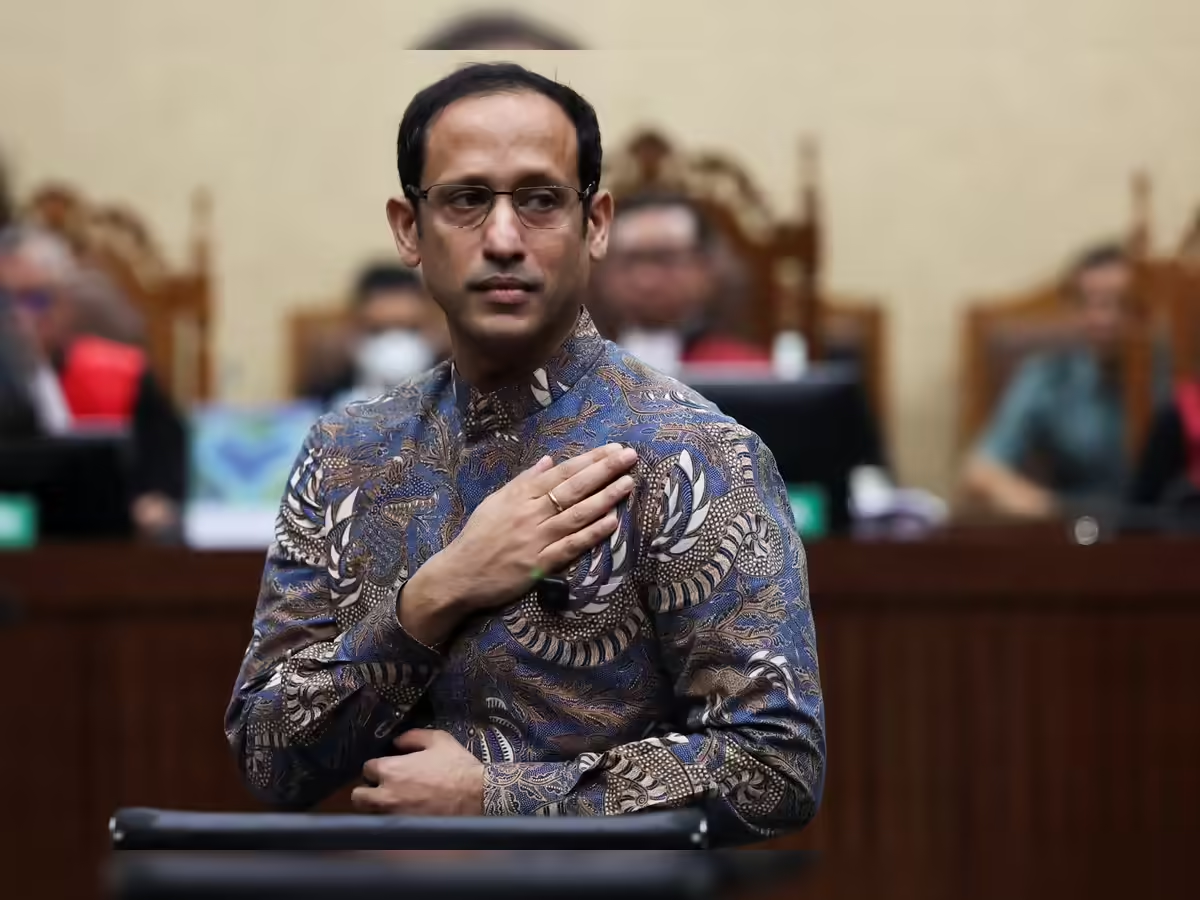
- Nadiem Makarim, Gojek co-founder and former Indonesian education minister, has been detained as a suspect in a $122 million corruption case
- Investigators allege Makarim tailored procurement specifications to favor Google Chromebooks during his tenure as minister
- The case raises questions about tech founder-turned-politicians and government procurement processes across Southeast Asia
Indonesian authorities have detained Nadiem Makarim, co-founder of ride-hailing giant Gojek and the country's former education minister, naming him a suspect in a corruption case tied to laptop procurement. The attorney general's office says the alleged scheme caused state losses of 1.98 trillion rupiah, roughly $122 million.
Makarim will remain in custody for 20 days while investigators build their case, according to Nurcahyo Jungkung Madyo, the lead investigator. The charges stem from his 2019-2024 tenure as Minister of Education, Culture, Research, and Technology.
What are the specific allegations against Makarim?
Prosecutors allege Makarim issued a decree in 2021 with procurement specifications that matched only Google's Chromebook laptops. The devices were intended for ministry use and distribution to students as part of Indonesia's digital education push.
Before selecting Chromebooks, Makarim met with Google Indonesia representatives six times, according to investigator Nurcahyo. The accusation centers on whether Makarim misused his ministerial authority to benefit himself or a company, violating Indonesia's anti-corruption laws.
Makarim's lawyer has not responded to requests for comment. Google also declined to comment on the allegations.
How does this connect to GoTo Group?
In July, the attorney general's office raided GoTo Gojek Tokopedia's offices searching for evidence related to the case. GoTo, Indonesia's largest tech company, was formed in 2021 when Gojek merged with e-commerce platform Tokopedia. The company raised $1.1 billion in its 2022 IPO, the largest in Indonesian tech history.
Makarim left Gojek in 2019 when President Joko Widodo appointed him minister. That appointment was seen as a signal that Indonesia's government embraced tech entrepreneurs in cabinet roles. Gojek at the time was valued at approximately $28 billion and served over 190 million users across Southeast Asia.
GoTo has not commented on the raid or the investigation.
What does this mean for Indonesia's tech sector?
The detention sends a stark message. Makarim was a poster child for Indonesia's startup economy. He built Gojek from 20 motorcycle drivers in 2010 into a super-app handling ride-hailing, food delivery, and digital payments. His move into government represented a new path for successful founders across the region.
Indonesia has one of Southeast Asia's most aggressive anti-corruption enforcement regimes. The Corruption Eradication Commission and attorney general's office have pursued numerous high-profile officials in recent years. This case follows that pattern, but with a twist: the suspect is one of the country's most prominent tech figures.
For foreign tech companies doing business with Indonesian government agencies, the case highlights procurement risk. The allegation that specifications were written to favor a single vendor is a common corruption pattern globally. It raises questions about due diligence when companies engage in public-sector contracts.
What happens next?
Makarim faces a 20-day detention period during which prosecutors will gather additional evidence. Under Indonesian law, corruption convictions can carry significant prison sentences. The investigation may expand to include other individuals or companies involved in the Chromebook procurement process.
The outcome will be watched closely by Indonesia's startup ecosystem, foreign investors, and other tech founders considering government roles. A conviction would mark a dramatic fall for a figure who symbolized Indonesia's tech ambitions.
Frequently Asked Questions
Who is Nadiem Makarim?
Nadiem Makarim co-founded Gojek in 2010, building it into Indonesia's first tech super-app. He served as Minister of Education, Culture, Research, and Technology from 2019 to 2024.
What is the corruption case against Nadiem Makarim about?
Prosecutors allege Makarim tailored government laptop procurement specifications to favor Google Chromebooks, causing state losses of approximately $122 million.
Is GoTo Group involved in the investigation?
The attorney general's office raided GoTo's offices in July searching for evidence. GoTo was formed after Gojek merged with Tokopedia in 2021, two years after Makarim left the company.
How long will Nadiem Makarim be detained?
He will be detained for 20 days while investigators continue building the case. This period may be extended depending on the investigation's progress.
Logicity's Take
This case will test whether Indonesia's anti-corruption apparatus treats tech founders the same as traditional political figures. For CTOs and founders considering government advisory roles or public-sector contracts in Southeast Asia, the lesson is clear: procurement processes require airtight documentation and third-party oversight. The six documented meetings with Google before a seemingly pre-determined specification is exactly the pattern compliance teams flag in vendor selection. Whether Makarim is ultimately convicted or cleared, the reputational cost to Indonesia's founder-to-minister pipeline is already real.
Need Help Implementing This?
For guidance on compliance frameworks, procurement best practices, or navigating regulatory environments in emerging markets, contact Logicity's consulting network at consulting@logicity.in.
Source: Tech-Economic Times / ET
Manaal Khan
Tech & Innovation Writer
Produced with AI assistance and reviewed by the Logicity editorial team. Learn more in our Editorial Policy.




