Key Takeaways
- Gimi Michi raised $1 million in seed funding led by IndiaQuotient, with DeVC, Titan Capital, and IIMA Ventures participating.
- The six-month-old startup reports 60% month-on-month revenue growth, with half its sales from tier-II and tier-III cities.
- Funds will go toward product development, team expansion, and strengthening quick commerce distribution.
Gimi Michi, a six-month-old startup selling Korean food products in India, has raised $1 million in seed funding led by IndiaQuotient. DeVC, Titan Capital, and IIMA Ventures also participated in the round.
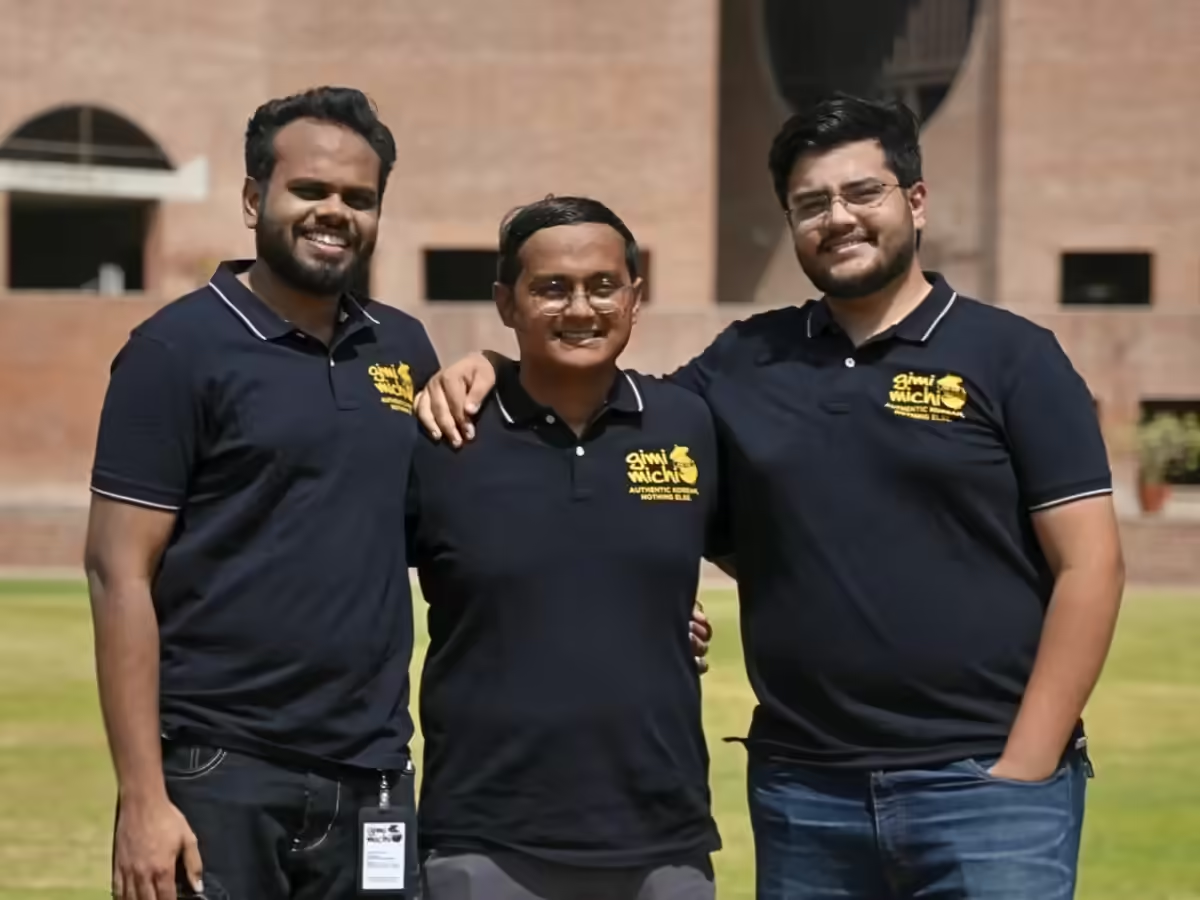
The company was founded by IIM Ahmedabad alumni Nishank Goyal, Akhil Kumar, and Bodhi Rathor. Before starting Gimi Michi, the three worked at BCG, Mondelez, AB InBev, and Pluckk.
The startup plans to use the capital for product development, hiring, brand building, and expanding distribution across quick commerce platforms. It already claims to have hit ₹1 crore in monthly net sales, growing at 60% month-on-month.
Why Korean food, why now?
Gimi Michi is betting that Korean food will follow the same path Korean entertainment did in India. K-dramas and K-pop built an audience over the past decade. Now those fans want the ramen and snacks they see on screen.
The founders argue that consumers already know what they want. Years of watching Korean content created demand. The barrier was access. Korean products in India were either expensive imports or hard to find outside metro cities.
Gimi Michi is positioning itself as the affordable, accessible alternative. It is building products specifically for Indian quick commerce channels, where discovery and delivery happen in minutes.
Tier-II and tier-III cities drive half the sales
The most striking number in the company's early data: nearly 50% of sales come from tier-II and tier-III cities. That suggests Korean food demand has spread well beyond Delhi, Mumbai, and Bangalore.
Quick commerce makes this possible. Platforms like Blinkit, Zepto, and Instamart reach smaller cities faster than traditional retail ever could. A startup with the right product can scale nationally without building its own logistics.
For Gimi Michi, that means focusing on brand and product while letting partners handle the last mile.
The investor thesis
IndiaQuotient led the round. Partner Sahil Makkar framed the opportunity in generational terms.
"Every generation finds its own food," he said. "For Indian millennials, it was Maggi. For Gen Z and Gen Alpha, it is Korean food. And Gimi Michi is well positioned to own that moment."
The comparison to Maggi is ambitious. Nestle spent decades making Maggi synonymous with instant noodles in India. But the investor's point is directional: a new generation is forming new habits, and there is no dominant brand serving them yet.
Titan Capital, Kunal Shah's fund, and IIMA Ventures, the alumni network fund from IIM Ahmedabad, also joined. The presence of IIMA Ventures is not surprising given all three founders are IIM-A alumni.
Competition and challenges ahead
Gimi Michi is not alone. Korean food imports have grown. Indian FMCG companies have launched Korean-style products. Quick commerce shelves have more options than they did two years ago.
The startup's differentiation pitch is authenticity. Legacy FMCG players tend to adapt flavors for Indian palates. Gimi Michi says it is creating products that deliver the actual Korean experience, the same taste consumers see in K-dramas.
Whether that distinction holds in a price-sensitive market remains to be tested. Quick commerce customers often buy on discount and impulse. Brand loyalty is hard to build when the next option is a tap away.
What comes next
The company says it will focus on product expansion, team growth, and deeper quick commerce penetration. At ₹1 crore monthly revenue with 60% growth, the math works for now. Sustaining that rate as the base grows is the real test.
The K-wave gave Gimi Michi a head start. Converting cultural curiosity into repeat purchases is the next phase.
Logicity's Take
Gimi Michi's tier-II and tier-III traction is the most interesting signal here. It suggests Korean food demand has moved past the urban niche phase. The real question is margins. Quick commerce platforms take a cut, and Korean-style products often require specialty ingredients. If Gimi Michi can maintain gross margins while scaling through Blinkit and Zepto, it has a real business. If not, the 60% growth becomes a race to burn cash.
Frequently Asked Questions
How much funding did Gimi Michi raise?
Gimi Michi raised $1 million in seed funding led by IndiaQuotient, with participation from DeVC, Titan Capital, and IIMA Ventures.
Who founded Gimi Michi?
The company was founded by IIM Ahmedabad alumni Nishank Goyal, Akhil Kumar, and Bodhi Rathor. They previously worked at BCG, Mondelez, AB InBev, and Pluckk.
What products does Gimi Michi sell?
Gimi Michi sells Korean food products, primarily ramen and noodles, targeting Indian consumers who have developed a taste for Korean cuisine through K-dramas and K-pop.
Where is Gimi Michi available?
The startup distributes through quick commerce platforms and reports that nearly 50% of its sales come from tier-II and tier-III cities across India.
What is Gimi Michi's current revenue?
The company reports monthly net sales of ₹1 crore with 60% month-on-month revenue growth.
Need Help Implementing This?
Building a D2C food brand or exploring quick commerce distribution? Logicity covers the strategies that work. Subscribe to our newsletter for weekly insights on startup funding, growth tactics, and market analysis.
Source: Tech-Economic Times / ET
Manaal Khan
Tech & Innovation Writer
Produced with AI assistance and reviewed by the Logicity editorial team. Learn more in our Editorial Policy.




