Key Takeaways
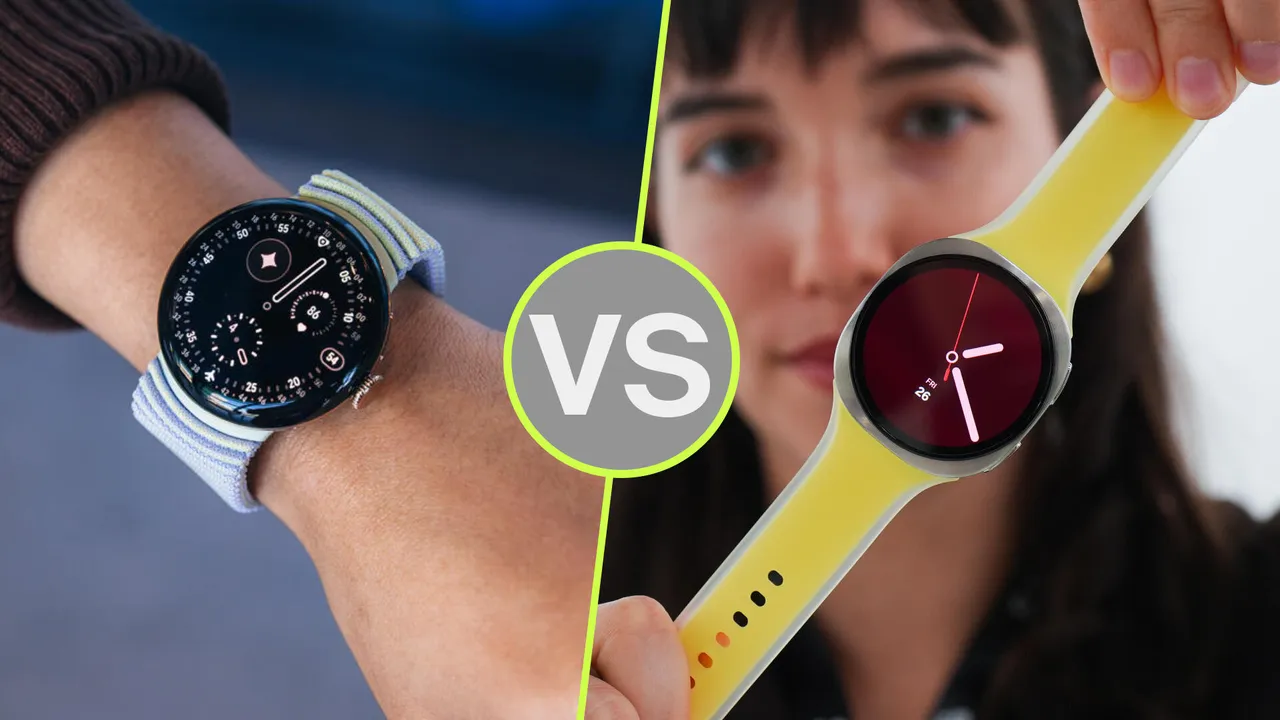
Samsung Galaxy Watch 9 vs Google Pixel Watch 4 - Best Smartwatch to Buy?
- Galaxy Watch 9 offers 30 hours of battery life with Always On Display, outpacing the Pixel Watch 4's smaller model
- Samsung includes FDA-cleared sleep apnea detection and antioxidant index tracking not found on Pixel Watch 4
- Pixel Watch 4 features standalone satellite SOS and Gemini-powered Health Coach, absent from Galaxy Watch 9
Samsung unveiled the Galaxy Watch 9 this week at Unpacked 2026, positioning it directly against Google's Pixel Watch 4, now nearly a year old. Both are flagship Android smartwatches, both run Wear OS, and both work best when paired with their maker's phones. But the hardware and health features diverge enough to make the choice meaningful.
The short version: Samsung pushes deeper into health metrics with FDA-cleared sleep apnea monitoring and new fitness tracking. Google counters with Gemini AI coaching and satellite SOS. Your pick depends on whether you prioritize raw biometric data or software intelligence layered on top.
How do the specs compare?
| Spec | Galaxy Watch 9 | Pixel Watch 4 |
|---|---|---|
| Display | Super AMOLED, 3,000 nits | AMOLED, 3,000 nits |
| Sizes | 40mm / 44mm | 41mm / 45mm |
| Processor | Snapdragon Wear Elite | Snapdragon W5 Gen 2 |
| RAM / Storage | 2GB / 32GB | 2GB / 32GB |
| Battery (small / large) | 390mAh / 445mAh | 325mAh / 455mAh |
| Satellite SOS | No | Yes (standalone) |
| Starting price | $379 | $387 |
Peak brightness matches at 3,000 nits. Both run 2GB of RAM and 32GB of storage. Samsung's Snapdragon Wear Elite is the newer chip, which should translate to modest efficiency gains over Google's W5 Gen 2, though real-world differences remain to be tested.
Why choose the Galaxy Watch 9?
Battery life tilts toward Samsung. The 40mm Galaxy Watch 9 packs a 390mAh cell, claiming 30 hours with Always On Display enabled. That's a notable upgrade from last year's Watch 8 and outpaces the Pixel Watch 4's 325mAh in the smaller size. The larger 44mm models are closer, with Samsung at 445mAh and Google at 455mAh.
Health tracking is where Samsung pulls ahead. The Galaxy Watch 9 introduces an FDA-cleared sleep apnea score that monitors breathing disturbances overnight, an antioxidant index to gauge nutrient levels, a daily cardio load score, and a heart health score that tracks short-term deviations for longitudinal cardiovascular insight. None of these appear on the Pixel Watch 4.
If you want granular biometric data, especially around sleep and heart health, Samsung's sensor suite is currently unmatched on Android.
Why choose the Pixel Watch 4?
Google's strongest differentiator is the Gemini-powered Health Coach, added a few months after launch. Rather than dumping raw numbers on you, it synthesizes sleep, activity, and recovery data into actionable advice. For users who don't want to interpret metrics themselves, this AI layer matters.
The Pixel Watch 4 also includes standalone satellite SOS, a genuine safety feature for backcountry hikers or anyone outside cell coverage. Samsung's Watch 9 lacks satellite connectivity entirely.
If you're invested in Google's ecosystem, these Calendar tricks pair well with Pixel Watch productivity.
Which pairs better with your phone?
Both watches technically work with any Android phone, but each loses features when unpaired from its parent brand. Galaxy Watch 9 unlocks Samsung Health's full depth only on Galaxy phones. Pixel Watch 4 integrates tightly with Google Assistant, Pixel-exclusive features, and the Gemini coach.
If you already own a Galaxy S-series phone, the Watch 9 is the obvious choice. Same logic applies for Pixel owners. Mixing ecosystems means accepting compromises.
Pricing and availability
Samsung's Galaxy Watch 9 starts at $379 for the 40mm model. Google's Pixel Watch 4 starts at $387 for the 41mm. Both offer LTE variants at higher price points. The $8 difference is negligible. Your decision hinges on features, not price.
Samsung's hardware push extends beyond wearables into chip manufacturing.
Logicity's Take
For enterprise buyers equipping field teams, the Galaxy Watch 9's FDA-cleared health metrics and longer small-model battery make it the safer bet. But if your workforce already uses Pixel phones and Google Workspace, the Pixel Watch 4's Gemini Health Coach and satellite SOS offer more practical daily value. Both sit in the same $380-$400 bracket, so compatibility and software philosophy should drive the choice, not sticker price.
The verdict
Samsung wins on health tracking depth and battery capacity in the smaller size. Google wins on AI-driven coaching and emergency satellite connectivity. Neither is universally better. If you obsess over biometric data, buy the Galaxy Watch 9. If you want software that interprets that data for you, and you need off-grid SOS, the Pixel Watch 4 earns its slightly higher price.
Frequently Asked Questions
Can I use Galaxy Watch 9 with a Pixel phone?
Yes, but some Samsung Health features and deep OS integrations won't work. You'll get core functionality without the full experience.
Does Pixel Watch 4 have sleep apnea detection?
No. Google's watch tracks sleep stages and quality but lacks FDA-cleared sleep apnea monitoring, which the Galaxy Watch 9 now includes.
Which watch has better battery life?
The Galaxy Watch 9's 40mm model offers 390mAh versus 325mAh in the Pixel Watch 4's 41mm. Larger models are nearly identical at 445mAh and 455mAh respectively.
What is Gemini Health Coach on Pixel Watch 4?
It's an AI feature powered by Google's Gemini model that synthesizes your health data into personalized, actionable advice rather than raw metrics.
Does Galaxy Watch 9 support satellite SOS?
No. Only the Pixel Watch 4 offers standalone satellite emergency messaging without a phone connection.
Need Help Implementing This?
Evaluating wearables for your organization or building health-tracking integrations? Reach out to Logicity's team for guidance on enterprise device strategy.
Source: Latest news
Manaal Khan
Tech & Innovation Writer
Produced with AI assistance and reviewed by the Logicity editorial team. Learn more in our Editorial Policy.