France Just Told Microsoft to Pack Its Bags: The Biggest Government Linux Migration Ever Is Happening

In a move that's sending shockwaves through the tech industry, France has officially announced it's kicking Windows off government computers and embracing Linux. With 2.5 million civil servants affected and hundreds of millions in potential savings at stake, this isn't just a tech story—it's a geopolitical earthquake that could reshape how nations think about their digital infrastructure.
Key Takeaways
- France's DINUM has ordered all government ministries to create plans for eliminating American software dependencies by autumn 2026
- The move affects 2.5 million civil servants and covers everything from operating systems to AI platforms and cybersecurity tools
- Germany's similar transition has already saved €15 million in licensing costs, suggesting France could see massive budget benefits
- 80,000 French health insurance employees have already switched to open-source alternatives for Teams, Zoom, and Dropbox
- This is part of a broader European trend, with Denmark planning to complete its own Linux migration by the end of 2026
In This Article
- The Announcement That Changed Everything
- Why France Is Breaking Up With American Tech
- The Transition Has Already Begun
- France Isn't Alone: Europe's Open-Source Revolution
- The Rocky Road Ahead
- What This Means for the Tech World
The Announcement That Changed Everything
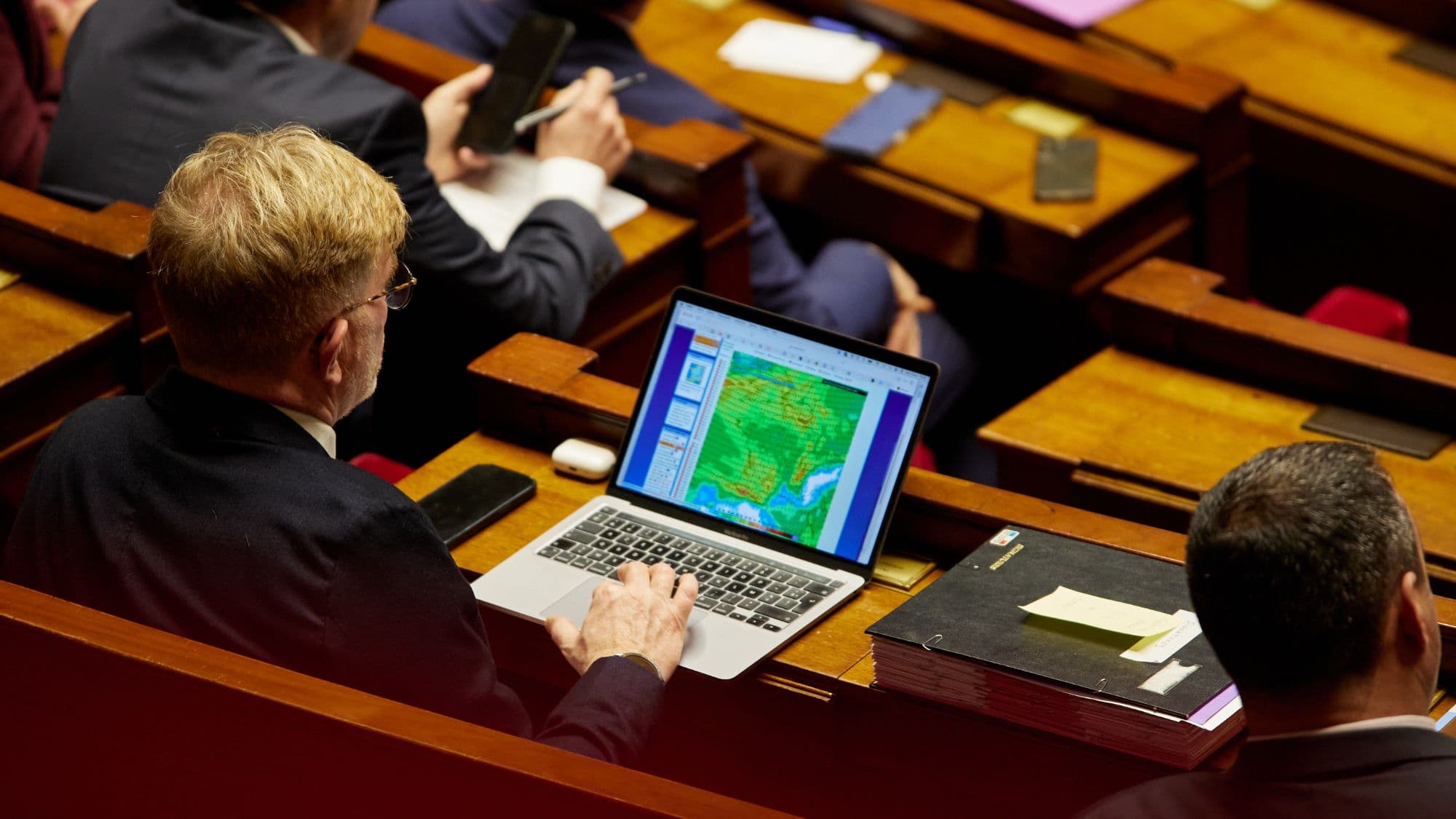
On April 8, 2026, France's Interministerial Digital Directorate (DINUM) dropped a bombshell that tech observers had been anticipating for years. The agency announced it would migrate its own workstations away from Microsoft's Windows operating system to Linux—and more importantly, it directed every single government ministry to follow suit.
- DINUM, which employs roughly 250 agents, will lead by example with its own transition to Linux-based systems
- Every ministry, including their operators and affiliated organizations, must submit detailed plans to reduce what officials call 'extra-European digital dependencies' before autumn 2026
- The scope is massive—covering not just operating systems but collaborative tools, cloud infrastructure, antivirus software, AI platforms, databases, and network equipment
Why France Is Breaking Up With American Tech
This isn't just about saving money on software licenses (though that's certainly a perk). French officials have been increasingly vocal about their concerns regarding data sovereignty, and recent geopolitical shifts have only intensified these worries. The relationship between Europe and the United States has become more complicated under recent administrations, and France is making it clear it wants to control its own digital destiny.
- Minister David Amiel explicitly singled out the United States in his statement, emphasizing France cannot allow its data, infrastructure, and strategic decisions to depend on systems it doesn't control
- A particularly eye-opening incident—where Microsoft reportedly blocked International Criminal Court Prosecutor Karim Khan's email access—served as a wake-up call for European governments
- French officials are concerned about unpredictable pricing, evolving terms of service, and security vulnerabilities that come with relying on foreign-controlled software

The Transition Has Already Begun
France isn't starting from scratch here. The country has been quietly building momentum toward this moment for years, and some impressive milestones have already been achieved. If you work for the French National Health Insurance Fund, you've probably already noticed some changes on your computer.
- 80,000 National Health Insurance employees have already migrated to open-source alternatives, swapping Microsoft Teams for Tchap, Zoom for Visio, and Dropbox for FranceTransfert
- These services are part of a modern productivity suite called 'La Suite,' built specifically for French government workers
- In January 2026, France mandated that its domestic Visio platform replace Teams and Zoom across all 2.5 million civil servants by 2027
- The country's Gendarmerie Nationale has been running a custom Linux distribution called 'GendBuntu' on over 100,000 machines since the mid-2000s—saving approximately €2 million annually
France Isn't Alone: Europe's Open-Source Revolution
What's happening in France is part of a much larger continental shift. Across Europe, governments are rethinking their dependence on American technology giants, and the results so far have been encouraging.
- Germany's Schleswig-Holstein state has completed nearly 80% of its 30,000-workstation migration and reported savings of €15 million in licensing costs in 2026 alone
- Denmark's Ministry of Digital Affairs has announced an aggressive timeline, with half their staff switching to Linux and LibreOffice by August 2026
- Italy's Ministry of Defence has standardized LibreOffice and Open Document Format across 150,000 computers
- The French city of Toulouse saved approximately €1.8 million over three years by migrating 90% of its desktops to open-source alternatives
The Rocky Road Ahead
Let's be real—this won't be easy. Government IT migrations are notoriously complex, and several similar European projects have stumbled on unexpected challenges. France will need to navigate some serious obstacles if this ambitious plan is going to succeed.
- Specialist software in defense, healthcare, and financial regulation often has deep dependencies on Windows-specific applications with no viable open-source alternatives yet
- Training 2.5 million civil servants to use new systems represents a massive logistical and financial undertaking
- No specific Linux distribution has been named publicly, with individual ministries retaining flexibility to choose their own migration path
- Previous municipal migrations across Europe have served as both proof of concept and cautionary tales, with some projects stalling due to complexity and budget overruns
What This Means for the Tech World
Make no mistake—this is a seismic moment for the technology industry. Microsoft stands to lose significant government revenue, while open-source communities are celebrating what could be their biggest validation yet. But the implications extend far beyond balance sheets.
- If France succeeds, it could create a template for other nations looking to reduce their dependence on American technology
- The move validates decades of work by open-source developers who argued that community-built software could compete with corporate giants
- Microsoft may need to rethink its approach to government contracts, potentially offering more favorable terms or local data storage options
- The decision could accelerate investment in European tech alternatives, creating new opportunities for homegrown software companies
“We must become less reliant on American tools and regain control of our digital destiny. We can no longer accept that our data, our infrastructure, and our strategic decisions depend on solutions whose rules, pricing, evolution, and risks we do not control.”
— David Amiel, French Minister of Public Action and Accounts
“Digital sovereignty is not an option, it is a strategic necessity.”
— Anne Le Hénanff, French Minister Delegate for Artificial Intelligence and Digital Technology
“This incident shows us that the EU cannot trust US operating system providers.”
— Aura Salla, Member of European Parliament
Final Thoughts
France's decision to abandon Windows for Linux represents more than just a software swap—it's a declaration of digital independence. As the first set of 'Industrial Digital Meetings' approaches in June 2026, where public-private partnerships will be formalized, all eyes will be on whether France can pull off what would be the largest government Linux migration in history. If successful, 2026 might just go down as the year that proved open-source software isn't just for tech enthusiasts—it's ready for prime time on the world stage. And for Microsoft, it's a stark reminder that no customer, no matter how large, should be taken for granted.
Sources & Credits
Originally reported by Latest from Tom's Hardware


Huma Shazia
Senior AI & Tech Writer
Produced with AI assistance and reviewed by the Logicity editorial team. Learn more in our Editorial Policy.




