Key Takeaways
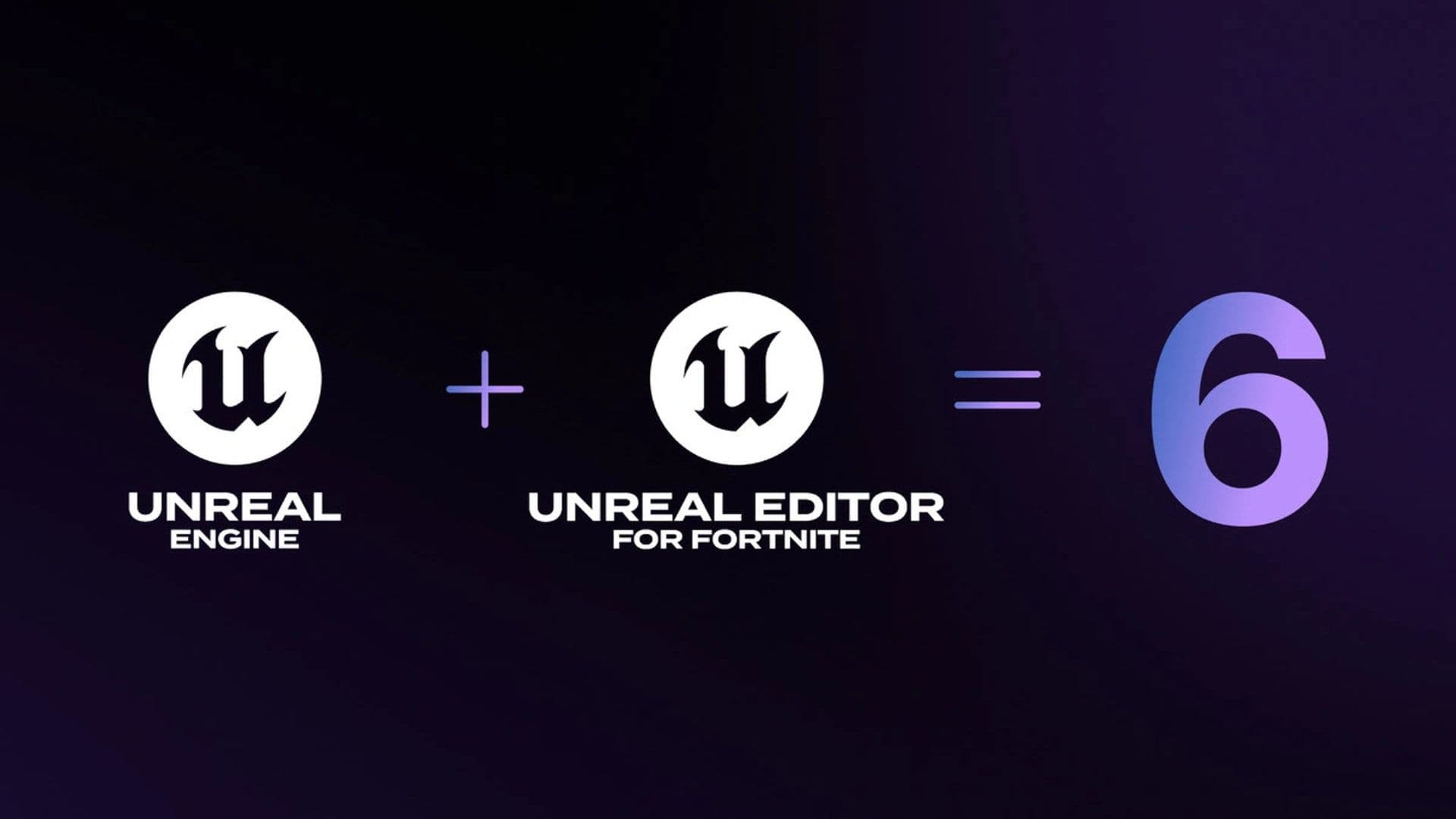
- Epic Games is merging Unreal Engine 5 with UEFN (Unreal Editor for Fortnite) to create Unreal Engine 6
- The new engine introduces Scene Graph, a Verse-based system replacing UE5's gameplay framework
- Early Access is targeted for late 2027, with Rocket League serving as the flagship showcase
Epic Games announced Unreal Engine 6 at its State of Unreal event in Chicago, revealing the next major version will merge UE5 with UEFN, the simplified Fortnite-focused editor. The company targets an Early Access release by late 2027. Tim Sweeney summed up the approach: "UE 5 plus UEFN equals UE 6, plus some more cool stuff on the way."
The merger represents Epic's bet that the accessibility gains from UEFN can benefit all developers, not just Fortnite creators. UEFN strips away much of UE5's complexity. Epic claims users with zero game development experience can build functional Fortnite maps within a day. That usability is now the foundation for UE6's design philosophy.
What does Unreal Engine 6 actually change?
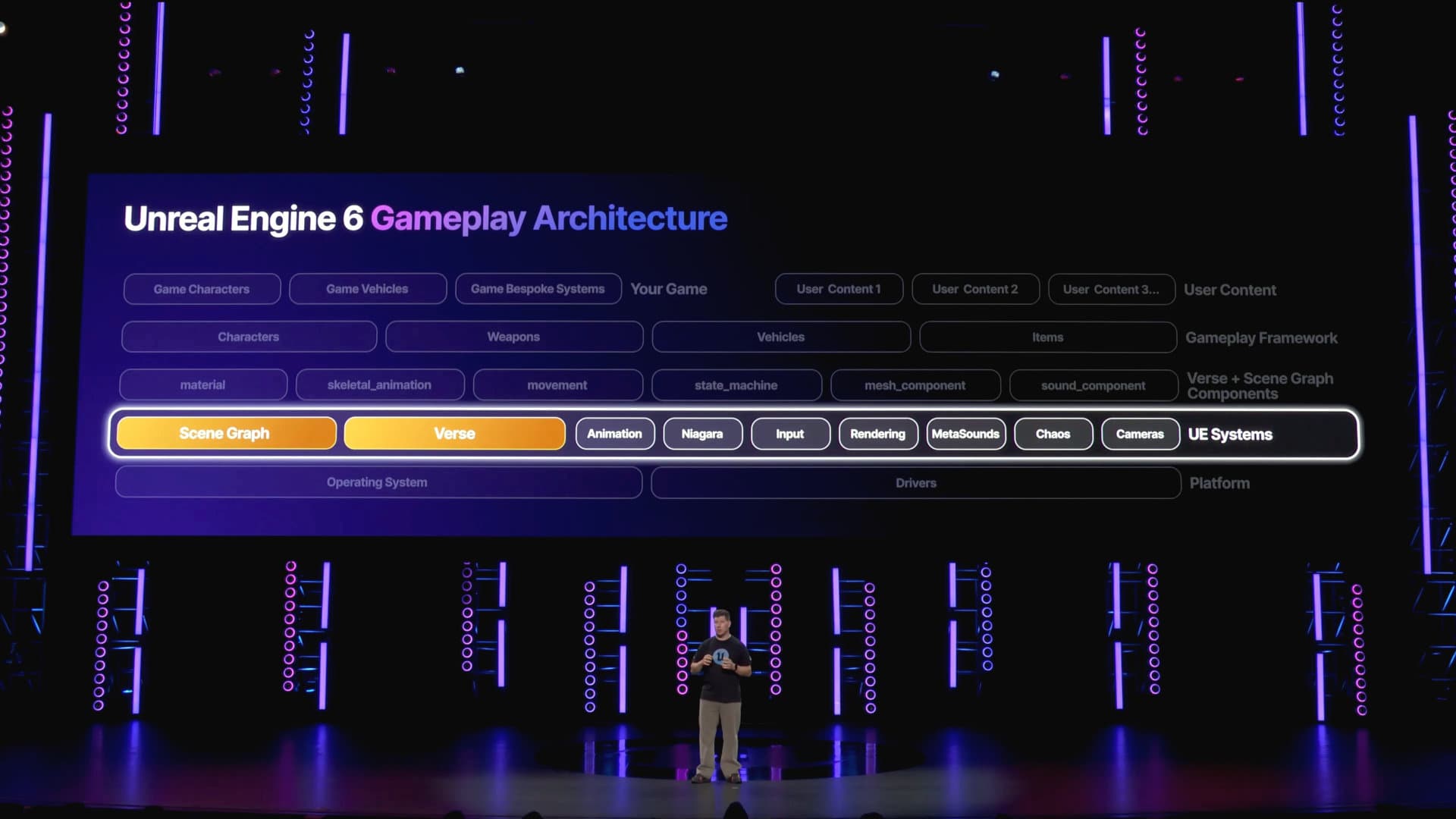
The most significant architectural shift is Scene Graph, a new gameplay framework built entirely on Verse, the scripting language Epic introduced with UEFN. Scene Graph replaces the current gameplay framework in UE5. C++ remains available underneath, but Verse becomes the primary language for gameplay programming.
Epic plans to build what it calls "a full distributed software transactional memory system" for large, interactive live worlds. The practical benefit for developers: game code can be written as if it runs on a single machine, without manually coordinating networking code across the project. For studios building multiplayer experiences, this could eliminate a substantial category of bugs and development time.
The unification also consolidates APIs and code across Epic's various UE add-ons, including MetaHumans. The goal is letting developers create content once and ship it across every platform and store simultaneously, including Fortnite itself.
Open standards and the ecosystem play
Epic announced a move toward open standards for tools, code, and APIs. This won't happen overnight, and the company didn't commit to making every element open. But the stated intent is giving developers an easier path to shipping content across both Epic's ecosystem and external platforms.

Rocket League, not Fortnite, becomes the showcase for UE6. Epic previewed the updated engine running the game at last month's Paris Major event of the RL Championship Series. This makes sense strategically: Rocket League's physics-heavy gameplay and competitive requirements demonstrate capabilities that a battle royale cannot.
AI tooling arrives in UE 5.8 first
Epic isn't waiting for UE6 to introduce AI features. The current UE5.8 release includes an MCP server plugin that lets developers connect any LLM and assign it tasks. The range spans from simple code refactoring to generating full 3D scenes that can then be manually adjusted.
This modular approach, letting studios pick their preferred LLM rather than locking them into a specific provider, gives Epic flexibility as the AI tooling market evolves. It also sidesteps the controversy some developers have over AI-generated content by making it optional and configurable.
Will UE6 be as big a jump as UE5 was?
Epic didn't announce specific rendering improvements like changes to Lumen or Nanite. The jump from UE4 to UE5 was visually dramatic, introducing technologies that fundamentally changed what real-time graphics could achieve. UE6, from what's been shown, focuses more on workflow and architecture than visual fidelity.
For players, this likely means less visible change. For developers, the gains could be substantial. An engine that's genuinely easier to use, with better multiplayer infrastructure and consolidated tooling, addresses pain points that don't show up in screenshots but matter enormously during production.
Timeline and availability
Epic described the release target as "2027-ish" during the keynote. The blog post is slightly more specific: Early Access by the end of 2027. Given Epic's history, expect the stable production release 12 to 18 months after Early Access begins, putting full availability somewhere in 2028 or 2029.
Studios planning their next projects should factor in this timeline. Starting a new game on UE5 today doesn't lock you out of UE6, but the architectural changes around Verse and Scene Graph suggest migration won't be trivial for projects heavily invested in UE5's current gameplay framework.

Logicity's Take
Epic's real play here is platform lock-in disguised as accessibility. By making UEFN's publish-to-Fortnite workflow native to the main engine, Epic ensures that the path of least resistance for indie developers leads directly through its ecosystem. The open standards commitment sounds good but remains vague. Watch what actually ships open versus what stays proprietary.
Frequently Asked Questions
When will Unreal Engine 6 be released?
Epic targets an Early Access release by the end of 2027, with the stable production version likely arriving 12 to 18 months later.
What is Verse in Unreal Engine 6?
Verse is Epic's scripting language, originally created for UEFN. In UE6, it becomes the primary language for gameplay programming, with C++ remaining available underneath.
Will Unreal Engine 6 be free like UE5?
Epic hasn't announced pricing changes. UE5's model remains free to use until a project earns $1 million in revenue, at which point a 5% royalty applies.
Can I migrate my UE5 project to Unreal Engine 6?
Epic hasn't detailed the migration path yet. The architectural changes around Scene Graph and Verse suggest projects heavily using UE5's current gameplay framework may require significant work to migrate.
What is Scene Graph in Unreal Engine 6?
Scene Graph is a new gameplay framework replacing UE5's current system. Built entirely on Verse, it's designed to simplify multiplayer development by letting code run as if on a single machine without manual networking coordination.
Another recent story on the challenges facing game development studios
Need Help Implementing This?
If you're evaluating whether to start new projects on UE5 or wait for UE6, or need guidance on Verse adoption strategy, reach out to our team for a consultation on game engine planning.
Source: PCGamer latest
Manaal Khan
Tech & Innovation Writer
Produced with AI assistance and reviewed by the Logicity editorial team. Learn more in our Editorial Policy.