Key Takeaways
Fake food delivery app among 'dopamine sites' on the rise
- Free apps like FoodNeverComes simulate the ordering experience with no actual delivery, exploiting the brain's anticipation-based dopamine release
- Research on simulated gambling suggests 19-26% of users migrate to real-money behavior within months, raising concerns about gateway effects
- Your fake shopping choices still feed advertisers valuable targeting data, making 'free' apps profitable for developers
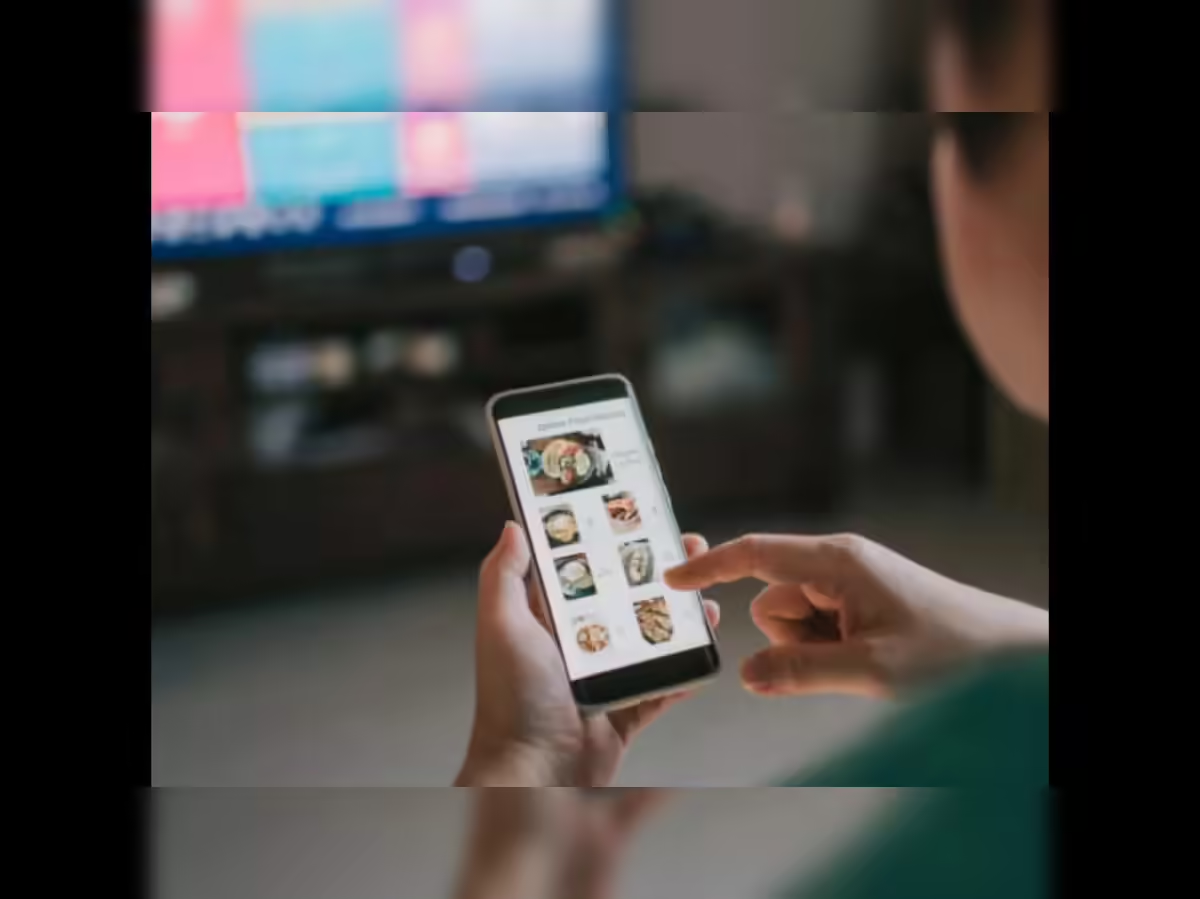
A growing number of people are placing food orders they never expect to receive. FoodNeverComes, an app that mimics food delivery platforms but ships nothing, claims nearly 1 million 'cravings satisfied' to date. The appeal is simple: users get the neurological reward of shopping and tracking a delivery without spending money or accumulating stuff.
These platforms are called dopamine apps, and they exploit a quirk of human psychology. Your brain releases more dopamine during anticipation than during actual reward consumption. Browsing menus, selecting items, confirming an order, watching a tracking screen: each step triggers a small hit. The missing final step, receiving the product, matters less than you'd expect.
How do dopamine apps actually work?
FoodNeverComes replicates a standard delivery interface. You browse restaurants, add dishes to your cart, place an order, and track its 'progress.' The app simulates the experience down to estimated arrival times. But there's no transaction, no charge, and no driver en route.
The concept extends beyond food. Dopamine Shop is a fake e-commerce site where users fill carts with items ranging from a 99-cent pet rock to a $99 million moon. No payment details are requested. Nothing ships. Even fake smoking apps exist: No Smoke Zone (also called Virtual Smoke) markets itself as 'a realistic cigarette simulation app' for people trying to quit or reduce stress.
The trend started in South Korea but is spreading. Dopamine Shop is owned by Fenwick Holdings LLC, a small independent studio in the United States. These apps are free and ad-supported, which explains the business model.
Why does fake ordering feel rewarding?
Dopamine functions as both a neurotransmitter and neuromodulator. It motivates you toward goals and helps your brain learn which actions lead to beneficial outcomes. The ordering process itself, not just the outcome, activates this system.
Users of dopamine apps experience three of the four stages that make real shopping satisfying: anticipation ('I might find something good'), selection ('I control my choices'), and confirmation ('My order is placed!'). Only consumption ('I received it') is missing. For many users, that fourth step contributes less to the overall satisfaction than the first three.
This isn't entirely new behavior. People have long used wish lists and abandoned carts for a similar rush. Pinterest boards of dream homes, travel planning apps for hypothetical vacations: the underlying psychology is identical. Dopamine apps just formalize it into a product.
Do fake shopping apps lead to real spending?
The apps are too new for direct research on gateway effects. But adjacent studies on simulated gambling are worth considering.
A 2014 study followed 409 people who played social casino games but had never gambled online with real money. Six months later, about 26% had migrated to real online gambling. A 2016 study of 521 social casino users found 19% reported gambling for real money as a direct result of social casino gaming. A 2018 study of 1,178 German teenagers found that engagement with simulated gambling predicted real-money gambling one year later.
Dopamine apps involve gamification elements similar to social casino games. Whether simulated ordering will push users toward actual spending remains an open question, but the parallel isn't comforting.
Your fake choices still feed advertisers
These apps cost nothing to use, but they aren't charities. Free apps monetize through advertising, and your browsing behavior creates targeting data. The Mexican food you 'ordered' on FoodNeverComes, the luxury watch you carted on Dopamine Shop: these choices reveal preferences that advertisers will pay to access.
The old saying applies: there's no such thing as a free lunch. Your simulated orders generate value for the platform, even if they generate no cost for you. The trade-off is your data.
Logicity's Take
For product teams, dopamine apps are a case study in unbundling value. These apps prove users will engage with an experience stripped of its primary function (delivery) if the psychological reward remains intact. The business question is whether this model scales beyond novelty. Ad-supported apps live or die on retention, and simulated experiences may lose their appeal once the novelty fades. Compare this to how gaming apps retain users: progression systems, social features, variable rewards. Dopamine apps currently lack these mechanics. Whether they evolve toward gamification or remain a quirky niche depends on whether developers can sustain engagement past the first few sessions.
Should you worry about using these apps?
For most users, dopamine apps are probably harmless. They offer a cheap thrill without financial consequences. But the gambling research suggests caution for anyone with impulsive tendencies around shopping or spending. If you struggle with compulsive buying, simulating the behavior may reinforce the neural pathways that make real spending hard to resist.
The advertising angle is harder to avoid. If you use these apps, assume your choices are being logged and sold. Privacy-conscious users should treat dopamine apps like any other free platform: you're the product.
Frequently Asked Questions
What is a dopamine app?
A dopamine app simulates an experience like shopping or food delivery without completing the transaction. Users browse, select, and confirm orders, but nothing is purchased or delivered. The apps are free and ad-supported.
How does FoodNeverComes make money?
The app is ad-supported. Users see advertisements, and their browsing data generates targeting information that advertisers pay to access.
Are dopamine apps safe to use?
For most people, yes. But research on simulated gambling suggests that practicing a behavior, even without real consequences, can increase the likelihood of real-world engagement later. Users with compulsive shopping tendencies should be cautious.
Why do people enjoy ordering food that never arrives?
The brain releases dopamine during anticipation and selection, not just consumption. The ordering process itself provides most of the psychological reward, making the actual delivery less critical to satisfaction.
Where did dopamine apps originate?
The trend started in South Korea but has spread internationally. Some dopamine apps, like Dopamine Shop, are now developed by U.S. companies.
Need Help Implementing This?
Understanding user psychology is critical for product design. If you're building engagement features or studying user retention, Logicity can connect you with experts who specialize in behavioral product design. Reach out through our contact page.
Source: Tech-Economic Times / ET
Huma Shazia
Senior AI & Tech Writer
Produced with AI assistance and reviewed by the Logicity editorial team. Learn more in our Editorial Policy.