Key Takeaways
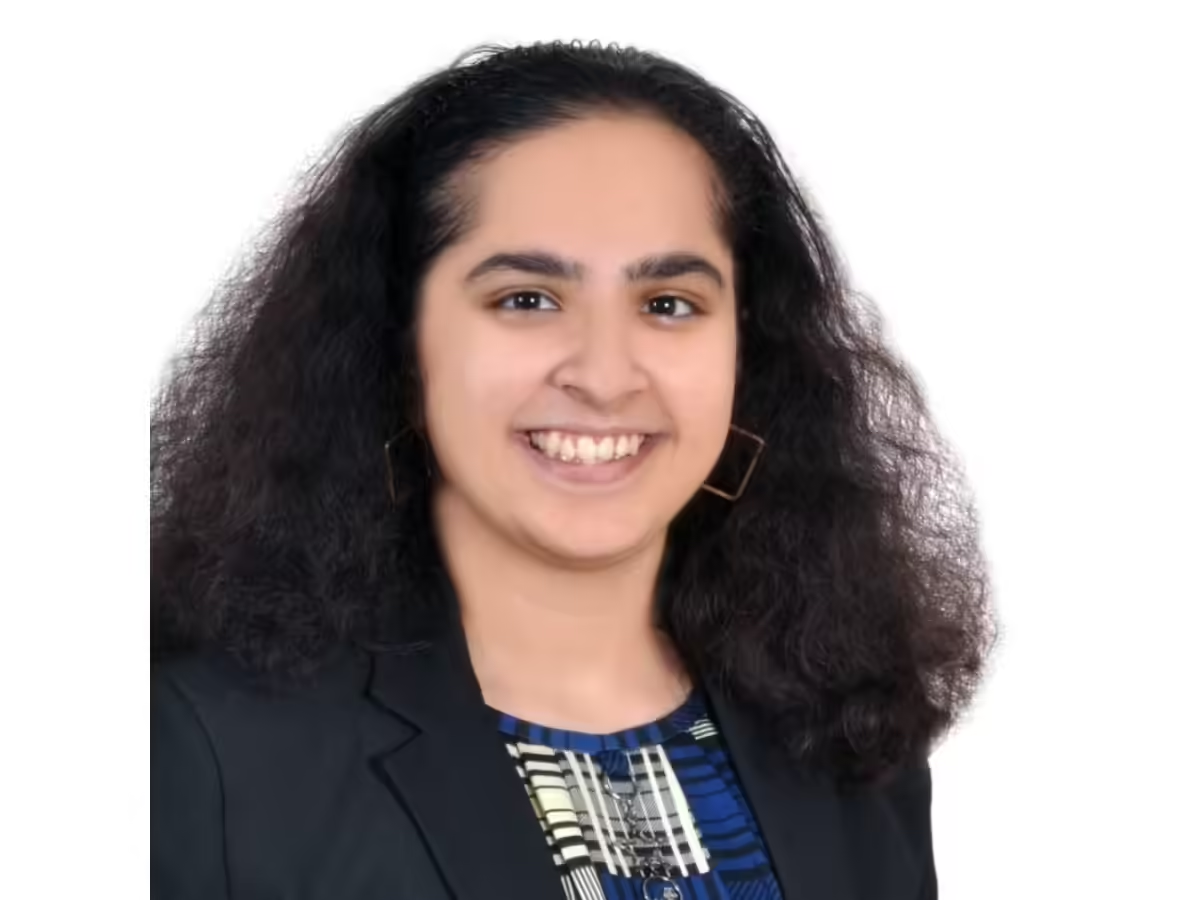
- BioCompute is shutting down Bengaluru operations and moving to San Francisco to build its first DNA storage chips
- Founder Anagha Rajesh says India's ecosystem isn't ready for high-risk frontier technology bets
- The move reflects a broader trend of 100+ Indian AI and deep-tech founders relocating to the US
BioCompute, a Bengaluru startup working on DNA-based data storage, is relocating to San Francisco and winding down its India operations. Founder Anagha Rajesh announced the move on Sunday, citing a need for capital, specialized talent, and customers willing to bet on unproven frontier technology.
The company, founded in 2024, converts digital data into synthetic DNA sequences. It's an approach that promises storage density far beyond conventional hard drives. One gram of DNA can theoretically hold 215 petabytes. The tradeoff: the technology is expensive, experimental, and years from commercial viability.
BioCompute raised over Rs 5 crore from Nikhil Kamath's WTFfund, Grad Capital, and 1517 Fund. The team built an end-to-end prototype and claims to have developed a low-cost method for encoding data into DNA. Now they're moving to build their first DNA storage chips, a phase requiring deeper resources than India can offer.
Why is BioCompute leaving India?
Rajesh's explanation is blunt. The problem isn't talent. It's ecosystem readiness.
“India often likes to play safe, looking at what has been built in the West and adapting it to our socio-cultural and economic landscape. But what we need to build a new age data storage hardware company, and take on Goliaths like IBM, is an ecosystem that is built on abundance and takes high-risk-high-reward bets.”
— Anagha Rajesh, Founder, BioCompute
She acknowledged India's recent push into deep tech, including the Rs 1 lakh crore RDI fund launched last November. But for a company attempting to compete with IBM on frontier hardware, government financing isn't enough. BioCompute needs venture capitalists who understand biotechnology, enterprise customers willing to pilot experimental systems, and a local talent pool with specific DNA synthesis expertise.
San Francisco offers all three. The Bay Area hosts Microsoft's DNA storage research partnership with the University of Washington, multiple biotech clusters, and investors who've already written checks for similar moonshots.
Part of a larger deep-tech exodus
BioCompute isn't an outlier. According to a January report from ET, more than 100 Indian AI founders have either moved or are planning to move to the US. Startups including Composio, Meetstream.ai, Smallest.ai, Beatoven.ai, and GetCrux have already shifted their headquarters.
The pattern is consistent: Indian founders build prototypes locally, taking advantage of lower costs and strong engineering talent. When they need growth capital, enterprise pilots, or specialized expertise, they relocate to where the buyers and backers are.
This creates an awkward dynamic. India produces the founders and funds early R&D. The US captures the scaling phase, the jobs, and the tax revenue.
What does DNA data storage actually do?
The technology encodes digital information into the four nucleotide bases of synthetic DNA: adenine, thymine, guanine, and cytosine. Each base represents data the way 1s and 0s do in binary storage. The density advantage is staggering. The entire internet could theoretically fit in a container the size of a shoebox.
DNA also lasts. Properly stored, it can preserve data for over 10,000 years. Traditional hard drives fail within a decade. For archival storage, where data is written once and accessed rarely, DNA could eventually replace tape libraries and cold storage facilities.
The catch is cost. Synthesizing and sequencing DNA remains expensive enough that the technology only makes sense for specialized applications. BioCompute's claim of developing a low-cost encoding method would be a significant step forward if it holds up in production.
What happens to the Bengaluru team?
The relocation means winding down BioCompute's Bengaluru operations entirely. The local team will depart. Rajesh didn't specify whether employees would receive offers to relocate or what severance arrangements, if any, were in place.
For a two-year-old startup that raised Rs 5 crore, the team is likely small. But the departure still represents lost institutional knowledge and trained researchers who now enter the Indian job market rather than contributing to a domestic deep-tech company.
Can India retain frontier startups?
The RDI fund addresses financing, but Rajesh's critique suggests capital alone won't solve the problem. Indian investors, she argues, prefer adapting proven Western models to backing genuinely novel technology. That's a cultural and institutional gap, not a funding gap.
India has produced successful deep-tech companies before. But they typically serve domestic markets or operate in sectors where India has existing expertise, such as space and defense. Frontier biotechnology hardware aimed at global enterprise customers is a different proposition.
Building that ecosystem requires more than government grants. It requires a generation of investors who've made and lost money on moonshots, enterprise buyers willing to pilot immature technology, and a regulatory environment that doesn't punish failure. That takes decades.
Another frontier technology sector attracting massive venture investment
Frequently Asked Questions
What is BioCompute and what does it do?
BioCompute is a startup developing DNA-based data storage technology. It converts digital data into synthetic DNA sequences, enabling extremely dense, long-lasting storage. The company was founded in Bengaluru in 2024 and is now relocating to San Francisco.
Why is BioCompute moving from India to San Francisco?
Founder Anagha Rajesh says India's deep-tech ecosystem isn't ready for high-risk frontier technology. The company needs access to specialized venture capital, biotech talent, and enterprise customers willing to pilot experimental products.
How much funding has BioCompute raised?
BioCompute has raised over Rs 5 crore from investors including Nikhil Kamath's WTFfund, Grad Capital, and 1517 Fund.
What is DNA data storage and why does it matter?
DNA data storage encodes digital information into synthetic DNA. One gram of DNA can theoretically store 215 petabytes of data and last over 10,000 years. This could address growing data storage demands while reducing energy consumption compared to traditional data centers.
Are other Indian startups also relocating to the US?
Yes. Over 100 Indian AI and deep-tech founders have either moved or are planning to move to the US, according to reports. Companies like Composio, Smallest.ai, and Beatoven.ai have already shifted their headquarters.
Logicity's Take
BioCompute's departure exposes a structural problem India hasn't solved: the country excels at producing technical talent but struggles to retain companies building genuinely novel hardware. The RDI fund addresses capital, but Rajesh's critique points to something harder to fix. Indian investors and customers remain risk-averse on unproven technology. Until domestic enterprise buyers start piloting moonshot products, founders will keep relocating to where the first customers are.
Need Help Implementing This?
Logicity covers emerging technology for founders and CTOs navigating frontier tech decisions. Subscribe to our newsletter for weekly analysis on deep tech, AI infrastructure, and enterprise technology trends shaping 2025 and beyond.
Source: Tech-Economic Times / ET
Manaal Khan
Tech & Innovation Writer
Produced with AI assistance and reviewed by the Logicity editorial team. Learn more in our Editorial Policy.




