Key Takeaways
- Union electricians are debating whether data center work is ethical amid the AI infrastructure boom
- Some workers refuse jobs at data centers citing concerns about AI misuse and community harm
- Others see data center projects as rare paths to management roles and higher pay
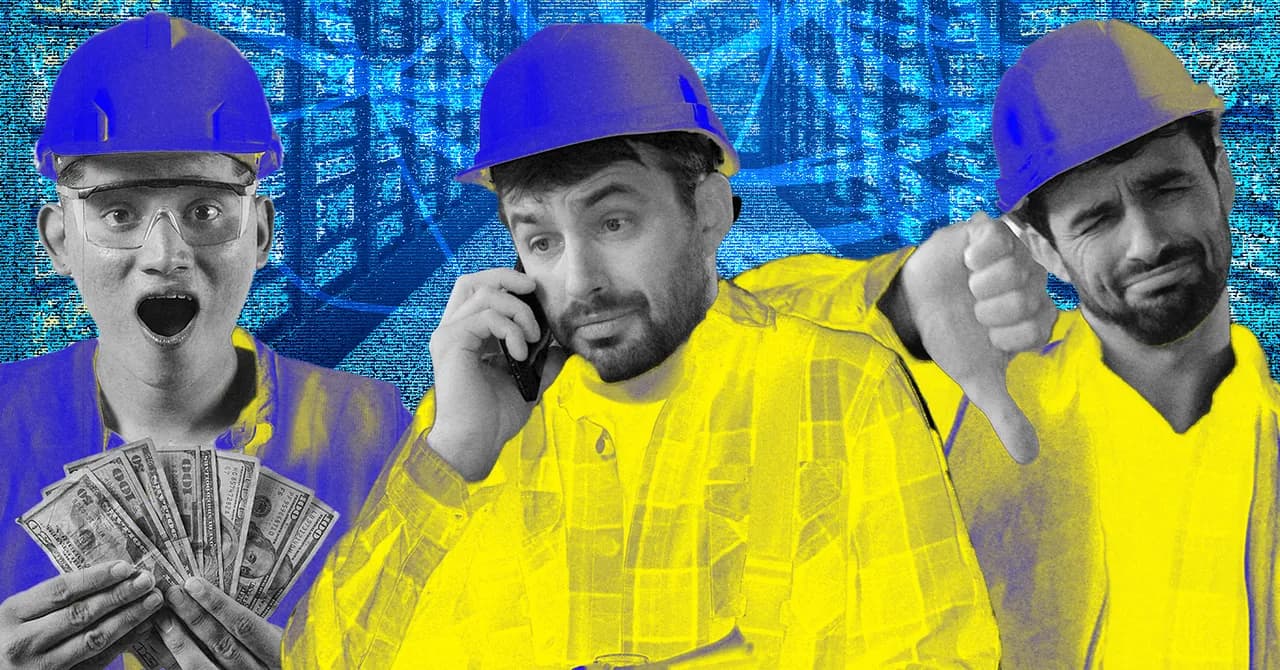
The billions pouring into American data centers have created a strange split among the electricians wiring them. Some view the work as a golden ticket: steady pay, fast promotions, front-row seats to the AI buildout. Others won't touch it. They see data center construction as complicity in environmental harm, corporate greed, or worse. The debate is playing out on Reddit, in union halls, and at job sites across the country.

The International Brotherhood of Electrical Workers has positioned itself firmly in the AI camp. Its March 2025 "Data Center Principles" declare that union labor is "essential to the future of AI." Tech giants are responding. Meta announced a skilled trades academy. Google committed $50 million to train workers for these projects. The demand for qualified electricians has never been higher.
But growth alone doesn't settle the moral question. On r/electricians, a subreddit with about half a million monthly visitors, threads now regularly debate whether wiring a data center makes you part of the problem.
Why some electricians refuse data center work
Ryan, an IBEW electrician who spoke to Wired, says he's never worked on a data center and probably never will. His concerns run political. He believes governments are drifting toward authoritarianism and doesn't trust the corporations building AI infrastructure. Executives like Elon Musk and Alex Karp are "suspicious at best," he says.
Ryan also worries the AI boom is a bubble. He sees "four or five AI companies just exchanging money with each other in a circle." As a union member, he has agency. He can decline jobs. His branch occasionally offers small data center gigs, which he avoids. Even a long stretch without work wouldn't change his mind. "I'd find it really tough to want to take that job call," he told Wired.
His position isn't purely about AI. He'd also turn down work at private prisons. But he acknowledges reality: "If they're going to get built, I'd rather they go union."
The case for taking the work
A Midwest-based electrician tells a different story. He specifically sought out data center work and accepted a pay cut to get hired. Within months, he was promoted to management. He's now angling for an engineering role.
"I did just see it as, 'Well, this is most likely going to be a major part of our future. And if you can't beat them, join them," he said. He has reservations, particularly about scams proliferating through AI tools and what he calls "corporate greed." But he views data center work as a rare ladder in an industry where upward mobility can be hard to find.
The social cost has surprised him. As a single man trying to date, he no longer tells people what he does. "The conversation shifts or gets shut down altogether" when data centers come up. He's been told directly how terrible it is that he's "contributing to something like that." That's usually the end of the conversation.
The argument that all work is compromised
Dante, an electrician who has worked on data centers for Intel, HP, and Amazon, takes a more fatalistic view. Nobody judges him, he says, because "we're almost always working for the worst possible people in the end, but we all need a paycheck because of the unlivable world that those same rich people have created for us."
Whether it's a lumber mill, a Dollar General warehouse, or an Amazon facility, he sees the work as "essentially the same kind of work, all for already extremely rich pieces of shit to use for the exploitation of the working class so they can get more rich." Data centers aren't special in his calculus. They're just another employer.
Jesse, another IBEW member, focuses on community impact. He thinks it's "ridiculous" if building a data center significantly harms local residents. But he believes those concerns should be directed at state and local governments, not at individual workers who need the income.
What this means for AI infrastructure
The talent war for electricians is real. Data center construction timelines are aggressive, and the projects are massive. Companies are competing for the best workers, which tends to drive wages up. For workers willing to take the jobs, the economics favor them.
But the ethical debate introduces friction. If a meaningful slice of skilled workers opts out, hiring gets harder and costs rise. The IBEW's public embrace of data center work suggests union leadership sees more benefit than risk. Individual members, as these interviews show, are less unified.
The underlying tension isn't going away. As AI infrastructure expands and communities push back, the people building it will keep facing the same question: does the paycheck justify the product?
Logicity's Take
This debate matters for anyone planning AI infrastructure. Labor constraints are a real bottleneck. If ethical objections thin the pool of willing workers, project timelines stretch and costs climb. Companies investing in data centers should track not just material costs and power availability, but workforce sentiment. Training programs like Meta's and Google's address skills gaps, but they don't address values gaps. The workers who opt out aren't unqualified. They're making a choice.
Frequently Asked Questions
How much do electricians earn on data center projects?
Data center work often pays a 7-15% wage premium over traditional commercial electrical work, though exact figures vary by region and union contract.
Can IBEW electricians refuse specific job assignments?
Yes. IBEW members generally have some agency to accept or decline job calls from their local union hall, though refusing too many jobs can affect their standing.
Why are tech companies investing in electrician training?
The data center buildout has created a skilled labor shortage. Google's $50 million training commitment and Meta's skilled trades academy aim to expand the talent pool.
What are the main ethical concerns about data center work?
Workers cite AI misuse, environmental impact, community harm from power and water consumption, and general distrust of tech corporations as reasons to avoid the work.
Need Help Implementing This?
If you're building AI infrastructure and navigating labor or community challenges, Logicity can connect you with experts who've done it. Reach out to our team for introductions.
Source: Feed: Artificial Intelligence Latest / Caroline Haskins
Manaal Khan
Tech & Innovation Writer
Produced with AI assistance and reviewed by the Logicity editorial team. Learn more in our Editorial Policy.