CXMT, China's largest chipmaker by market value, is in talks with Beijing officials to build a second 12-inch DRAM plant in the city's Yizhuang tech zone, sources told Reuters. The company is seeking at least 60 million yuan ($8.9 million) in government support for the facility, which would expand its Beijing footprint beyond the existing fab it operates in the same district.
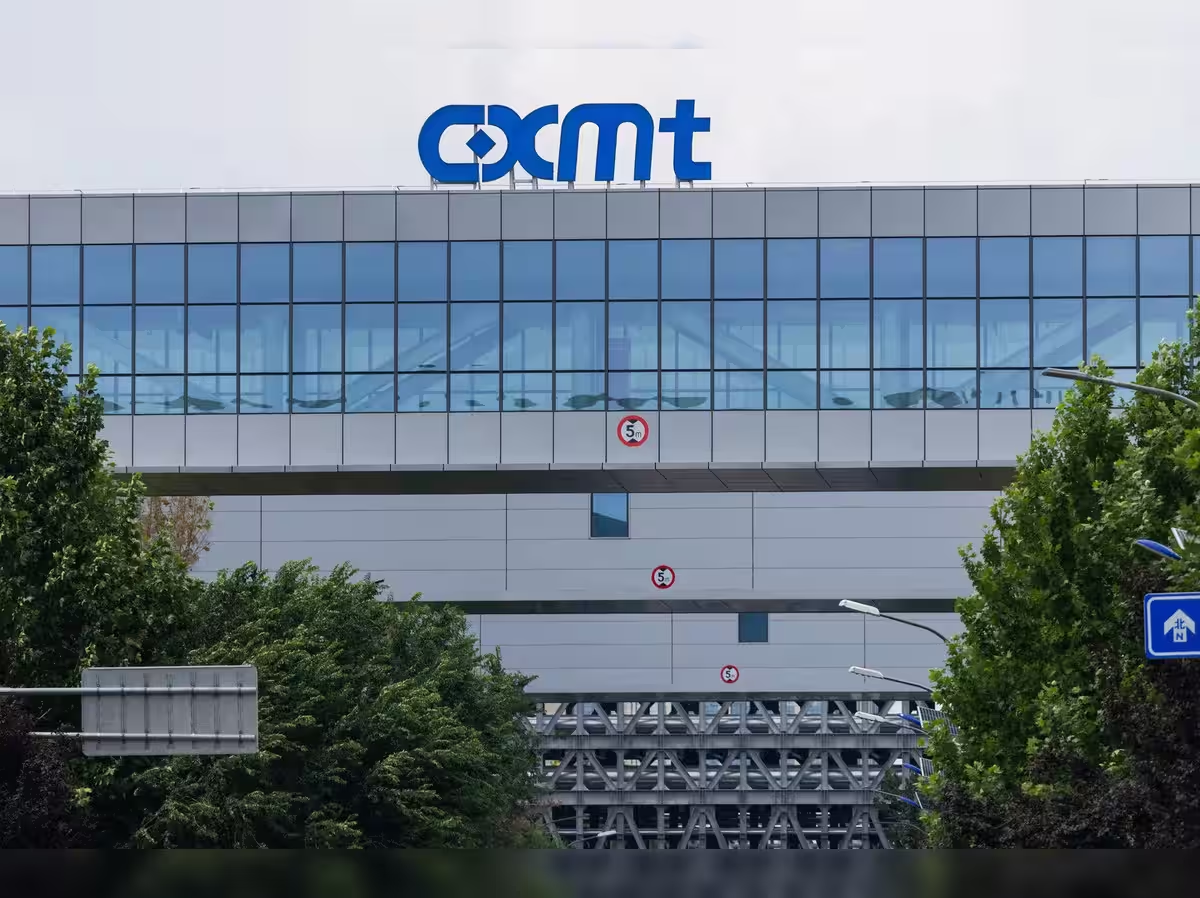
The negotiations come weeks after CXMT raised $8.6 billion in the largest mainland Chinese semiconductor IPO on record. Its shares have gained 13% since listing. The company now appears to be channeling that capital into an aggressive expansion across multiple cities, with plants already under construction in Shanghai and Hefei.
What CXMT is building and where
CXMT currently operates three 12-inch DRAM fabs: two in Hefei and one in Beijing. Each produces roughly 100,000 wafers per month. The Shanghai and Hefei expansions Reuters previously reported could double total capacity to more than 600,000 wafers per month when fully operational.
The proposed second Beijing plant would be built in Yizhuang, about 20 km southeast of central Beijing. The Beijing Economic-Technological Development Area, which governs Yizhuang, hosts other chip industry players including contract manufacturer SMIC, equipment maker Naura Technology, and Xiaomi. The zone is also positioning itself as a hub for robotics and AI.
Planned capacity and total investment for the new fab remain unclear. For context, building a leading-edge DRAM facility typically costs more than $10 billion. The 60 million yuan figure CXMT is seeking represents a fraction of that, suggesting the company expects multiple funding sources. State-owned tech companies have expressed interest in participating, though talks are early-stage and the funding structure could change.
Why local governments are competing for CXMT
The expansion reflects intensifying competition among Chinese local governments to host CXMT facilities. Beijing and Shanghai have both provided funding and support to the company, seeking a share of the economic and strategic benefits as China pushes for semiconductor self-sufficiency.
CXMT's rise has been closely tied to what's called the "Hefei model," under which Anhui's capital city has used state funding to nurture strategic technology companies. The chipmaker, though now the world's fourth-largest DRAM producer, remains far smaller than Samsung Electronics, SK Hynix, and Micron. Those three companies held a combined 90% of global DRAM market share in Q1 2026, according to Counterpoint Research.
Within China, however, CXMT's growing dominance has given it pricing power. Reuters reported last month that the company has been able to raise prices for customers including Huawei.
The AI demand driving this expansion
CXMT is expanding during what the company sees as a memory-chip upcycle. Demand from AI infrastructure, data centers, and consumer electronics is driving a global chip shortage. For China specifically, the company has become a key pillar of Beijing's drive to narrow the technology gap with the United States amid ongoing tech rivalry between the two countries.
Neither CXMT nor the Beijing municipal government responded to Reuters' requests for comment. The Shanghai municipal government also did not respond.
Logicity's Take
CXMT's multi-city expansion strategy suggests it's playing local governments against each other for better terms. The 60 million yuan ask is notably modest for a fab project, which raises the question of what other commitments (land, utilities, workforce support) Beijing might be offering. For companies buying DRAM from Chinese suppliers, CXMT's domestic pricing power may grow as capacity expands, but export restrictions remain a wild card for any customer outside China.
What happens next
The Beijing talks are at an early stage. Any finalized deal would add to CXMT's expansion pipeline that already includes Shanghai and Hefei facilities. The company's post-IPO capital and China's push for chip independence suggest more announcements could follow.
Whether CXMT can meaningfully close the gap with the top three DRAM makers is a separate question. The capacity numbers are impressive for a Chinese player, but Samsung, SK Hynix, and Micron each operate on a different scale entirely. The real test is whether China's domestic demand alone can sustain CXMT's growth if export markets remain constrained.
Need Help Implementing This?
Logicity helps technology leaders navigate semiconductor supply chain decisions. Reach out if you're evaluating memory chip sourcing strategies or tracking China's chip industry developments.
Source: Tech-Economic Times / ET
Huma Shazia
Senior AI & Tech Writer
Produced with AI assistance and reviewed by the Logicity editorial team. Learn more in our Editorial Policy.