Key Takeaways
- The nice!nano was designed in a single weekend using KiCad and Nordic's documentation
- Over 50,000 units sold, generating $1 million+ in revenue for a one-person operation
- The board became the hardware standard for the ZMK wireless keyboard firmware ecosystem
Nick Winans was a college freshman with a problem. His DIY wireless keyboard, built with an Adafruit Bluefruit LE microcontroller, had terrible typing latency and burned through battery in days. He knew wireless tech could do better. Logitech and Apple proved that. So over a single weekend in his dorm room, he designed something new.
That weekend project became the nice!nano, a wireless microcontroller that has now sold over 50,000 units and generated more than $1 million in revenue. The board transformed the DIY mechanical keyboard scene by making wireless builds accessible to hobbyists who had been stuck with wired setups for years.
The Problem With Existing Options
Before Winans started designing, he spent two months researching the wireless microcontroller space. He learned that Nordic chips were the hobbyist's choice for wireless projects, and the Pro Micro format was the standard for DIY keyboards. Three boards were trying to bridge that gap: the BlueMicro, the nRFMicro, and the BLE-Micro-Pro.
| Board | Retail Cost | Pro Micro Compatible | Open Source |
|---|---|---|---|
| BlueMicro | N/A | No (too large) | Yes |
| nRFMicro | N/A | Yes | Yes |
| BLE-Micro-Pro | ~$40 | Yes | No |
| nice!nano | ~$25 | Yes | Yes |
The BlueMicro was too big to fit most keyboard builds. The BLE-Micro-Pro cost around $40, was closed-source, and only sold in Japan. The nRFMicro came closest to what Winans wanted, but when he tried to modify it for his needs, he realized his goals were too ambitious for a fork. He started from scratch.
A Weekend of Obsessive Focus
The entire nice!nano design happened over one weekend. Winans barely left his desk, eating maybe three meals from the dining hall. His tools were KiCad for PCB design, Nordic's Infocenter documentation, the nRFMicro wiki, and Adafruit's nRF52840 Feather schematic.
“The nice!nano powers tens of thousands of keyboards, has inspired many, and changed my life.”
— Nick Winans, Founder of Nice Keyboards
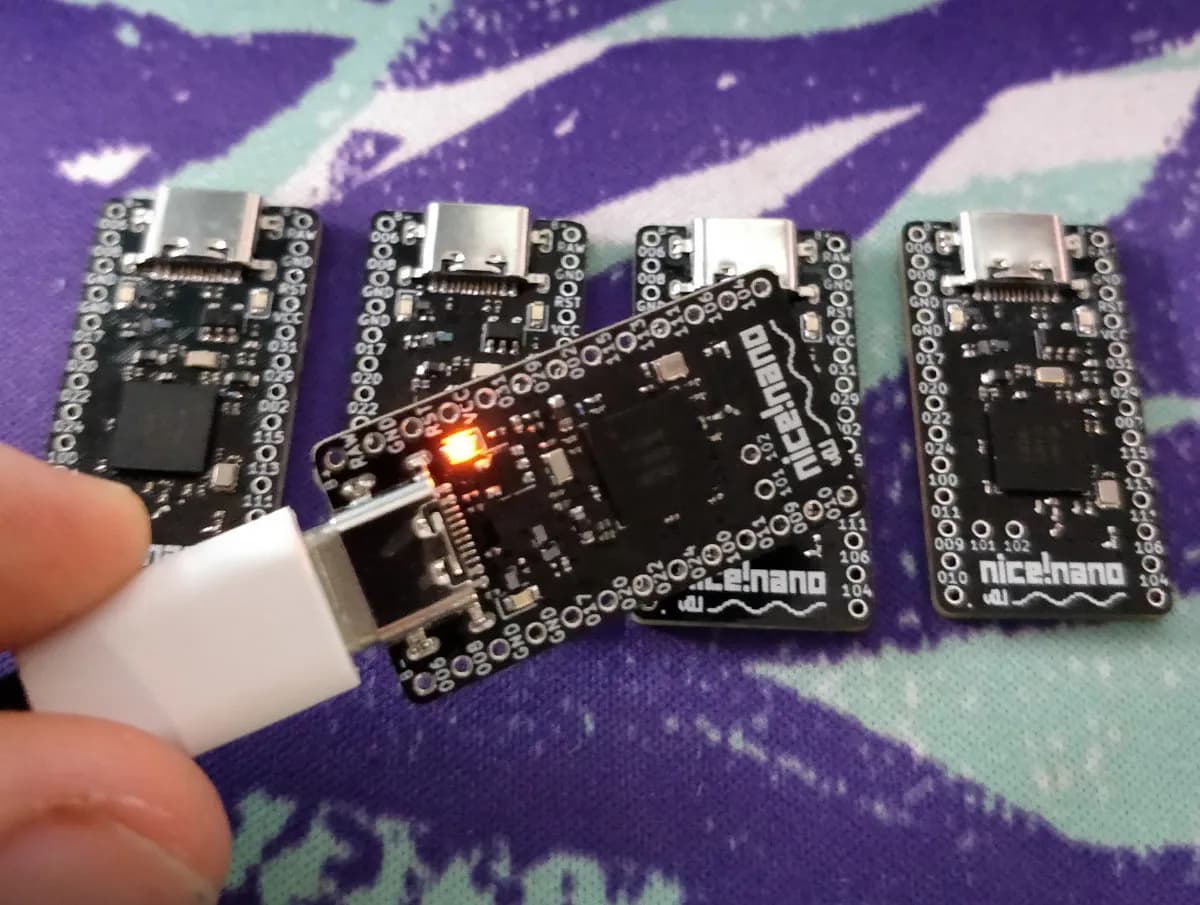
He put together the schematic and bill of materials, laid out the PCB, routed the connections, re-routed them, and came out the other side with the thinnest Pro Micro-compatible nRF52840 board anyone had made. The following week, he created branding and found a PCB assembler. The name combined his username "Nicell" with the metric naming convention of the Pro Micro. The lowercase pixel font logo was designed to sit atop the antenna.
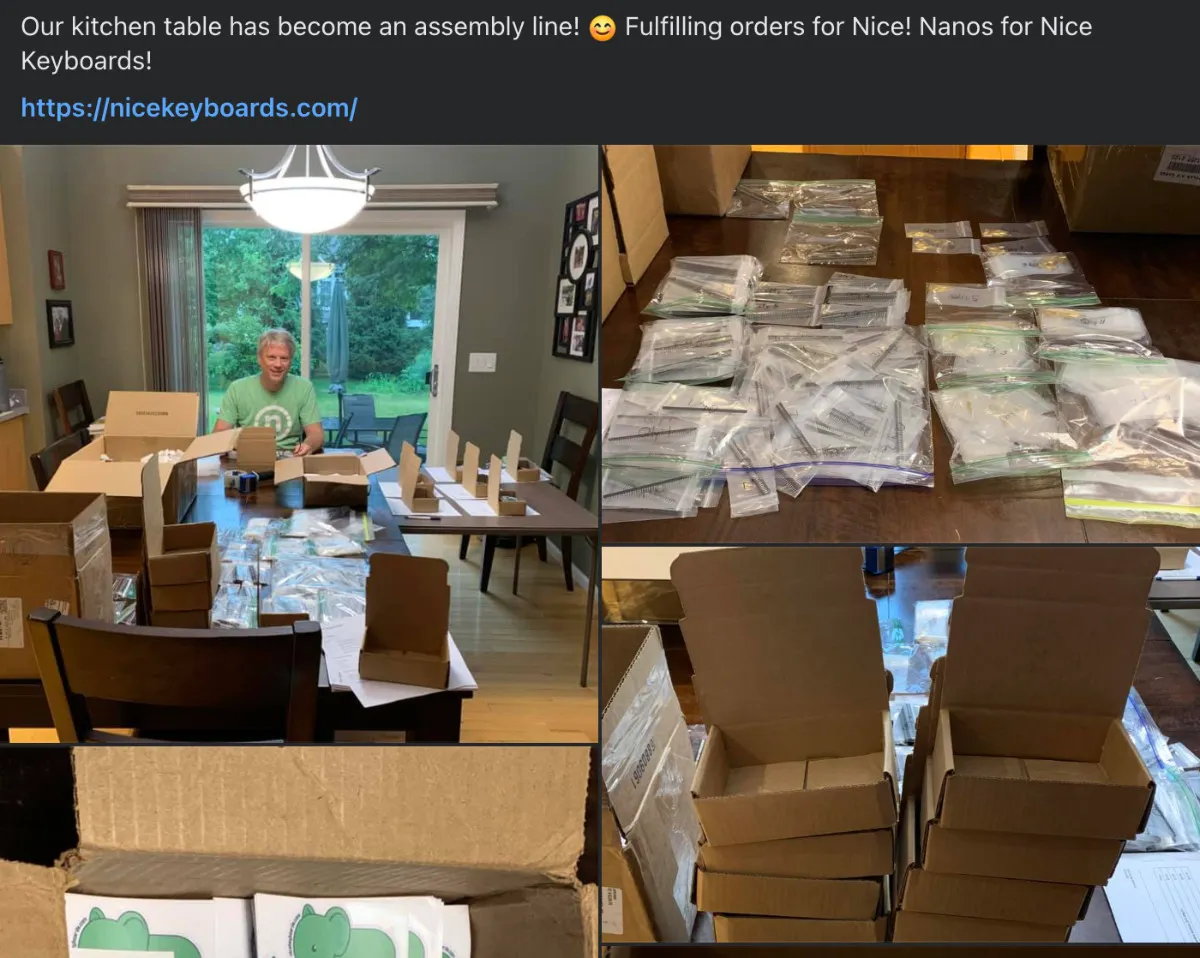
The cheapest quote for five assembled boards was $100. That was a significant bet on an untested design. Winans spent days double-checking everything before paying. A few weeks later, the boards arrived at his dorm room door.
Why the Timing Worked
The nice!nano arrived at exactly the right moment. The DIY mechanical keyboard community had been growing for years, but builders were stuck with wired boards. Companies like Drop and KBDFans had proven there was serious money in custom keyboards. What was missing was a simple path to wireless.
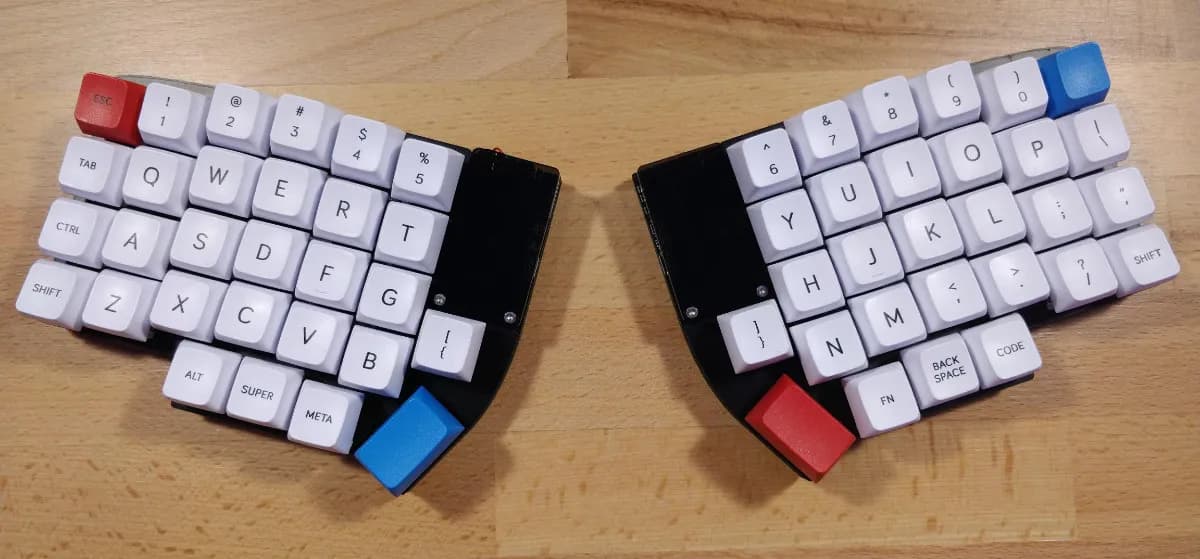
The board became the hardware standard for ZMK, an open-source keyboard firmware built specifically for wireless builds. With the nice!nano and ZMK, hobbyists could finally build split wireless keyboards, portable boards, and low-profile designs without sacrificing battery life or adding latency.
Today, more than 1,000 custom keyboard designs support the nice!nano natively. The board didn't just fill a gap in the market. It created a new category of DIY wireless keyboards that didn't exist before.
The Clone Problem
Success brought competition. Since the nice!nano is open-source hardware, manufacturers on AliExpress and Taobao quickly produced clones at lower prices. This is a common challenge for open-source hardware creators. You share your designs to help the community, and the community sometimes undercuts you.
Hacker News commenters called the nice!nano a "textbook case" of bootstrapping, but also noted the difficulty of sustaining an open-source hardware business. The community generally supports buying from the original creator, but not everyone checks where their board comes from.
What Made This Work
Winans didn't have venture funding, a team, or even a business plan. He had a problem he wanted to solve, deep knowledge of the space, and the skills to execute. The mechanical keyboard community is small but intensely passionate. They spend hundreds of dollars on keycaps and switches. They notice when someone solves a real problem.
- Deep niche knowledge: Two months of research before designing anything
- Pro Micro compatibility: Worked with existing keyboard designs, not against them
- Open source: Built trust and allowed community contributions
- Right timing: ZMK firmware was ready for better hardware
The $100 bet on five prototype boards turned into a million-dollar product. Not because Winans had some secret, but because he understood exactly what a specific group of people needed and built precisely that.
Logicity's Take
Frequently Asked Questions
What is the nice!nano?
The nice!nano is a wireless microcontroller board that's compatible with the Pro Micro format. It uses Nordic's nRF52840 chip to add Bluetooth to DIY mechanical keyboards with low latency and long battery life.
How much does a nice!nano cost?
The nice!nano typically sells for around $25, making it more affordable than alternatives like the BLE-Micro-Pro while offering better form factor compatibility than the BlueMicro.
Is the nice!nano open source?
Yes. The nice!nano hardware design is open source, which has allowed community contributions but also led to clone products from manufacturers in China.
What firmware does the nice!nano use?
The nice!nano is commonly paired with ZMK, an open-source keyboard firmware built specifically for wireless builds. This combination has become the standard for DIY wireless keyboards.
How many nice!nano units have been sold?
Over 50,000 nice!nano boards have been sold since the product launched, generating more than $1 million in total revenue.
Another look at how niche technical communities can drive significant business outcomes
Need Help Implementing This?
Source: Hacker News: Best
Huma Shazia
Senior AI & Tech Writer
Produced with AI assistance and reviewed by the Logicity editorial team. Learn more in our Editorial Policy.




