Key Takeaways
- Claude Design eliminates the design bottleneck for pitch decks, prototypes, and marketing materials
- Figma stock dropped 7% on announcement day, signaling market disruption
- Teams can maintain brand consistency by feeding Claude existing design systems and codebases
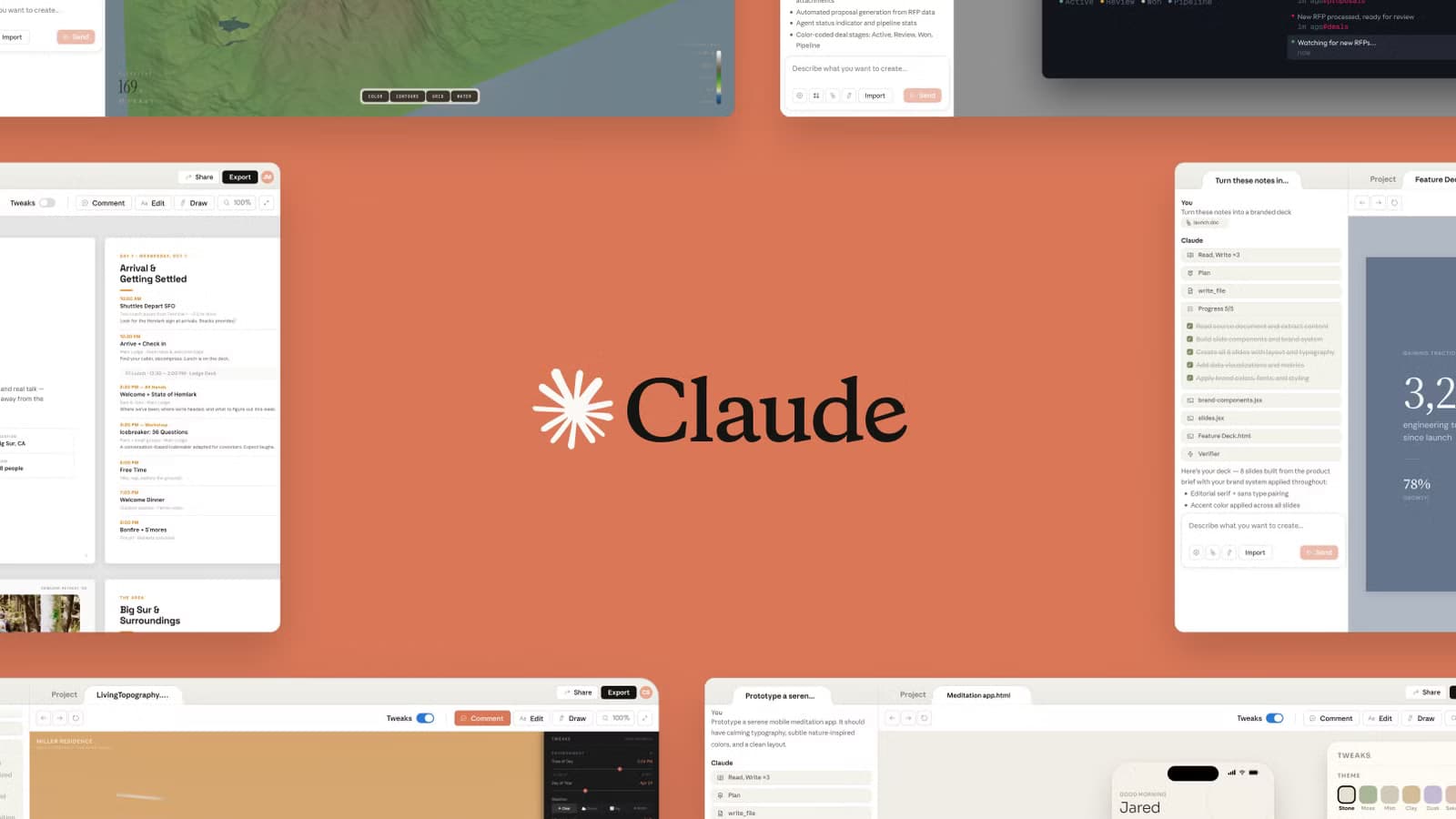
According to [MakeUseOf](https://www.makeuseof.com/claude-can-now-design-your-slide-decks-and-a-whole-lot-more/), Anthropic has released Claude Design, a powerful new tool that creates polished visual work including designs, prototypes, slides, and marketing materials from simple text prompts.
Here's what your board doesn't care about: how AI generates vector graphics. Here's what they do care about: your design team's three-week backlog and the $15,000 monthly agency retainer. Claude Design, launched April 17, 2026, aims to solve both problems by letting anyone create professional-grade visual work through conversation.
That stock movement tells you everything about market expectations. When Anthropic's Chief Product Officer Mike Krieger (who resigned from Figma's board days before this launch) introduces a tool that can generate UI mockups, pitch decks, and marketing collateral from text prompts, the design software industry takes notice.
What Can Claude Design Actually Do for Your Business?
Forget the technical specs. Let's talk deliverables. Claude Design handles the visual work that currently costs you time, money, or both.
- Pitch decks and investor presentations: Go from outline to polished slides in minutes
- Product prototypes: Create clickable mockups for stakeholder feedback before writing code
- Marketing materials: Landing pages, social assets, one-pagers with brand consistency
- Wireframes and UI concepts: Explore multiple design directions simultaneously
“Claude Design follows a natural creative flow. Your brand, built in.”
— Mike Krieger, Chief Product Officer at Anthropic
The "brand built in" part matters most for enterprise teams. You can feed Claude your existing design system, style guides, or even a codebase. It pulls design elements automatically, so your marketing intern's social graphics match what your senior designer created for the website.
How Much Does Claude Design Cost?
Claude Design is included with Pro, Max, Team, and Enterprise plans. No separate licensing fee. If you're already paying for Claude access, you get this feature.
| Plan | Monthly Cost | Design Access | Best For |
|---|---|---|---|
| Pro | $20/user | Full access | Individual contributors |
| Max | $100/user | Full access + priority | Power users, executives |
| Team | $25/user | Full access + collaboration | Small to mid-size teams |
| Enterprise | Custom | Full access + SSO + admin controls | Large organizations |
Compare that to your current design costs. A freelance designer for pitch deck work runs $500-2,000 per project. Design agencies charge $150-300/hour. Even one avoided agency engagement per quarter pays for a year of Team subscriptions.
Claude Design vs Figma: Should CTOs Worry?
The Reddit community on r/ClaudeAI quickly labeled Claude Design a "Figma Killer." That's premature, but it's not entirely wrong either.
“The entry point to design just got demolished.”
— Top-voted comment on r/ClaudeAI
Here's the honest assessment: Claude Design won't replace your product design team tomorrow. Complex design systems, detailed interaction patterns, and pixel-perfect production work still need professional designers with professional tools. Figma isn't going anywhere for teams shipping real products.
But Claude Design absolutely replaces the low-stakes design work that currently bottlenecks your organization. Internal presentations, first-draft prototypes, marketing experiments, investor updates. These are tasks that don't need a senior designer, but currently wait in a queue because you don't have anyone else.
✅ Pros
- • Eliminates design bottleneck for non-production work
- • Brand consistency without manual enforcement
- • Zero learning curve for non-designers
- • Included in existing Claude subscriptions
❌ Cons
- • Still in research preview with reported timeout issues
- • Not a replacement for production-ready design systems
- • 35% effective increase in token costs with new tokenizer
- • Complex refinements may require multiple iteration cycles
How Does Claude Design Work in Practice?
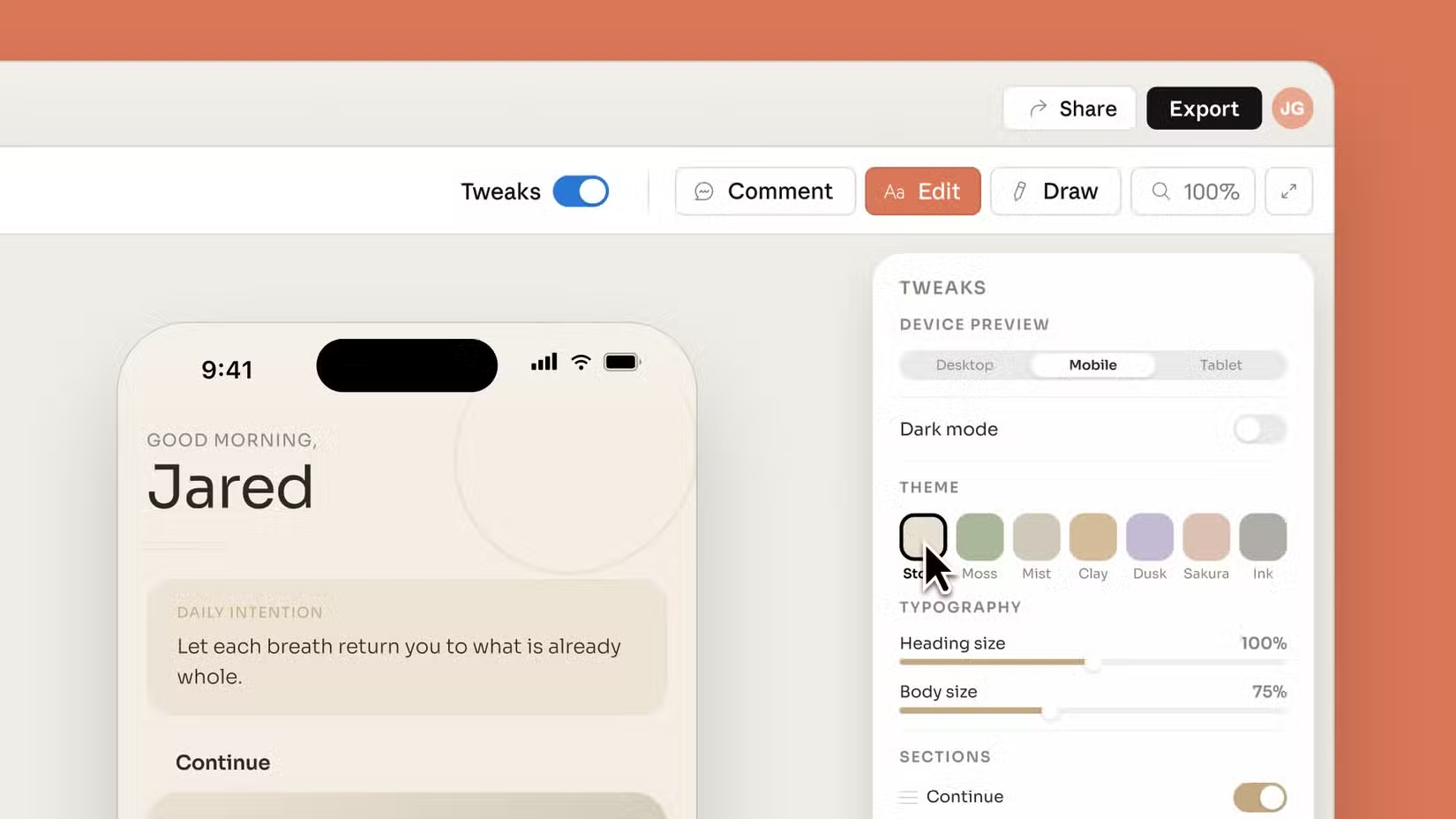
The workflow is deliberately simple. You start with a prompt describing what you need, or import existing images and documents as inspiration. Claude generates a first draft. Then you refine using inline comments, additional prompts, or adjustment sliders.
- Describe your deliverable: "Create a 10-slide Series A pitch deck for a fintech startup targeting millennials"
- Feed context: Upload your logo, brand guidelines, or point to your codebase
- Review the first draft: Claude generates a complete design within minutes
- Refine iteratively: Use comments like "make the CTA more prominent" or "use our secondary color palette"
- Export and share: Download in standard formats or share directly for feedback
The codebase integration deserves special attention. If you point Claude at your app's repository, it can pull existing design elements, colors, and component styles. Your prototype automatically looks like your product. This is huge for teams that want stakeholder feedback on features before committing development resources.
What's Powering Claude Design Under the Hood?
Claude Design runs on the new Claude Opus 4.7 model, released just one day before this announcement. For business leaders, the technical improvements translate to practical capabilities.
That context window expansion matters for enterprise use cases. You can feed Claude your entire brand guidelines document, your product spec, competitor screenshots, and still have room for a detailed prompt. The model holds all that context while generating your design.
Early Limitations Business Leaders Should Know
Claude Design is currently a research preview, not a production tool. The Hacker News community has been more measured than Reddit, praising the "vibe coding" potential while flagging practical issues.
- Timeout issues on complex generation requests
- Refinement loops sometimes require more iterations than expected
- Export formats are still limited compared to dedicated design tools
- Brand guideline interpretation isn't always perfect on first pass
Set expectations appropriately. This tool is ready for internal work, rapid prototyping, and first drafts. It's not ready to replace your design team's Figma workflow for customer-facing products. The gap will narrow, but it exists today.
More AI tools that reduce team bottlenecks
Strategic Implications for Your Design and Marketing Teams
The question isn't whether to adopt AI design tools. It's how to integrate them without disrupting teams that are already stretched thin.

Three Adoption Strategies by Company Size
**Startups (under 50 employees):** Use Claude Design as your primary tool for pitch decks, investor materials, and marketing experiments. Hire designers only for product work. **Mid-size (50-500 employees):** Deploy as a first-draft tool that feeds into your existing design review process. Free up senior designers for strategic work. **Enterprise (500+ employees):** Pilot with marketing and sales teams for collateral creation. Evaluate brand consistency controls before wider rollout.
The companies that benefit most will be those with clear brand guidelines already documented. Claude Design is only as consistent as the context you give it. If your brand lives in one designer's head, you've got a prerequisite to address first.
Budget planning for tech infrastructure upgrades
Frequently Asked Questions About Claude Design
Frequently Asked Questions
Is Claude Design worth the investment for small businesses?
If you're already paying $20/month for Claude Pro, you get Claude Design included. The ROI calculation is simple: if it saves you one freelance design project per quarter ($500+), it pays for itself multiple times over. For businesses without any Claude subscription, the value depends on your design bottleneck severity.
Can Claude Design replace our design team?
Not for production work. Think of Claude Design as an addition to your design capacity, not a replacement. It handles the internal presentations, quick prototypes, and marketing experiments that don't need senior designer attention. Your design team stays focused on customer-facing product work.
How long does it take to implement Claude Design in our workflow?
Implementation is nearly instant since it's a cloud-based tool. The real work is preparing your brand assets: uploading style guides, defining brand parameters, and establishing review processes. Most teams are productive within a few hours of access.
Does Claude Design integrate with our existing tools like Figma or Canva?
Claude Design uses a deep integration with Canva's design engine. Export capabilities allow you to move designs into other tools, but there's no direct two-way sync with Figma at launch. Expect integration improvements as the product matures past research preview.
What data security considerations should enterprises evaluate?
Enterprise plans include SSO and admin controls. Standard Anthropic data handling policies apply. If you're feeding Claude your codebase or confidential brand materials, verify that your legal and security teams are comfortable with Anthropic's enterprise terms before rollout.
Logicity's Take
We've been building Claude-powered agents and automation workflows for clients across India and the Middle East for the past year. Claude Design changes our calculus for client deliverables significantly. Previously, when we built AI automation systems for startups, the design phase was always a separate line item. We'd need to either hire designers or wait for client teams to produce mockups. Now, our initial discovery calls can include real-time prototype generation. We can show a client what their dashboard might look like before the engagement contract is signed. For Indian tech businesses specifically, this matters because of the cost differential. A good UI/UX designer in Hyderabad costs 8-15 lakhs annually. Claude Design doesn't replace that hire for product companies building consumer apps. But for B2B SaaS startups, internal tools, and agency work, it compresses the proposal-to-prototype timeline from weeks to hours. We're already integrating this into our n8n workflows. A client submits a feature request, our automation generates a first-pass visual, and stakeholders can react before any developer time is allocated. That's the real unlock: faster feedback loops, fewer wasted sprints.
Need Help Implementing This?
Logicity builds AI-powered automation workflows for businesses ready to move faster. Whether you're integrating Claude Design into your marketing operations or building custom agents for your team, we can help you skip the learning curve and go straight to results. Get in touch for a free consultation on your AI automation strategy.
Source: MakeUseOf
Huma Shazia
Senior AI & Tech Writer
Produced with AI assistance and reviewed by the Logicity editorial team. Learn more in our Editorial Policy.