Key Takeaways
Claude Code, Cowork & Claude AI - Pick the Right One
- Claude.ai is the chatbot; Code and Cowork are agentic tools that execute tasks autonomously
- Models range from lightweight Haiku to restricted Fable/Mythos, with Opus as the practical daily workhorse
- Agentic tools require close supervision despite their automation capabilities
Anthropic, now valued at $1.2 trillion on secondary markets, sells AI products ranging from simple chatbots to autonomous agents that can write code and control your computer. The lineup has grown confusing: Claude.ai, Claude Code, Claude Cowork, plus model tiers named Haiku, Sonnet, Opus, Fable, and Mythos. A practical breakdown from veteran tech journalist David Gewirtz clarifies which tool fits which job.
Models are engines, tools are vehicles
Gewirtz uses a car analogy that cuts through the marketing fog. Think of the model names as engine sizes. Haiku and Sonnet are the V6s: good, lightweight, cheap to run. Opus is the 375-horsepower V8 most professionals actually need. Fable and Mythos are the supercharged drag-strip monsters, so powerful the US government temporarily banned Fable earlier this year because regulators deemed it too risky for general use.
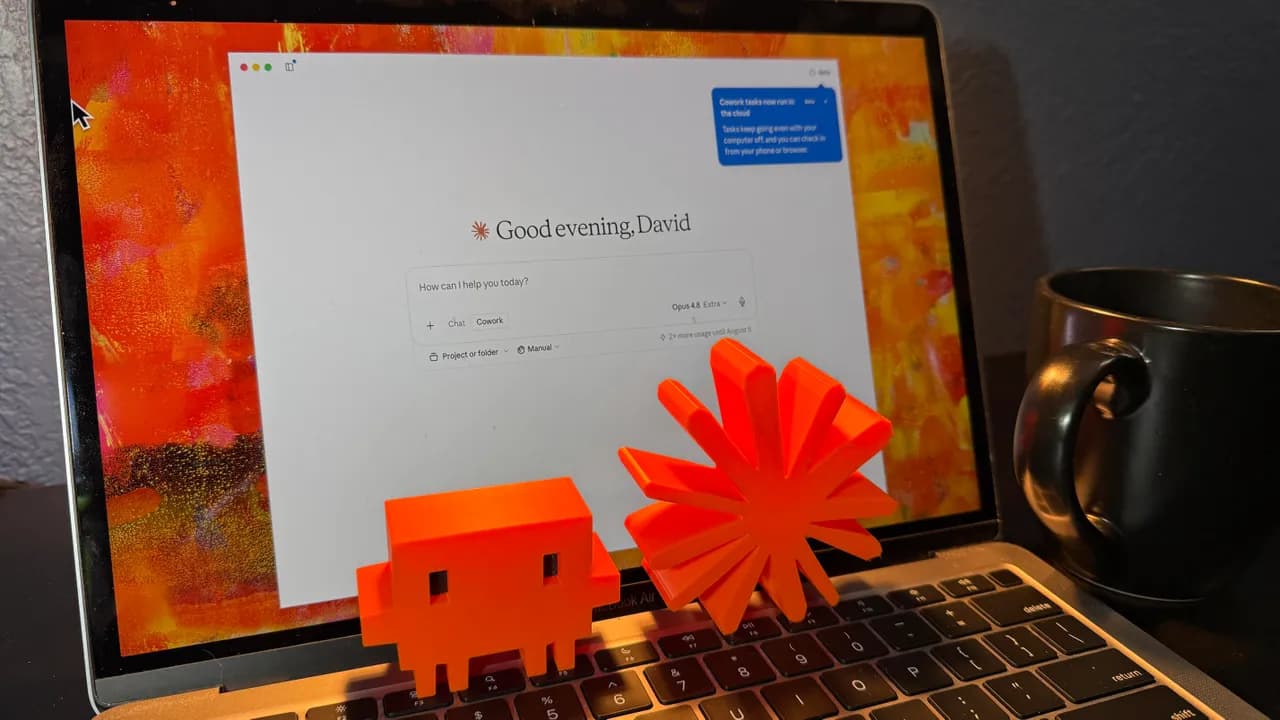
The three tool names represent different vehicle types. Claude.ai is the standard sedan, a chatbot that answers questions. Claude Code is a pickup truck for software development, building and modifying code autonomously. Claude Cowork is more like a panel van outfitted for general work, handling broader computer tasks like file management, browser automation, and multi-step workflows.
| Tool | Purpose | Type | Best Model Pairing |
|---|---|---|---|
| Claude.ai | Chat, Q&A, analysis | Chatbot | Sonnet (free tier) or Opus (paid) |
| Claude Code | Write, debug, refactor code | Agentic | Opus or higher |
| Claude Cowork | Computer automation, multi-step tasks | Agentic | Opus or higher |
Chatbots answer questions. Agents do stuff.
The core distinction is passivity versus action. Claude.ai waits for prompts and returns text. You ask a question, you get an answer. Code and Cowork operate differently. They accept goals, then autonomously execute steps to achieve them. Code writes functions, commits to Git, runs tests. Cowork navigates browsers, fills forms, moves files.
This autonomy comes with a tradeoff Gewirtz emphasizes: agents require close supervision. They can be force multipliers for repetitive tasks, but they can also make mistakes at machine speed. A chatbot's wrong answer stays on screen. An agent's wrong action might delete a directory or submit a form before you notice.
Which model tier actually matters?
For most professional work, Opus hits the sweet spot. Gewirtz notes he prefers Claude Opus 4.8 over the newer Fable 5 for daily use, citing five practical reasons including cost, stability, and lower regulatory friction. Fable and Mythos deliver frontier-level capability, but they cost more, face usage restrictions, and introduce complexity most teams do not need.
Sonnet works well for lighter tasks and sits in Anthropic's free or cheap tier. Haiku is the smallest model, useful for high-volume, low-complexity calls where latency and cost matter more than nuance.
Model: Haiku, Capability Tier: Lightweight, Typical Use Case: High-volume API calls, simple classification, Availability: Generally available. Model: Sonnet, Capability Tier: Mid-tier, Typical Use Case: Free-tier chatbot, everyday Q&A, Availability: Generally available. Model: Opus, Capability Tier: High-end, Typical Use Case: Professional daily driver, complex reasoning, Availability: Generally available. Model: Fable, Capability Tier: Frontier, Typical Use Case: Research, advanced autonomy, Availability: Restricted (US ban lifted). Model: Mythos, Capability Tier: Frontier+, Typical Use Case: Cutting-edge experiments, Availability: Limited access.
Context on how competitors are responding to Anthropic's model leadership
Security, cost, and oversight still matter
Anthropic's pitch centers on safety research, but Gewirtz's practical takeaway is simpler: treat agentic tools like junior employees who work fast but need code review. The regulatory attention on Fable signals that even Anthropic's own models can outpace governance. For engineering teams, that means building guardrails around Code and Cowork, not just trusting their outputs.
Cost is straightforward. More powerful models burn more tokens. If you run Code with Opus on a large codebase, expect meaningful API bills. For teams evaluating Claude against alternatives, the real comparison is whether agentic execution saves enough human hours to justify the spend.
Related coverage on AI autonomy and security concerns in enterprise contexts
Logicity's Take
Anthropic's product naming invites confusion, but the decision tree is simple: use Claude.ai for chat, Code for software tasks, Cowork for computer automation, and default to Opus unless you have a specific reason to go higher or lower. Teams evaluating AI assistants should also look at GitHub Copilot ($19/month individual, $39/month business) for code-focused work and [Perplexity](https://logicity.in/r/perplexity) for research-heavy Q&A. The agentic tools are genuinely useful, but the supervision overhead is real. Budget time for review, not just execution.
Disclosure
Some links in this post are affiliate links — Logicity earns a commission if you sign up, at no extra cost to you. We only link products we have used or actively recommend.
Frequently asked questions
Frequently Asked Questions
What is the difference between Claude.ai and Claude Code?
Claude.ai is a chatbot that answers questions and generates text. Claude Code is an agentic tool that autonomously writes, debugs, and refactors code based on goals you set.
Why was Anthropic's Fable model temporarily banned?
The US government restricted Fable earlier in 2026 because regulators deemed it too capable and risky for general use. The ban has since been lifted with usage restrictions.
Which Claude model should I use for daily work?
Opus is the recommended daily driver for most professionals. It offers strong reasoning without the cost, restrictions, or complexity of frontier models like Fable.
Do Claude Code and Cowork require supervision?
Yes. Both are agentic tools that execute tasks autonomously, which means mistakes happen at machine speed. Treat their output like work from a fast but fallible junior employee.
How does Anthropic's valuation compare to competitors?
Anthropic reached a $1.2 trillion valuation on secondary markets as of July 2026, making it the world's most valuable AI company by that measure.
Need Help Implementing This?
If you're evaluating AI tools for your engineering or operations team, reach out to the Logicity team for guidance on model selection, cost modeling, and building supervision workflows around agentic AI.
Source: Latest news
Manaal Khan
Tech & Innovation Writer
Produced with AI assistance and reviewed by the Logicity editorial team. Learn more in our Editorial Policy.