Key Takeaways
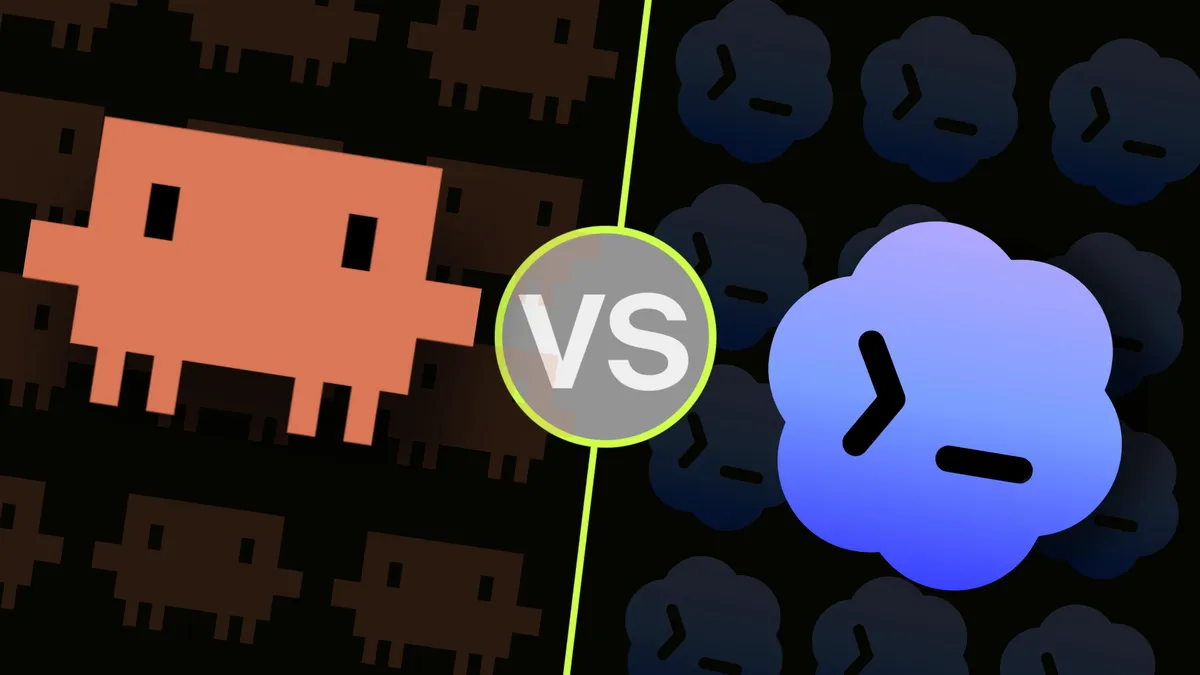
Codex vs Claude Code: which AI coding agent is better?
- Both tools produce quality code; the difference is in ecosystem, workflow, and environment preferences
- Claude Code runs in terminal windows; Codex integrates tightly with ChatGPT's interface
- Most individual developers pay roughly the same for either tool, so cost is rarely the deciding factor
Claude Code and OpenAI Codex both build software from start to finish, run tests, fix bugs, and work for hours without intervention. After 18 months of agentic coding tools going mainstream, the real question is no longer which one writes better code. It's which one fits your workflow.
David Gewirtz, writing for ZDNet, has used both extensively and argues that trying both may be smarter than forcing a choice. The tools are more alike than different, he says, and the decision comes down to ecosystem familiarity, company preference, and environment fit.
| Factor | Claude Code | OpenAI Codex |
|---|---|---|
| Primary interface | Terminal / command line | ChatGPT web interface |
| Multi-project support | Yes, via multiple terminal windows | Yes, via parallel agents |
| Ecosystem | Anthropic's Claude models | OpenAI's GPT models |
| Plugin/connector support | Yes | Yes |
| Code quality | Production-grade | Production-grade |
| Individual developer cost | Roughly equivalent | Roughly equivalent |
What makes agentic coding different from autocomplete?
Early AI coding tools were smart autocomplete. They finished lines or blocks of code for you. That era ended. Claude Code and Codex don't suggest code. They build entire systems when you describe what you want.
Gewirtz frames the shift with a workshop analogy. For decades, developers used hand tools. Generative AI moved us to power tools. Now we're at the general contractor level: you specify the project, and the agent builds it.
"Don't think line-by-line. Think assignment by assignment," Gewirtz writes. Both tools can work on existing projects, modify files, run commands, execute tests, find and fix bugs, review their own output, and run autonomously for extended sessions.
How the two tools actually work in practice
Claude Code runs in terminal windows. Gewirtz describes keeping one open on a side monitor while working on other tasks. Claude iterates on a project, makes changes, evaluates its output against samples, and occasionally asks for human input. The experience mirrors managing a junior developer who checks in periodically.
Codex integrates with ChatGPT's interface. It builds all parts of the software, tests it, and makes it work, rather than handing back code in a text box. Both tools can run multiple projects simultaneously, using separate agents for different pieces of a problem.
Both now support connectors and plugins for external tools and resources. The practical difference is where you prefer to live: a terminal-first workflow or a browser-based conversational interface.
Expands on Claude's capabilities beyond coding agents
Why benchmarks matter less than ecosystem
Gewirtz no longer rates AIs on whether they can produce working code. Both can. When something fails, it's usually because the agent got confused or received unclear direction, not because the underlying model lacks capability.
Cost is also roughly equivalent for individual developers. There's nuance in how each charges, but most solo practitioners end up paying about the same. The decision factors that actually matter:
- Which ecosystem are you already invested in? If you use Claude for other tasks, Claude Code integrates naturally. Same for ChatGPT and Codex.
- Which company do you prefer to work with? Anthropic and OpenAI have different stances on safety, pricing, and product direction.
- Which environment fits your habits? Terminal users may find Claude Code more natural; browser-centric developers may prefer Codex.
The case for using both
Gewirtz's actual recommendation: try both. Neither tool is objectively better. They excel in slightly different contexts, and the best developers will likely develop intuitions about which agent handles which type of task more reliably.
This mirrors how professional developers already work with multiple tools. Using ClickUp for project management doesn't preclude using Notion for documentation. Similarly, having both Claude Code and Codex available lets you route tasks to whichever agent feels more appropriate.
Disclosure
Some links in this post are affiliate links — Logicity earns a commission if you sign up, at no extra cost to you. We only link products we have used or actively recommend.
Relevant context on AI coding agent limitations
What the comparison doesn't tell you
Gewirtz's piece focuses on individual developers. Enterprise considerations differ. OpenAI has deeper partnerships with Microsoft and Azure. Anthropic has Amazon's backing. Your company's existing cloud commitments may push you toward one or the other regardless of personal preference.
Security and compliance posture also differ. Both companies have SOC 2 certifications, but their data retention policies, audit logging, and enterprise support tiers vary. For teams building in regulated industries, the choice may come down to which vendor your security team has already vetted.
Logicity's Take
The real story here isn't Claude vs Codex. It's that agentic coding has matured to the point where the underlying model matters less than workflow fit. For CTOs evaluating these tools, the question isn't 'which is better?' but 'which one my team will actually use consistently?' That's a cultural question, not a technical one. Start with a pilot on a non-critical project and let developer preference guide the decision.
Frequently Asked Questions
Is Claude Code or Codex better for beginners?
Neither has a meaningful advantage. Both require understanding how to specify projects clearly. The interface preference (terminal vs browser) matters more than skill level.
Can I switch between Claude Code and Codex on the same project?
Yes. Both work with standard codebases. You can have Claude Code iterate on a feature, then bring Codex in for debugging or vice versa.
Do these tools replace human developers?
No. They shift the developer's role from writing code to specifying, reviewing, and directing work. You still need someone who understands what good code looks like.
Need Help Implementing This?
Logicity helps technical teams evaluate AI coding tools and integrate them into existing workflows. Contact us for a consultation on building your agentic coding stack.
Source: Latest news
Manaal Khan
Tech & Innovation Writer
Produced with AI assistance and reviewed by the Logicity editorial team. Learn more in our Editorial Policy.