Key Takeaways
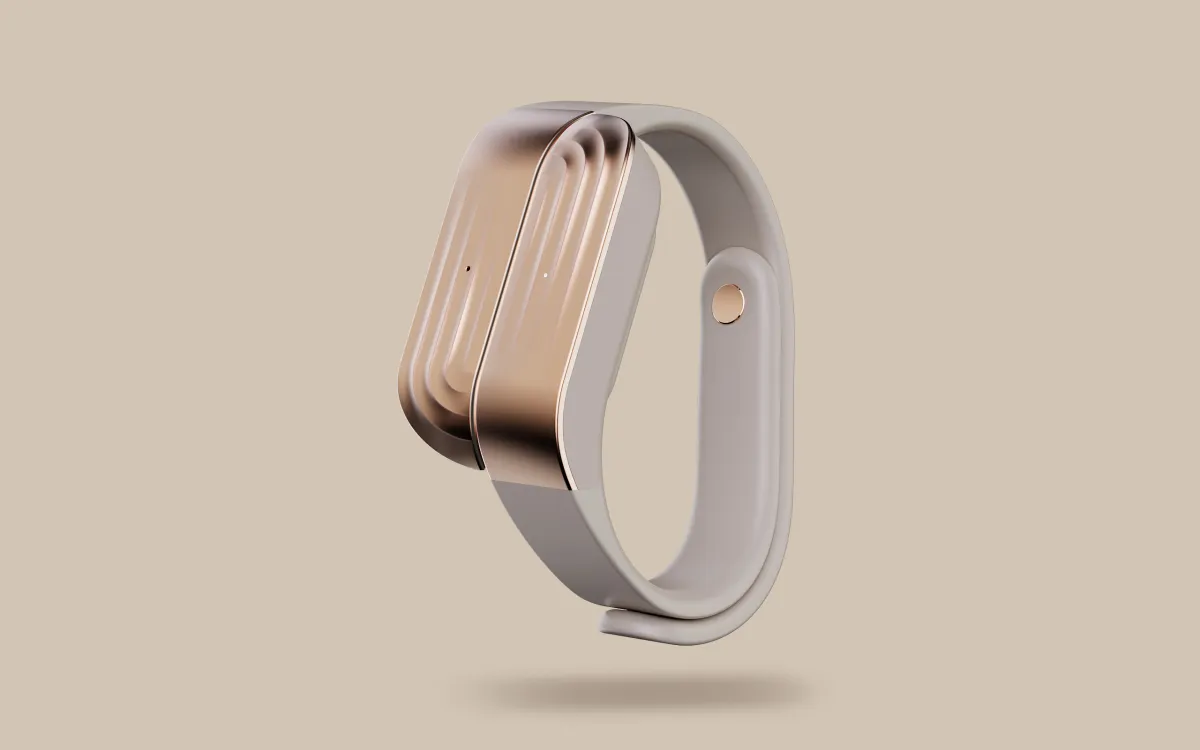
- Clair Health raised $11.6 million led by Khosla Ventures to build a non-invasive hormone tracking wearable
- The device uses 10 biosensors including a novel biomagnetic sensor to track 130+ biomarkers
- Pre-orders open now at $369 plus $9.99/month subscription, shipping November 2026
Clair Health, a startup founded by Stanford graduates Jenny Duan and Abhinav Agarwal, has raised $11.6 million to build a wrist wearable that tracks hormones without blood draws. Khosla Ventures led the round, with a16z speedrun, Anne Wojcicki, and several other investors participating. The company plans to ship devices in November 2026 at $369 plus a $9.99 monthly subscription.
The pitch is straightforward: women currently rely on blood tests or symptom-logging apps to understand their hormonal health. Clair wants to replace both with continuous, passive monitoring. Their device packs 10 biosensors, including what the company describes as a "novel biomagnetic sensor" for hormonal insights, tracking over 130 distinct biomarkers.
What makes this different from an Apple Watch?
Consumer wearables like the Apple Watch or Pixel Watch use three primary sensors: a gyroscope, an optical/PPG sensor for heart rate, and a temperature sensor. Clair argues these are insufficient for tracking hormonal fluctuations. Their device adds sensors capable of detecting estrogen, progesterone, LH, and FSH levels, the company claims, though they haven't published peer-reviewed validation data yet.
"Until today, there hasn't been a single device, be it invasive or noninvasive, that can capture insights into hormones in real time and get to the source of a problem," Duan told TechCrunch. "We didn't start by thinking of building a particular piece of hardware. We just wanted to track hormones continuously."
The company also expanded beyond the traditional four-phase menstrual cycle model. Their AI identifies nine sub-phases, aiming to give users more granular insight into where they are in their cycle and how their body is responding.
Voice-based onboarding and symptom logging
One unusual feature: Clair uses voice-based onboarding to understand user health markers. The company claims their AI can analyze voice biomarkers to determine cycle phase after a few minutes of conversation. Whether this holds up to clinical scrutiny remains to be seen, but the intent addresses a real frustration.
“What we found is that in women's health and in the current state of apps, women can't communicate a large amount of symptoms because the apps are built for only specific ones. With our voice stack, we are giving our users a way to communicate their own problems in their own way.”
— Jenny Duan, CEO and Co-founder of Clair Health
The company has data partnerships providing access to millions of electronic health records for training their models. They're targeting insights for conditions including endometriosis, PMDD, and perimenopause.
The market gap Clair is targeting
Perimenopause diagnosis remains surprisingly primitive. Mary Minno, an investor at Treehub, described the current state bluntly: "My perimenopausal friends are still getting blood draws to understand the efficacy of hormone treatments." Clair aims to replace periodic lab visits with continuous monitoring that women can share with their healthcare providers.
The femtech space has attracted several competitors with different approaches. Level Zero Health uses continuous tracking through glucose monitor-style patches. Hormona relies on home test kits. Apps like Ourself Health use AI to analyze manually logged symptoms. Clair's bet is that a jewelry-inspired wrist wearable offers the best combination of aesthetics and data quality for everyday use.
Can skin sensors actually measure hormones accurately?
This is the central question. Discussion on Hacker News shows split reactions: some users express skepticism about whether skin-based sensors can match lab-grade accuracy for specific hormones like estrogen, while others are enthusiastic about normalizing data-driven women's health tracking even if precision is lower than clinical tests.
Clair hasn't published peer-reviewed studies yet, and the FDA hasn't cleared the device for medical diagnostics. The company positions it as a wellness product, not a medical device, similar to how Oura and Whoop frame their sleep and recovery metrics. That's a reasonable regulatory strategy, but it means users shouldn't treat Clair's readings as clinical measurements.
Duan became interested in women's health while working at a nonprofit in Portland during her time at Stanford. She met Agarwal in a Stanford class focused on women's health and nonprofits. The device is currently in closed beta testing before the November launch.
Pricing and availability
Pre-orders are open now at $369 for the device, with a $9.99 monthly subscription required for the full feature set. That's comparable to an Oura Ring ($299-$549) plus subscription, positioning Clair at the premium end of consumer health wearables.
November 2026 is the target ship date. With 25,000 people on the waitlist, Clair will face immediate pressure to deliver on its claims about non-invasive hormone tracking.
Logicity's Take
Clair Health is making a bold bet that sensor miniaturization and machine learning have finally caught up to the problem of non-invasive hormone monitoring. The $11.6M raise and Khosla backing suggest serious investors believe this is achievable. But the gap between wellness-grade insights and clinical-grade diagnostics matters enormously for conditions like PMDD and perimenopause. Success will depend less on the hardware and more on whether Clair's 130+ biomarker analysis actually correlates with hormonal states in ways that help women make better decisions. Watch for independent validation studies before treating this as more than an expensive experiment.
Frequently Asked Questions
How does Clair Health's hormone tracking wearable work?
The device uses 10 biosensors including a biomagnetic sensor to track over 130 biomarkers through the skin. The company claims this allows non-invasive monitoring of hormones like estrogen, progesterone, LH, and FSH without blood draws.
How much does Clair Health cost?
The wearable is priced at $369 with a $9.99 monthly subscription. Pre-orders are available now with shipping planned for November 2026.
Is Clair Health FDA approved?
Clair Health has not announced FDA clearance. The device is positioned as a wellness product rather than a medical diagnostic device, similar to fitness wearables like Oura or Whoop.
Who funded Clair Health?
Khosla Ventures led the $11.6 million round. Other investors include a16z speedrun, Treehub, Anne Wojcicki (23andMe founder), Brydge Club, Cartan Capital, and Insiders VC.
What conditions can Clair Health help monitor?
The company targets cycle irregularities, perimenopause, PMDD, endometriosis, and general hormonal fluctuations. The app also provides insights on inflammation, energy levels, and biological aging pace.
Need Help Implementing This?
Building health tech or wearable integrations? Logicity covers the tools and platforms shaping connected health. Subscribe for weekly analysis on femtech, biosensors, and health data infrastructure.
Source: TechCrunch / Ivan Mehta
Huma Shazia
Senior AI & Tech Writer
Produced with AI assistance and reviewed by the Logicity editorial team. Learn more in our Editorial Policy.




