OpenAI is consolidating ChatGPT's automation features into a single interface. A new 'Scheduled' page now appears in the sidebar, collecting all recurring tasks so users can view, pause, edit, or delete them from one place. The update applies to Plus, Pro, Business, and Enterprise subscribers.

This is the clearest signal yet that OpenAI wants ChatGPT to function less like a chatbot and more like a background assistant. The previous 'Pulse' feature, which handled some recurring functionality, is being retired and absorbed into scheduled tasks.
What changed in ChatGPT scheduled tasks?
The core addition is organizational. Instead of scattered task settings, everything now lives in a dedicated sidebar section. Users can schedule tasks for specific times or choose broader windows: morning, afternoon, or evening. OpenAI claims all tasks are now faster and more reliable, though the company did not publish specific performance numbers.
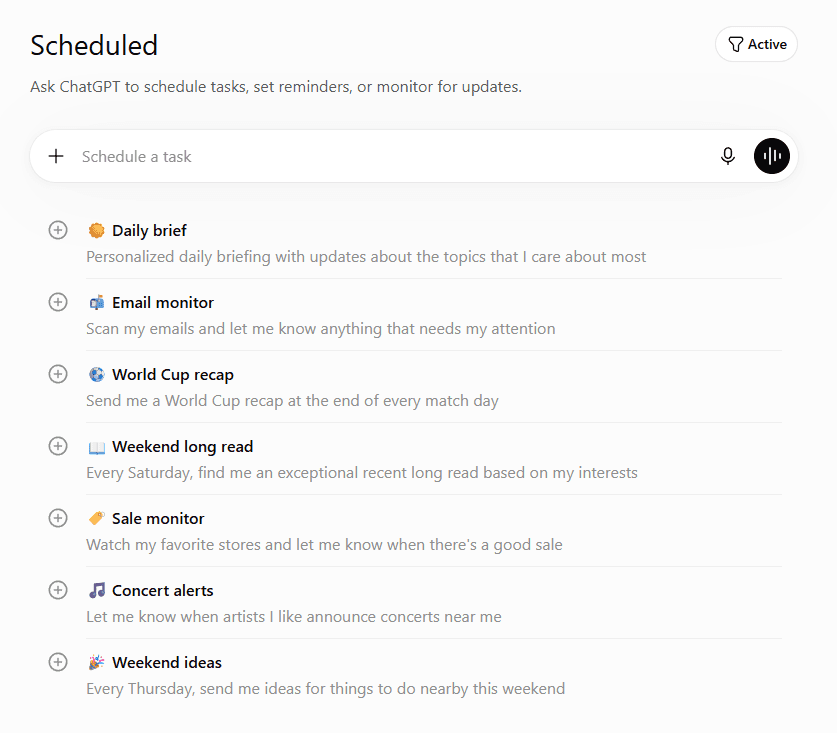
A more significant functional change involves research tasks. These can now search the web and connected apps, sending alerts only when something actually changes. That distinction matters. Previous implementations often sent notifications on a schedule regardless of whether new information existed. The shift to change-based alerts reduces noise and makes the feature genuinely useful for monitoring competitors, news topics, or specific data points.
Limits and availability
Not everyone gets the same access. The number of active tasks a user can run varies by plan tier, though OpenAI did not specify exact limits. Free users appear to be excluded entirely.
There are hard constraints, too. Tasks can run at most once per hour. If a user goes inactive for an extended period, tasks pause automatically. This likely serves two purposes: managing compute costs and preventing abandoned automations from running indefinitely.
Why OpenAI is pushing toward AI agents
ChatGPT's user base reportedly exceeds 200 million weekly active users. Keeping that audience engaged requires more than conversation. OpenAI has been layering on agent-like capabilities for over a year: browsing, code execution, file analysis, memory, and now better task scheduling.
The competitive pressure is obvious. Google Assistant and Apple's Siri have owned the 'do things for me' category for a decade. Anthropic is building its own agent frameworks. Microsoft, OpenAI's largest backer, has been integrating Copilot across Office and Windows with similar automation ambitions.
Scheduled tasks address a specific gap. A chatbot responds when you ask. A personal assistant anticipates or monitors on your behalf. The research task feature, watching for changes and alerting you proactively, is a small but meaningful step toward the latter.
What this means for business users
For Enterprise and Business subscribers, the practical applications are straightforward. Monitor a competitor's pricing page and get an alert when it changes. Track regulatory filings. Summarize daily news on a specific topic and have it ready each morning. These were technically possible before, but required manual prompting or third-party tools.
The once-per-hour limit will frustrate users who want near-real-time monitoring. For genuinely time-sensitive alerts, dedicated tools like Distill.io or custom scripts remain necessary. But for 'I want to know by end of day' use cases, hourly checks are sufficient.
Context on OpenAI's financial position as it expands ChatGPT features
The retirement of Pulse
OpenAI's Pulse feature, introduced earlier to deliver periodic updates on topics users cared about, is being folded into the scheduled tasks system. This consolidation suggests OpenAI found the fragmented approach confusing or redundant. Having one place for all automation makes sense from a UX perspective, even if it means sunsetting a feature some users relied on.
Migration details were not provided. Users with active Pulse subscriptions should check whether their monitoring persists or requires manual recreation in the new system.
Frequently Asked Questions
Who can use ChatGPT scheduled tasks?
Plus, Pro, Business, and Enterprise subscribers have access. Free tier users do not appear to have the feature.
How often can ChatGPT scheduled tasks run?
Tasks can run at most once per hour. They also pause automatically if the user goes inactive.
What happened to ChatGPT Pulse?
OpenAI is retiring Pulse and folding its functionality into the new scheduled tasks system.
Can ChatGPT scheduled tasks connect to external apps?
Yes. Research tasks can search the web and connected apps, sending alerts only when something changes.
Logicity's Take
The real test for scheduled tasks is reliability. OpenAI claims performance improvements but does not quantify them. Users who tried earlier iterations often found tasks misfiring or delivering inconsistent results. If OpenAI has genuinely fixed the backend, this feature becomes a legitimate productivity tool. If not, it remains a demo that frustrates more than it helps. The change-based alerting for research tasks is the most underrated addition here. It transforms ChatGPT from 'pull information when asked' to 'push information when relevant,' a shift that justifies the assistant framing OpenAI clearly wants.
Need Help Implementing This?
If your team wants to integrate ChatGPT's automation features into business workflows, or evaluate whether scheduled tasks meet your monitoring needs, reach out to Logicity's consulting partners for an assessment.
Source: The Decoder / Matthias Bastian
Huma Shazia
Senior AI & Tech Writer
Produced with AI assistance and reviewed by the Logicity editorial team. Learn more in our Editorial Policy.