Key Takeaways
- OpenAI's image generation upgrade could cut creative production costs by 30-50% for marketing teams
- Enterprise-grade image generation is now accessible through existing ChatGPT subscriptions
- Early adopters report 3-5x faster turnaround on visual content compared to traditional design workflows
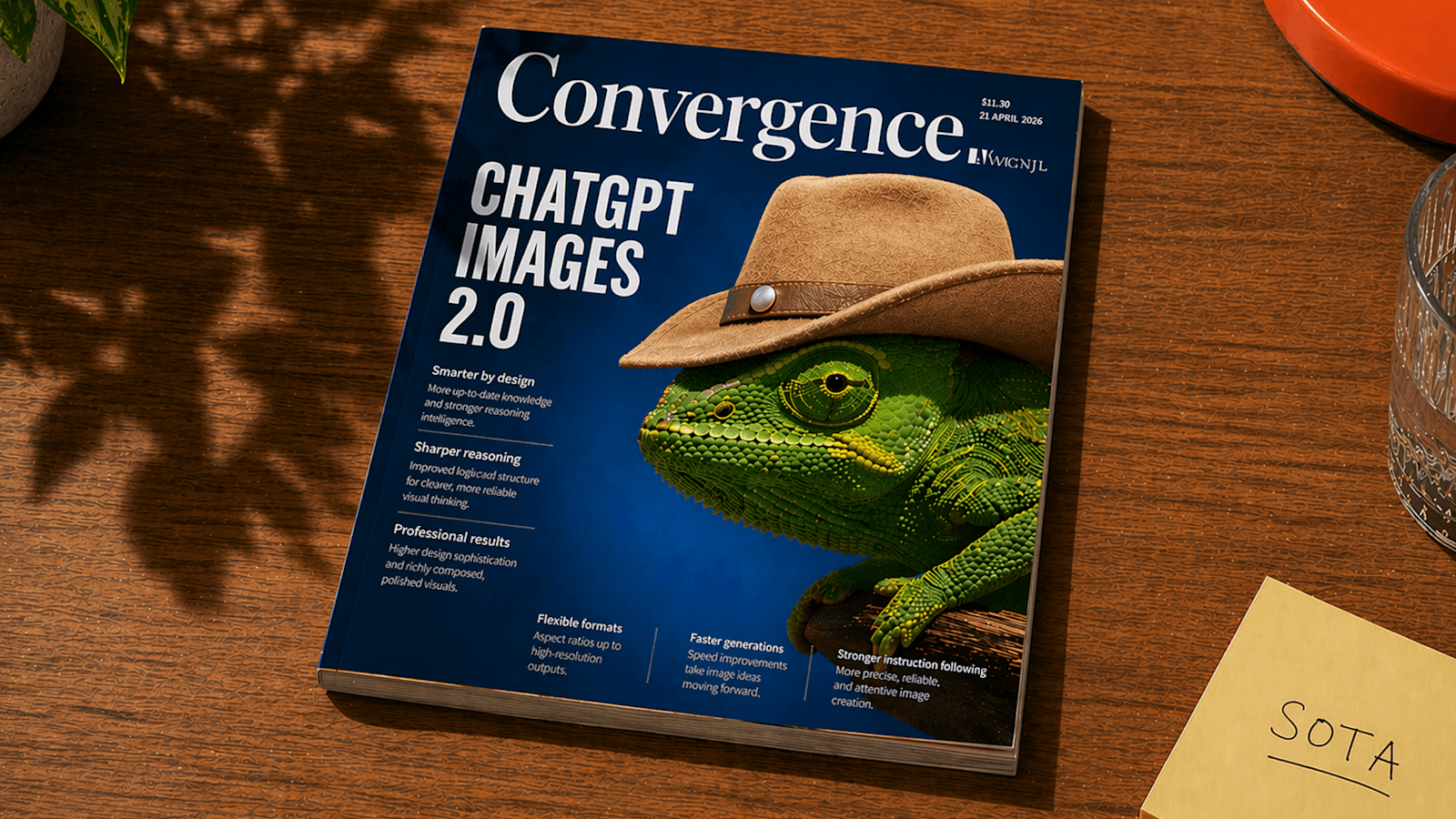
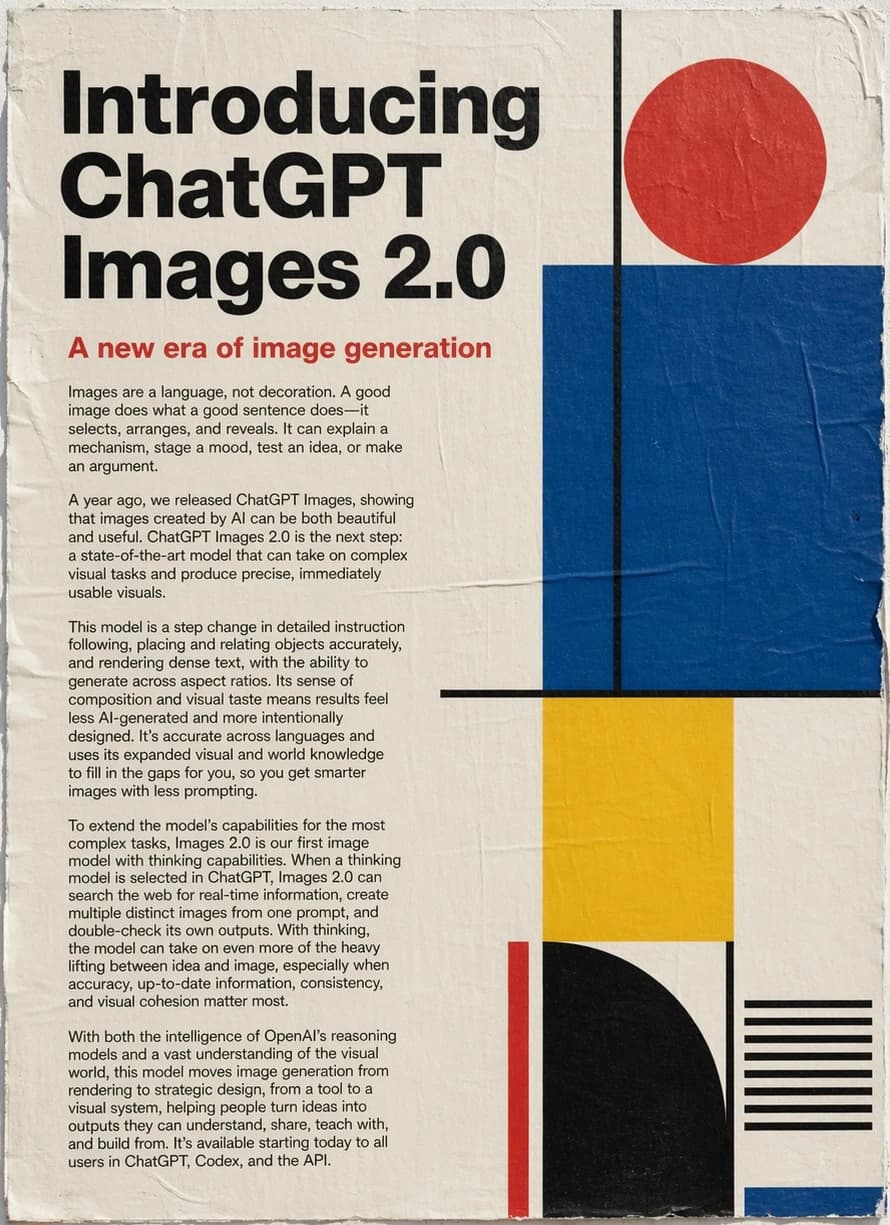
According to [OpenAI's official announcement](https://openai.com/index/introducing-chatgpt-images-2-0/), ChatGPT Images 2.0 marks "a new era of image generation" with significant upgrades to quality, control, and creative capabilities. For business leaders watching AI investments, this release signals that generative image tools have matured from experimental toys to production-ready business infrastructure.
Read in Short
ChatGPT Images 2.0 delivers professional-grade image generation directly within ChatGPT. For businesses, this means marketing teams can produce campaign visuals in minutes instead of days, product teams can prototype faster, and content operations can scale without proportional headcount increases. The upgrade supports multiple aspect ratios and improved prompt understanding, making it practical for real business workflows.
What Is ChatGPT Images 2.0 and Why Should CEOs Care?
OpenAI's latest release isn't just an incremental update. It's a fundamental shift in how businesses can approach visual content creation. The new system supports horizontal, square, and vertical formats natively. That might sound like a small technical detail, but it means your team can generate Instagram Stories, LinkedIn posts, and website banners from a single prompt conversation.
The business case is straightforward. Every hour your design team spends on routine visuals is an hour not spent on high-value creative work. ChatGPT Images 2.0 handles the routine stuff. Need 20 variations of a product shot for A/B testing? That's a five-minute conversation now, not a two-day design sprint.
How Much Does ChatGPT Images 2.0 Cost for Enterprises?
Here's where the math gets interesting for CFOs. ChatGPT Images 2.0 is included in existing ChatGPT Plus and Enterprise subscriptions. That's $20/month for individual users or custom enterprise pricing for teams. Compare that to traditional creative costs.
| Creative Option | Cost Per Image | Turnaround Time | Customization |
|---|---|---|---|
| Traditional Design Agency | $150-500 | 3-7 days | High |
| Freelance Designer | $50-150 | 1-3 days | Medium-High |
| Stock Photography | $10-50 | Immediate | Low |
| ChatGPT Images 2.0 | $0.05-0.10* | Seconds | Medium-High |
*Estimated per-image cost based on subscription pricing and typical usage patterns. Actual costs vary by volume and subscription tier.
The cost savings are dramatic, but they're not the whole story. The real value is in speed and iteration. When you can generate 50 variations in the time it takes to brief a designer on one concept, your entire creative process changes. Marketing teams can test more ideas. Product teams can visualize concepts before engineering begins. Sales teams can personalize presentations at scale.
Real Business Use Cases for AI Image Generation
Let's get specific about where this matters. The companies seeing the biggest ROI from AI image tools are using them strategically, not as a replacement for all design work.
- E-commerce product visualization: Generate lifestyle shots and context images for products without expensive photo shoots
- Social media content at scale: Create platform-specific visuals for multi-channel campaigns in minutes
- Internal communications: Make presentations, training materials, and documentation more visual without design bottlenecks
- Rapid prototyping: Visualize product concepts and marketing campaigns before committing resources
- Personalized marketing: Generate customized visuals for different audience segments and regions
The pattern here is clear. AI image generation excels at volume, speed, and iteration. It's less suited for brand-defining creative work where human judgment and artistic vision are essential. Smart business leaders are using it to handle the 80% of visual content that's functional, freeing up human creatives for the 20% that's strategic.
How Does ChatGPT Images 2.0 Compare to Other AI Image Tools?
OpenAI isn't operating in a vacuum. Midjourney, DALL-E 3, Stable Diffusion, and Adobe Firefly are all competing for enterprise attention. Here's how the landscape looks for business buyers.
| Tool | Best For | Enterprise Features | Learning Curve |
|---|---|---|---|
| ChatGPT Images 2.0 | Integrated workflows, conversational iteration | Strong | Low |
| Midjourney | Artistic quality, aesthetic control | Limited | Medium |
| Adobe Firefly | Brand compliance, existing Adobe users | Strong | Low-Medium |
| Stable Diffusion | Customization, self-hosting | Requires setup | High |
ChatGPT Images 2.0's biggest advantage is integration. If your team already uses ChatGPT for writing, research, or coding, adding image generation to that workflow is seamless. There's no new tool to learn, no separate subscription to manage, no context-switching between applications.
See how enterprise companies are building AI into their workflows
Implementation Timeline: How Long to Deploy AI Image Generation?
Unlike most enterprise software, AI image generation has a remarkably short time-to-value. Here's what a realistic rollout looks like for a mid-size company.
The technical implementation is trivial. The real work is organizational. You need clear guidelines about when AI-generated images are appropriate, how they fit into approval workflows, and who's responsible for quality control. Companies that skip this step end up with inconsistent brand presentation and frustrated teams.
What Are the Risks of AI Image Generation for Business?
No honest business analysis ignores the risks. AI image generation comes with legitimate concerns that executives need to address.
✅ Pros
- • Dramatic cost reduction for routine visual content
- • Speed enables more testing and iteration
- • Democratizes visual content creation across teams
- • Consistent availability unlike human designers
- • Easy integration with existing ChatGPT workflows
❌ Cons
- • Copyright and IP concerns remain legally ambiguous
- • Brand consistency requires careful prompt engineering
- • Quality varies and requires human review
- • Over-reliance may erode in-house creative capabilities
- • Potential authenticity concerns with customers
The copyright question deserves special attention. As of April 2026, legal frameworks for AI-generated content ownership are still evolving. Most legal experts recommend treating AI-generated images as work-for-hire where possible and maintaining documentation of prompts and generation processes. This isn't a reason to avoid the technology, but it is a reason to implement it thoughtfully.
Related cost optimization strategies for AI infrastructure
Strategic Recommendations for Business Leaders
Based on what we're seeing from early enterprise adopters, here's how to approach ChatGPT Images 2.0 strategically.
- Start with high-volume, low-stakes content. Social media graphics, internal presentations, and A/B testing variations are ideal starting points.
- Invest in prompt libraries. The difference between good and great AI-generated images often comes down to prompt quality. Build institutional knowledge here.
- Maintain human creative leadership. Use AI to amplify your best designers, not replace them. Strategic creative direction still requires human judgment.
- Document everything. Keep records of prompts, generations, and edits for legal compliance and process improvement.
- Measure actual ROI. Track time saved, costs avoided, and output volume increases. The numbers will guide expansion decisions.
The companies winning with AI image generation aren't the ones using it most aggressively. They're the ones using it most strategically. They understand where AI adds value and where human creativity remains essential.
How entertainment companies are monetizing AI-generated visual content
The Bottom Line for Decision Makers
ChatGPT Images 2.0 isn't a revolution. It's an evolution that makes AI image generation practical for mainstream business use. The technology is mature enough to deliver real ROI, accessible enough for non-technical teams to use, and integrated enough to fit into existing workflows.
For business leaders, the question isn't whether to adopt AI image generation. It's how quickly and strategically you can implement it. The companies that figure this out first will have structural advantages in content production costs and speed to market. Those that wait will find themselves at a competitive disadvantage when visual content demands continue to grow.
Logicity's Take
At Logicity, we've been integrating AI tools into client workflows since the early GPT-4 days. ChatGPT Images 2.0 is genuinely useful, but it's not magic. The businesses we see getting the most value are those who treat AI image generation as part of a broader content strategy, not a standalone solution. From our experience building AI-powered applications with Claude and integrating automation workflows through n8n, the pattern is consistent. The technology is the easy part. The hard part is organizational: defining clear use cases, establishing quality standards, and training teams to prompt effectively. For Indian businesses specifically, this release is significant. Many startups and mid-size companies here operate with lean creative teams. AI image generation can give a five-person marketing team the visual output of a team three times that size. But you need to be intentional about it. We've seen clients waste months on AI tools that don't fit their actual workflows. Our advice: start small, measure everything, and expand based on what actually works for your specific business. The hype cycle is real, but so is the practical value if you implement thoughtfully.
Frequently Asked Questions
How much does ChatGPT Images 2.0 cost for business use?
ChatGPT Images 2.0 is included in ChatGPT Plus ($20/month) and ChatGPT Enterprise (custom pricing). For most businesses, this represents a fraction of traditional design costs. A team generating 100+ images monthly could see per-image costs below $0.10, compared to $50-500 for traditional design services.
Is AI-generated content safe to use for commercial purposes?
OpenAI's terms of service grant users rights to generated content for commercial use. However, copyright law for AI-generated content is still evolving globally. Best practice is to document your generation process, avoid prompts that reference specific copyrighted works, and consult legal counsel for high-stakes applications.
How long does it take to implement AI image generation in a business workflow?
Technical implementation is nearly instant since it's a cloud service. Organizational implementation typically takes 4-8 weeks for a thoughtful rollout including pilot testing, guideline development, and team training. Companies that rush this step often see inconsistent results and team frustration.
Will AI image generation replace our design team?
Not for strategic creative work. AI excels at high-volume, iterative content but struggles with brand strategy, emotional resonance, and novel creative concepts. Smart companies are using AI to handle routine work, freeing designers for higher-value projects. The result is often a more productive design team, not a smaller one.
What's the quality difference between ChatGPT Images 2.0 and professional photography?
For product photography and high-stakes brand imagery, professional photography still delivers superior results. For social media content, presentations, concept visualization, and A/B testing, AI-generated images are often good enough and dramatically faster. The right choice depends on the specific use case and quality requirements.
Need Help Implementing This?
Logicity specializes in helping businesses integrate AI tools into practical workflows. From Claude-powered applications to automated content pipelines, we've helped companies across India and the Middle East turn AI capabilities into business results. If you're exploring AI image generation or other AI implementations, let's talk about what makes sense for your specific situation.
Source: Hacker News: Best
Manaal Khan
Tech & Innovation Writer
Produced with AI assistance and reviewed by the Logicity editorial team. Learn more in our Editorial Policy.