Key Takeaways
Health in ChatGPT is coming to U.S. users

- ChatGPT Health connects Apple Health and medical records to provide personalized health insights
- Health data is not used for model training or ad targeting
- Available to US users 18+ on Free, Go, Plus, and Pro plans via web and iOS
OpenAI launched ChatGPT Health on July 23, letting US users connect Apple Health data and medical records directly to the chatbot. The feature aims to turn scattered health information into actionable context during conversations, pulling from lab results, medications, sleep data, and activity metrics with user permission.
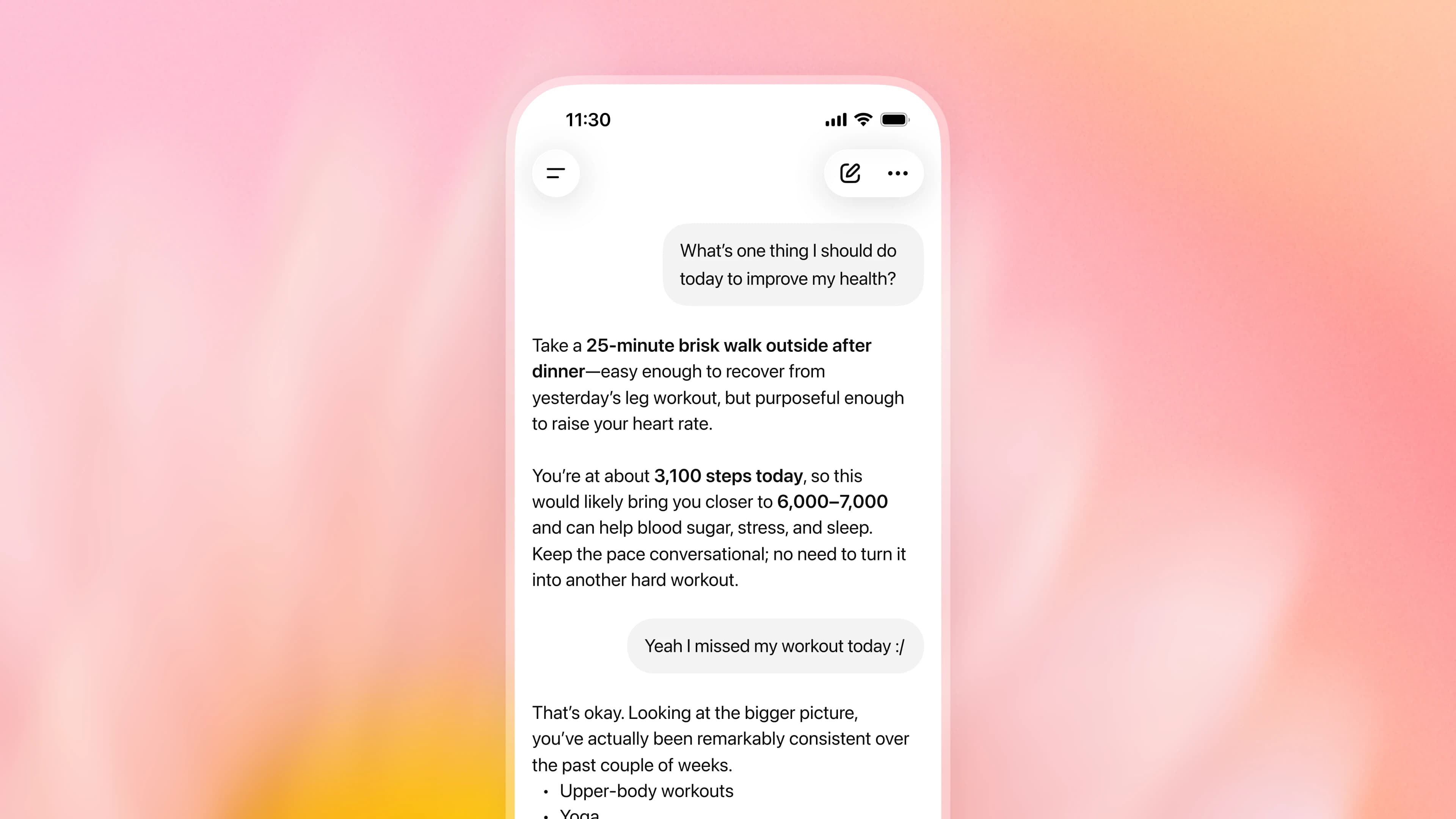
OpenAI says more than 300 million people ask ChatGPT health questions weekly. The problem: most of that context lives in patient portals, fitness apps, and wearables. Users had to copy-paste lab results or explain their medical history from scratch each time. ChatGPT Health centralizes this, so the AI can compare your new cholesterol panel to last year's results without you digging through PDFs.
How ChatGPT Health connects your data
The setup lives in ChatGPT's sidebar. Users can connect Apple Health and supported medical records from healthcare providers. Once linked, ChatGPT can reference medications, lab results, recent doctor visits, sleep patterns, and workout data across any conversation. You choose what to share and when.
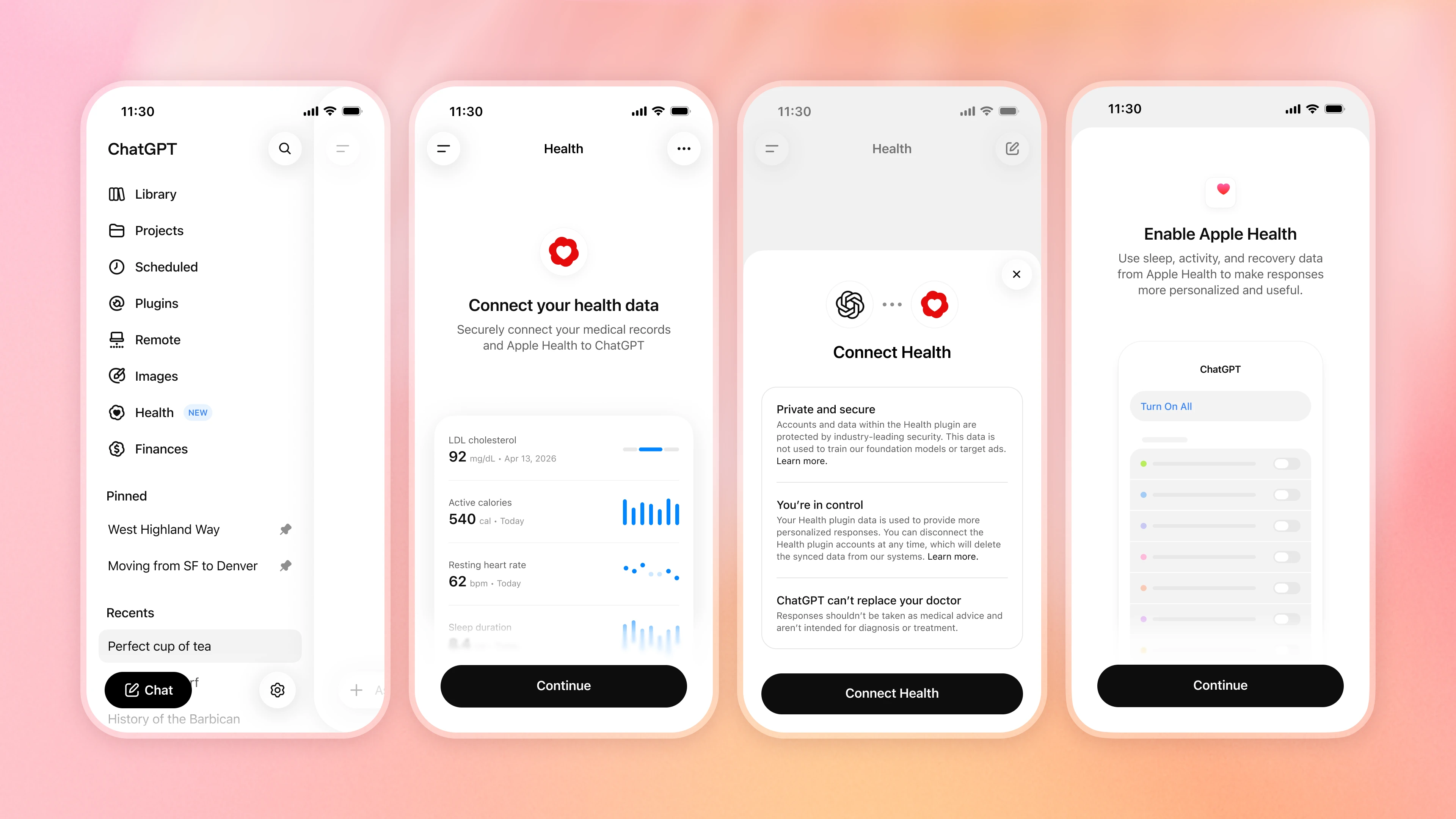
The rollout covers logged-in US users aged 18 and older on web and iOS. It works across Free, Go, Plus, and Pro plans, though GPT-5.6 Sol on paid tiers handles complex medical reasoning better than GPT-5.5 Instant on Free.
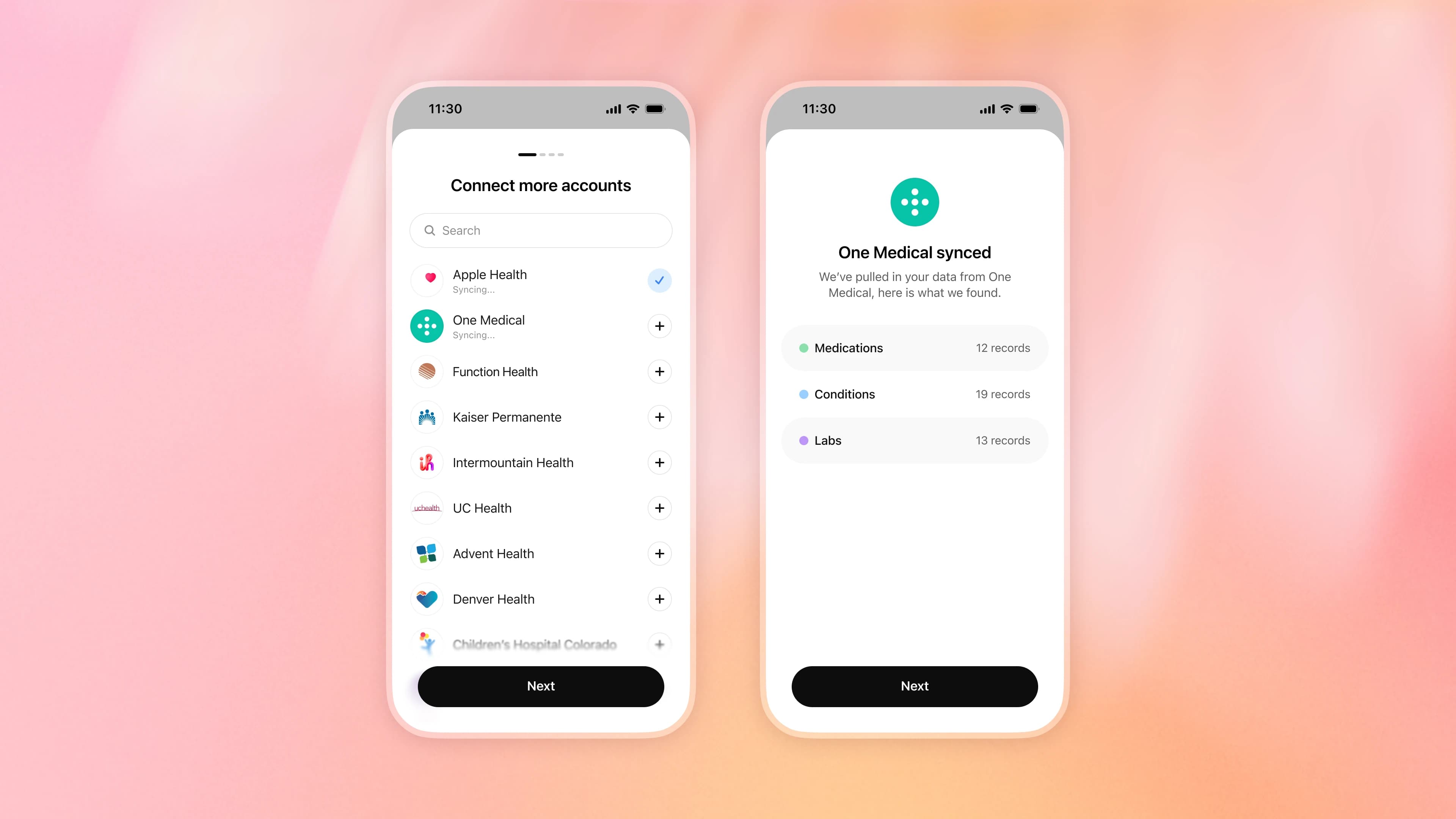
Why OpenAI moved health out of a separate space
OpenAI initially tested a dedicated health experience that required users to navigate to a specific area in ChatGPT. Early data killed that approach: more than 70% of health-related conversations happened outside the dedicated space. Health questions came up while planning meals, choosing restaurants, or scheduling weekend activities.
The new design integrates health context everywhere. Ask ChatGPT for restaurant recommendations, and it can factor in your food allergies without you mentioning them. Plan a weekend hike, and it knows about your recent knee injury. The Health sidebar remains the hub for managing connections, viewing trends, and browsing synced records.
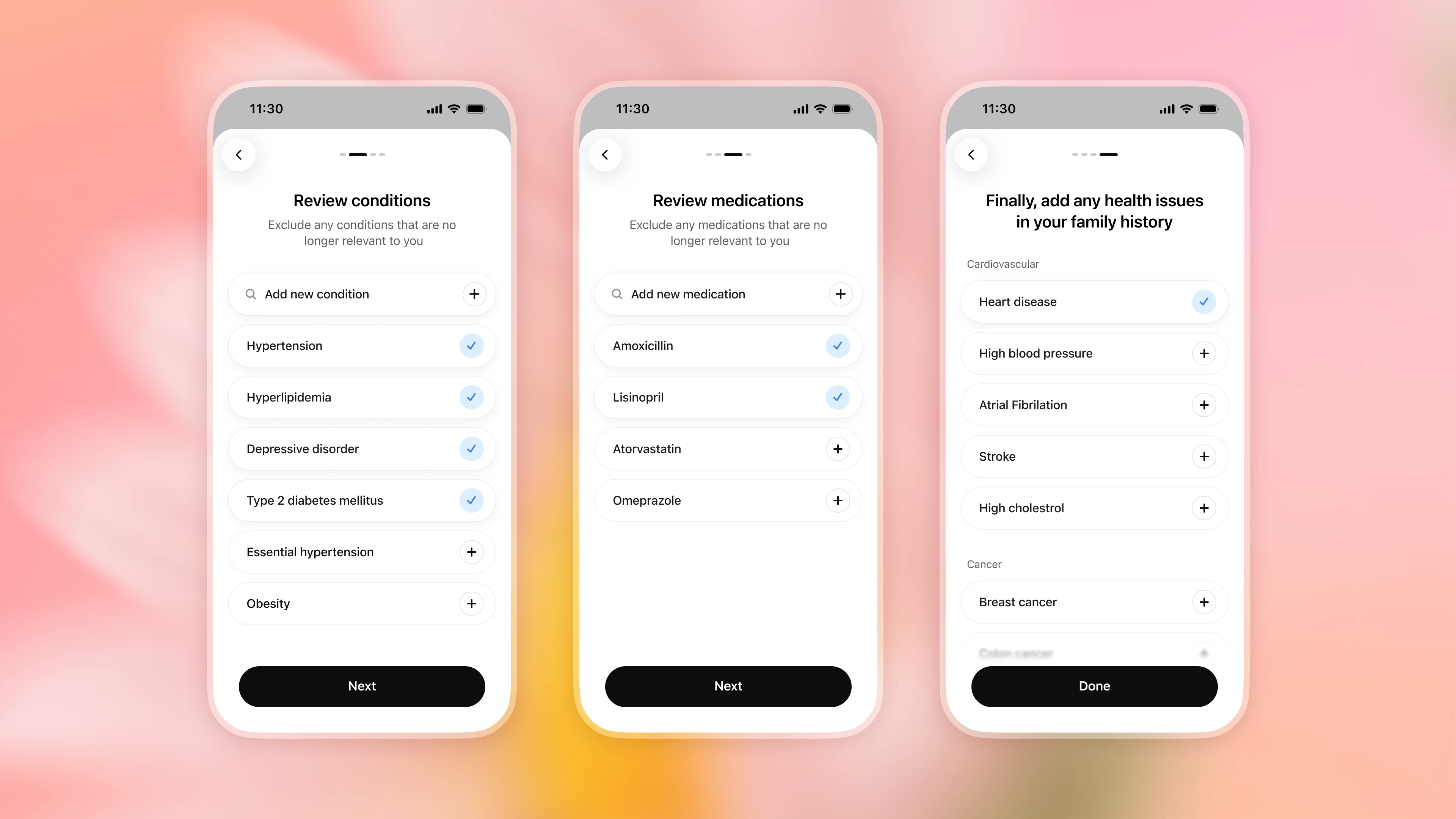
Privacy safeguards and what OpenAI won't do with your data
OpenAI states that connected medical records, Apple Health information, and conversations using that data are not used to train foundation models or target ads. This is a hard line the company needed to draw. Health data is among the most sensitive categories, and any training use would trigger regulatory scrutiny and user backlash.
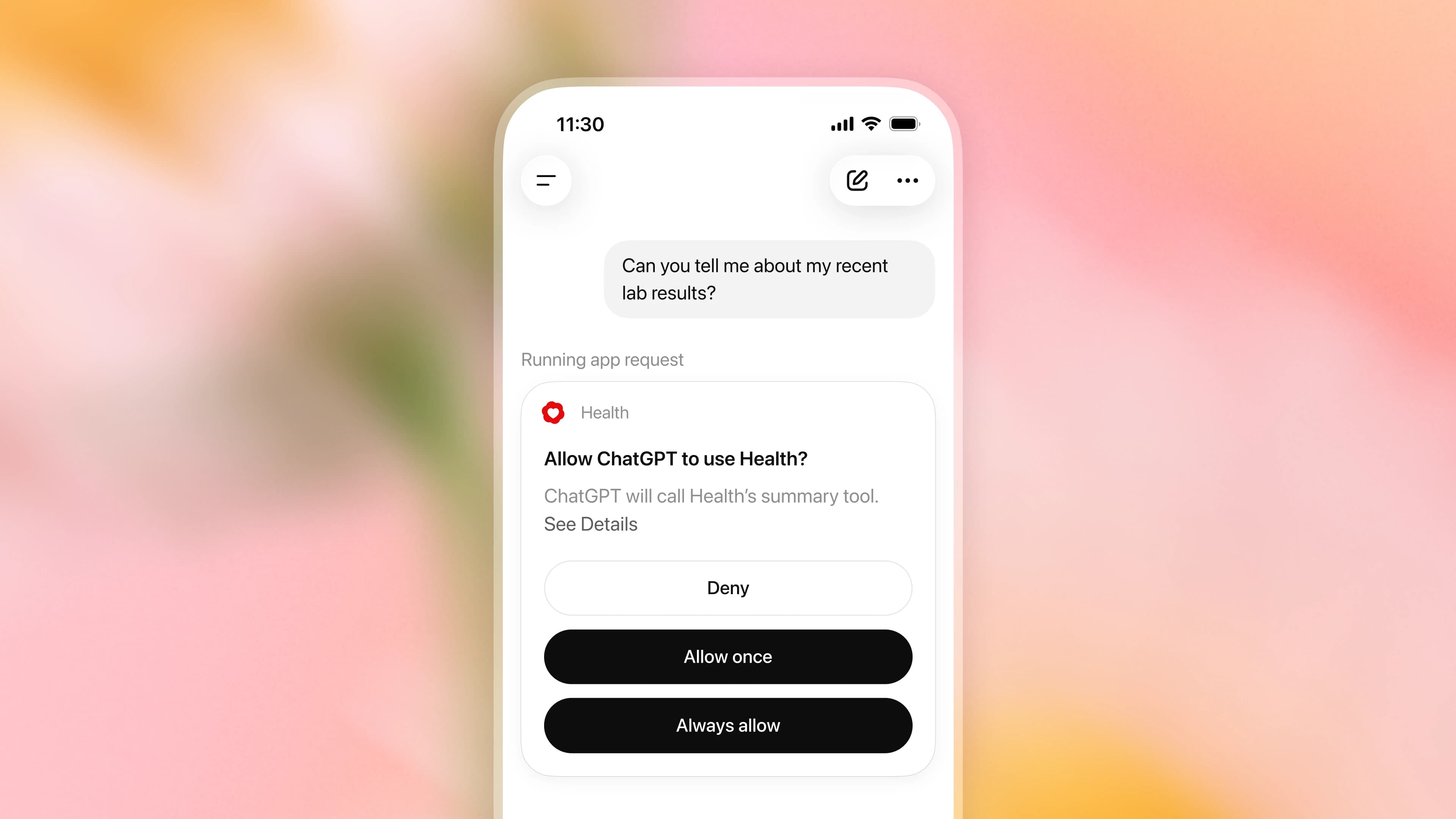
Users control access at a granular level. When ChatGPT wants to reference your health data, it asks permission. You can grant one-time access or persistent access, and revoke it anytime. The feature is not available in Codex, OpenAI's coding agent, keeping health data out of automated development workflows.
Understanding AI agent security risks becomes more important as ChatGPT gains access to personal health data
What users say it actually does
“The most useful part has been turning scattered medical history into something I can actually understand and explain. I have multiple overlapping issues and ChatGPT helped connect those pieces into a clear timeline, explain the medical terms in plain English, and create summaries I could share with a physical therapist or trainer.”
— Blake, technical program manager and early tester
The practical use case is clear: someone with chronic conditions juggling multiple specialists can get a unified view. ChatGPT can translate medical jargon, spot patterns across disconnected diagnoses, and generate summaries for new providers. This doesn't replace doctors, but it reduces the cognitive load of managing your own records.
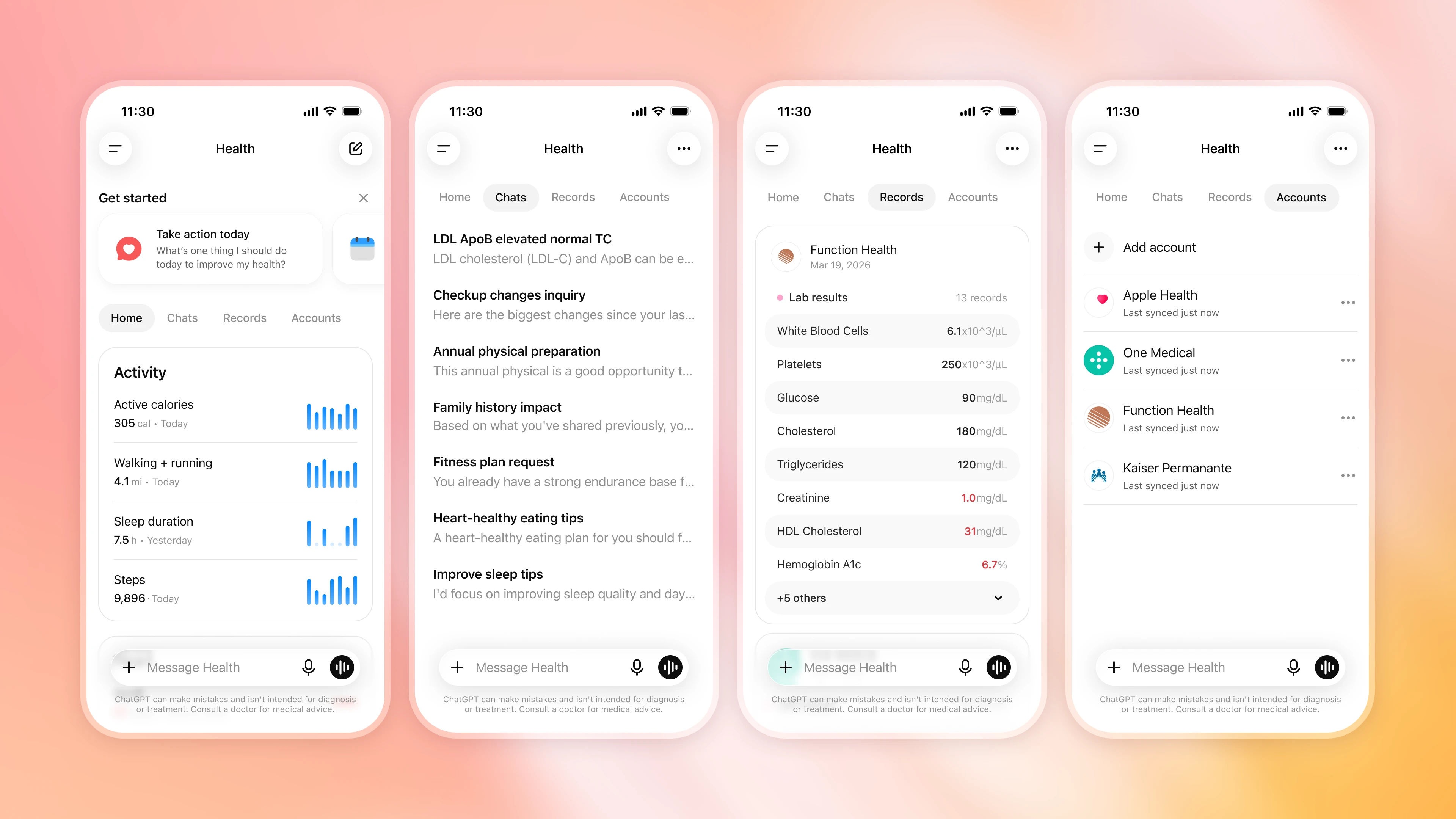
ChatGPT Health plans compared
| Feature | Free | Go | Plus | Pro |
|---|---|---|---|---|
| ChatGPT Health access | Yes | Yes | Yes | Yes |
| Apple Health integration | Yes | Yes | Yes | Yes |
| Medical records sync | Yes | Yes | Yes | Yes |
| Model | GPT-5.5 Instant | GPT-5.5 Instant | GPT-5.6 Sol | GPT-5.6 Sol |
| Complex health reasoning | Basic | Basic | Advanced | Advanced |
| Codex access | No | No | No | No |
The gap between Free and Plus matters for health use cases. GPT-5.6 Sol handles nuanced medical reasoning better, recognizes when urgent care is needed, asks for relevant context, and explains uncertainty more clearly. If you're using ChatGPT Health for anything beyond basic questions, the paid tiers deliver meaningfully better responses.
What this means for health AI products
OpenAI just made a strategic play into consumer health. Dedicated health AI startups now compete against a feature baked into a product 300 million people already use weekly. The integration advantage is real: ChatGPT Health works inside existing conversations rather than requiring users to adopt another app.
For AI builders, the architecture is instructive. OpenAI kept health context opt-in at every level, with explicit permission prompts and no training on the data. That's the pattern for sensitive integrations. Teams building similar features can use workflow automation tools like Zapier or Make to connect health data sources while maintaining similar permission models.
Disclosure
Some links in this post are affiliate links — Logicity earns a commission if you sign up, at no extra cost to you. We only link products we have used or actively recommend.
Logicity's Take
OpenAI's entry into health AI pressures standalone health chatbots and symptom checkers that charge subscription fees for similar functionality. Ada Health, Babylon, and K Health now face a free competitor with GPT-5.5 Instant and a better-integrated alternative at ChatGPT Plus pricing ($20/month). The 300 million weekly health queries OpenAI cited represent massive distribution. For product teams building health features, the lesson is clear: integrate with existing user workflows rather than forcing separate destinations. OpenAI's own data showed 70% of health conversations happened outside their dedicated health space.
Frequently Asked Questions
Is ChatGPT Health available outside the US?
No. The feature launched exclusively for US users on July 23, 2026. OpenAI has not announced international expansion plans.
Does OpenAI use my health data to train AI models?
No. OpenAI states that connected medical records, Apple Health data, and health conversations are not used to train foundation models or target ads.
Can I use ChatGPT Health on Android?
Not at launch. The feature is available on web and iOS only. Android support was not mentioned in the announcement.
Is ChatGPT Health free?
Yes, the feature is available on Free, Go, Plus, and Pro plans. However, paid plans use GPT-5.6 Sol, which handles complex health reasoning better than GPT-5.5 Instant on Free.
Can ChatGPT Health replace my doctor?
No. OpenAI explicitly positions the feature as supporting, not replacing, professional medical care. The AI is trained to recognize when professional care may be needed.
Need Help Implementing This?
Building health AI features or integrating sensitive user data into your product? Logicity's team can help you navigate the privacy architecture and permission models that OpenAI used here. Contact us for a consultation.
Source: OpenAI News
Manaal Khan
Tech & Innovation Writer
Produced with AI assistance and reviewed by the Logicity editorial team. Learn more in our Editorial Policy.