Key Takeaways
Byju Gets 6 Months in Jail By Singapore Court Over Contempt | Vantage on Firstpost | 4K
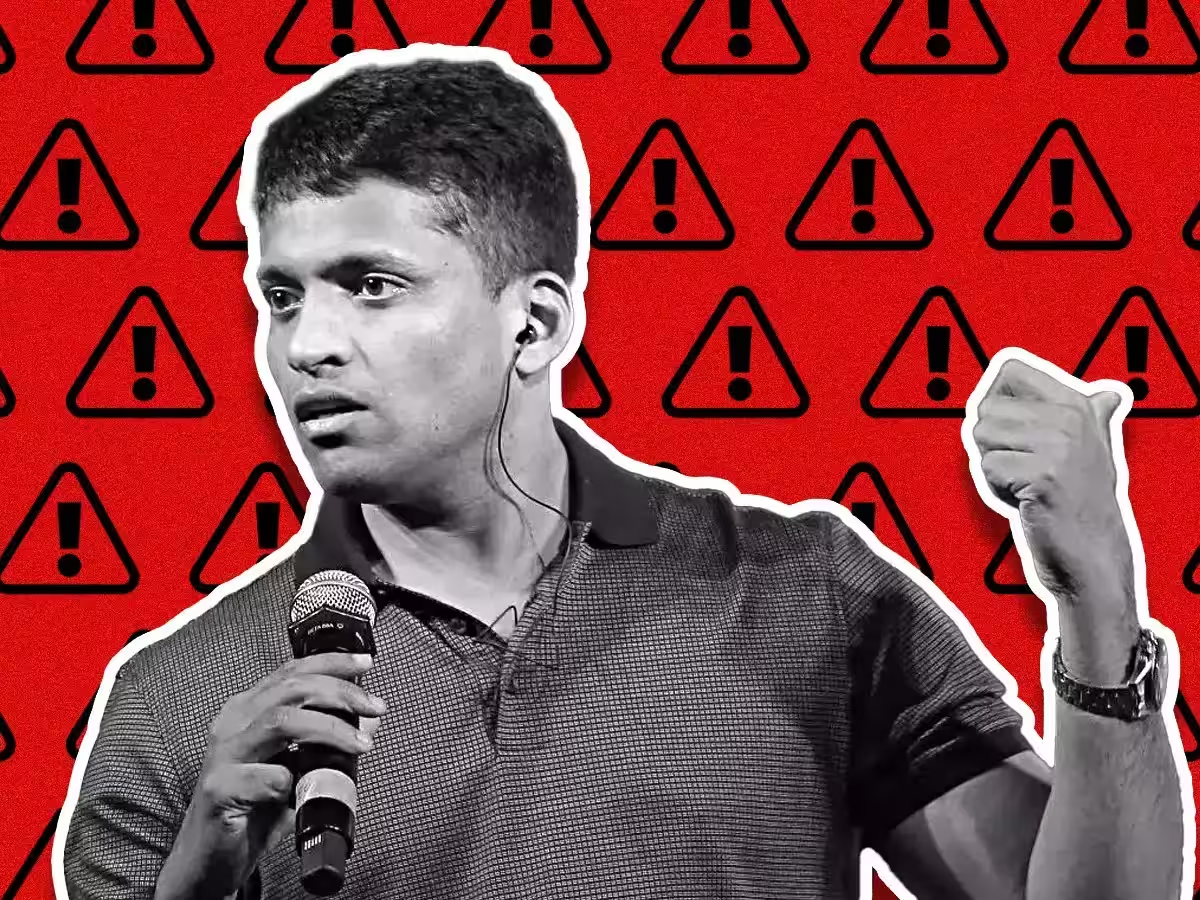
- Singapore High Court rejected Byju Raveendran's appeal to halt his 6-month jail sentence for contempt
- The ruling effectively bars Raveendran from entering Singapore unless he serves the term
- Qatar Investment Authority and US lenders continue pursuing legal claims against the Byju's founder globally
Singapore's High Court has rejected Byju Raveendran's attempt to overturn his six-month jail sentence, effectively barring the founder of failed edtech giant Byju's from entering the city-state unless he's prepared to serve the term. The July 9 ruling marks another blow for the former billionaire, whose company once stood as India's most valuable startup at $22 billion.
The court had originally handed down the contempt sentence in May, then granted a temporary stay last month. That reprieve is now gone. Raveendran's law firm, Lazareff Le Bars, confirmed the rejection in a statement Tuesday.
What does this mean for Raveendran?
The practical effect is straightforward: Raveendran cannot enter Singapore without facing arrest and imprisonment. His lawyer, J. Michael McNutt, acknowledged this reality while noting his client is not currently in Singapore and has no confirmed travel plans.
“The order has no practical effect unless and until he chooses to enter Singapore. In the future, should he be in, or intend to travel to, Singapore, he may appeal then and the court will deal with it.”
— J. Michael McNutt, Lazareff Le Bars
Raveendran maintains he did not breach any court order, intentionally or otherwise. His legal team says he will pursue every lawful remedy through proper legal channels. But the contempt finding stems from alleged violations of a Mareva injunction, an asset-freezing order obtained by foreign investors. Courts take such violations seriously.
Who is pursuing Raveendran globally?
The Singapore case is one front in a multi-jurisdictional legal battle. In the city-state, Raveendran faces claims from a subsidiary of Qatar Investment Authority, which invested in Byju's during a funding round even as the company was cutting jobs and laying off staff. QIA invested approximately $500 million in the edtech firm.
QIA welcomed the ruling. In a statement, the sovereign wealth fund said it remains "determined to ensure that Mr. Raveendran is held accountable for his actions" and will continue pursuing all legal remedies.
In the United States, the situation is equally dire. Lenders are fighting to recover losses from a $1.2 billion term loan that soured. US bankruptcy proceedings have included allegations that Raveendran transferred approximately $533 million to personal accounts. He denies these claims.
How did Byju's collapse so spectacularly?
The fall has been dramatic by any measure. Raveendran, a former teacher, built Think & Learn Pvt (operating as Byju's) into an edtech powerhouse during the pandemic boom. The company claimed over 150 million registered users at its peak. It reached a $22 billion valuation in 2022, making Raveendran a billionaire and a symbol of India's startup success.
Then came the unraveling. Aggressive expansion, mounting losses, and alleged corporate governance failures combined to bring the company down. The shift from pandemic-era online learning back to physical classrooms hit revenue. Auditors raised concerns. Layoffs followed. Investors who had poured billions into the company began demanding accountability.
The speed of the collapse surprised many observers. A company that had attracted investment from Sequoia, Tiger Global, and sovereign wealth funds found itself facing insolvency proceedings and criminal allegations against its founder in multiple countries.
What happens next?
Raveendran's options are narrowing. The Singapore ruling limits his mobility in Asia. US legal proceedings continue. And creditors show no sign of backing down.
His legal team's argument, that the jail sentence has "no practical effect" unless he enters Singapore, is technically correct but misses the broader picture. International business requires international travel. Singapore is a major financial hub. Being barred from the country, or any country, constrains a founder's ability to operate, raise capital, or negotiate settlements.
The case also sends a message to other founders facing investor disputes. Courts in financial centers like Singapore take contempt seriously. Asset-freezing orders have teeth. Ignoring them, or appearing to ignore them, carries real consequences.
Logicity's Take
The Byju's saga offers a cautionary tale for tech investors and founders alike. Raveendran built something genuinely impressive, then allegedly failed to maintain the governance structures that protect both investors and founders when growth slows. For CTOs and tech leaders evaluating vendors or partners, this case underscores why due diligence matters beyond the product demo. A company's financial health, governance practices, and founder accountability are as important as its feature set. The edtech sector specifically now faces heightened scrutiny from investors who watched billions evaporate in the Byju's collapse.
Frequently Asked Questions
Why was Byju Raveendran sentenced to jail in Singapore?
Raveendran received a six-month jail sentence for contempt of court, stemming from alleged violations of a Mareva injunction (asset-freezing order) obtained by foreign investors including Qatar Investment Authority.
Can Byju Raveendran appeal the Singapore ruling?
According to his lawyer, Raveendran could potentially appeal if he enters or intends to travel to Singapore in the future. However, the current ruling stands and would require him to serve the sentence upon entering the country.
How much did Byju's investors lose?
The full extent of losses is still being calculated through various legal proceedings. US lenders are pursuing $1.2 billion from a soured term loan, while Qatar Investment Authority invested approximately $500 million. Byju's peak valuation was $22 billion.
Where is Byju Raveendran now?
His lawyer confirmed Raveendran is not currently in Singapore and has no confirmed plans to travel there. His exact location has not been publicly disclosed.
What caused Byju's to collapse?
The company's collapse resulted from a combination of aggressive expansion, mounting losses following the end of pandemic-era online learning demand, and alleged corporate governance failures that triggered investor lawsuits and auditor concerns.
Need Help Implementing This?
If your organization is navigating vendor due diligence, governance frameworks, or risk assessment for tech partnerships, our team can help connect you with the right expertise. Contact us at hello@logicity.in.
Source: Tech-Economic Times / ET
Manaal Khan
Tech & Innovation Writer
Produced with AI assistance and reviewed by the Logicity editorial team. Learn more in our Editorial Policy.