Key Takeaways
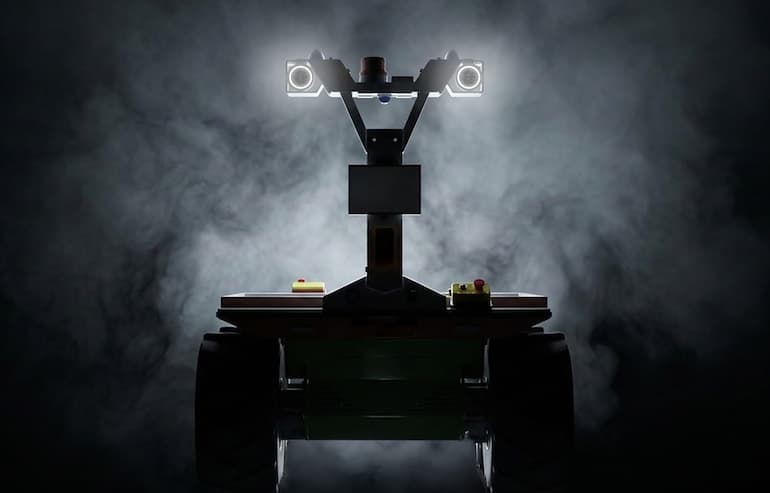
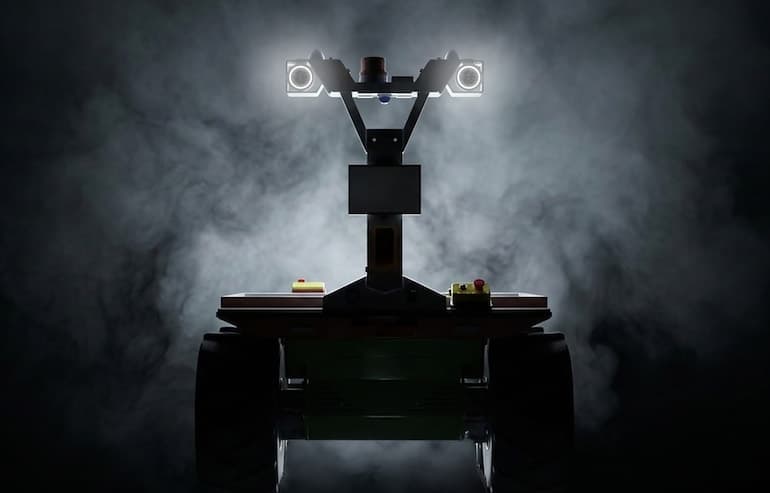
- The Grande 44 delivers 44 hp peak power and can tow up to 6,000 lb, making it Burro's most powerful autonomous platform
- Burro has logged over 1 million hours and 200,000 miles of autonomous operation across six countries before this launch
- The platform operates indoors and outdoors without infrastructure modifications, targeting rail yards, airports, and depot facilities
Burro has launched the Grande 44, an autonomous mobile robot built for heavy industry that packs 44 hp of peak power and tows up to 6,000 lb. The Philadelphia-based company says this is its most powerful platform yet, designed to handle gravel yards, loading docks, and outdoor industrial environments where conventional warehouse robots fail.
The Grande 44 marks Burro's first push beyond agriculture into industrial applications. The company has spent eight years running autonomous robots through farms, nurseries, and logistics operations, logging more than 1 million hours and 200,000 miles across the U.S., Australia, New Zealand, the U.K., Israel, and Latin America. That operational history now powers a robot aimed at intermodal yards, airports, rail facilities, and automotive logistics campuses.
What makes the Grande 44 different from warehouse robots?
Traditional automated guided vehicles rely on magnetic tape, reflectors, and consistent lighting. They work on smooth warehouse floors. The Grande 44 is built for the opposite: uneven terrain, variable weather, and the transition between indoor facilities and outdoor yards.
Burro says the platform navigates gravel, slopes, dust, and mud without requiring infrastructure modifications. It runs the same 12-camera 360-degree vision system used across Burro's agricultural fleet, which generates roughly 2 terabytes of imagery per hour of operation. That data feeds back into the company's proprietary dataset for continuous improvement.
“Robots have long been stuck in warehouses and factories. Few companies have successfully scaled autonomy outdoors, into agriculture, construction, and now heavy industry, where trillions of dollars are spent on labor every year.”
— Charlie Andersen, CEO of Burro
What can the Grande 44 actually do?
Burro positions the Grande 44 as a multi-purpose industrial workhorse. The company outlines four primary use cases:
- Industrial towing and transport: Moving heavy loads directly to assembly lines or across campuses, functioning as a decentralized autonomous conveyor
- Scouting and patrolling: Using sensors and RFID readers to track assets across large yards in real time, reducing fuel costs and manual audits
- Payload carrying: A solid steel cargo tray handles up to 1,500 lb for asset transport
- Vegetation management: Compatible with Burro's Cortador mower and Sprayito spot sprayer attachments for large-acreage maintenance
The towing capacity is notable. While Burro lists 6,000 lb as the standard rating, the platform has demonstrated capability at up to 15,000 lb in certain conditions. For comparison, that's heavier than a loaded Ford F-150.

How does Burro's "Physical AI" approach work?
Burro's pitch centers on what it calls "Physical AI", a system trained on millions of real environmental scenes collected daily from its operational fleet. Images of people, terrain, weather conditions, obstacles, and varying lighting all feed into a proprietary dataset.
The company claims this approach has made the platform resilient to edge cases that would trip up robots trained only in controlled environments. The same system that operated through tropical storms in Florida, sub-zero winters in the Northeast, and scorching Texas summers now powers the Grande 44.
Does this replace workers?
Burro frames the Grande 44 as a "collaborative force multiplier" rather than a labor replacement. The company says it absorbs repetitive, physically demanding transport tasks that create bottlenecks and overwork short-staffed crews. The goal: free skilled operators for higher-value work.
CEO Charlie Andersen is more direct about the economic reality driving adoption. "The only way labor-intensive industries will be viable long-term in the U.S. is to boost productivity per employee with automation, AI, and other technologies," he said.
This framing sidesteps the displacement question, but the underlying logic is clear. If the alternative is moving operations offshore or shutting down, on-site automation becomes attractive regardless of how you describe it.
When can you see it?
Burro will demonstrate the Grande 44 at Automate 2026 in Chicago next week. The company will be at Booth 25064 and will run live demonstrations in the AMR Demo Area at Booth 24040. Burro says its automation engineers will discuss specific operational challenges and workflows with attendees.
For companies operating large outdoor facilities, the pitch is straightforward: here's a robot that already works in unpredictable conditions, now scaled up for industrial loads. Whether it delivers on that promise at scale remains to be proven, but the 1 million hours of prior operation gives Burro more real-world credibility than most outdoor robotics entrants.
Logicity's Take
Burro's agricultural track record is its strongest differentiator. Most outdoor AMR vendors are still in pilot phases. Burro has eight years of fleet data across six countries. The question now is whether farm and nursery experience translates to the higher-stakes environment of rail yards and airports, where safety requirements and throughput expectations are more demanding. If the Grande 44 performs, it could establish a template for how outdoor robotics scales: prove reliability in agriculture first, then move upstream.
Frequently Asked Questions
What is the Burro Grande 44?
The Grande 44 is Burro's most powerful autonomous mobile robot, featuring 44 hp peak power and 6,000 lb towing capacity. It's designed for heavy industry applications including rail yards, airports, and logistics campuses.
Can the Grande 44 operate both indoors and outdoors?
Yes. Burro built the platform to transition between indoor facilities and outdoor yards without infrastructure modifications, handling gravel, slopes, dust, mud, and variable weather conditions.
How much operational experience does Burro have with autonomous robots?
Burro has deployed over 750 robots and logged more than 1 million hours and 200,000 miles of autonomous operation across the U.S., Australia, New Zealand, the U.K., Israel, and Latin America.
What industries is the Grande 44 designed for?
Burro targets intermodal and depot yards, airports, rail yards, automotive logistics operations, and facility campuses that require heavy towing and transport in outdoor environments.
Where can I see the Burro Grande 44 in person?
The platform will be demonstrated at Automate 2026 in Chicago at Booth 25064, with live demonstrations in the AMR Demo Area at Booth 24040.
Need Help Implementing This?
Evaluating autonomous platforms for your industrial operations? Get in touch with our team for vendor comparisons, integration assessments, and ROI analysis tailored to your facility requirements.
Source: The Robot Report / The Robot Report Staff
Manaal Khan
Tech & Innovation Writer
Produced with AI assistance and reviewed by the Logicity editorial team. Learn more in our Editorial Policy.




