Key Takeaways
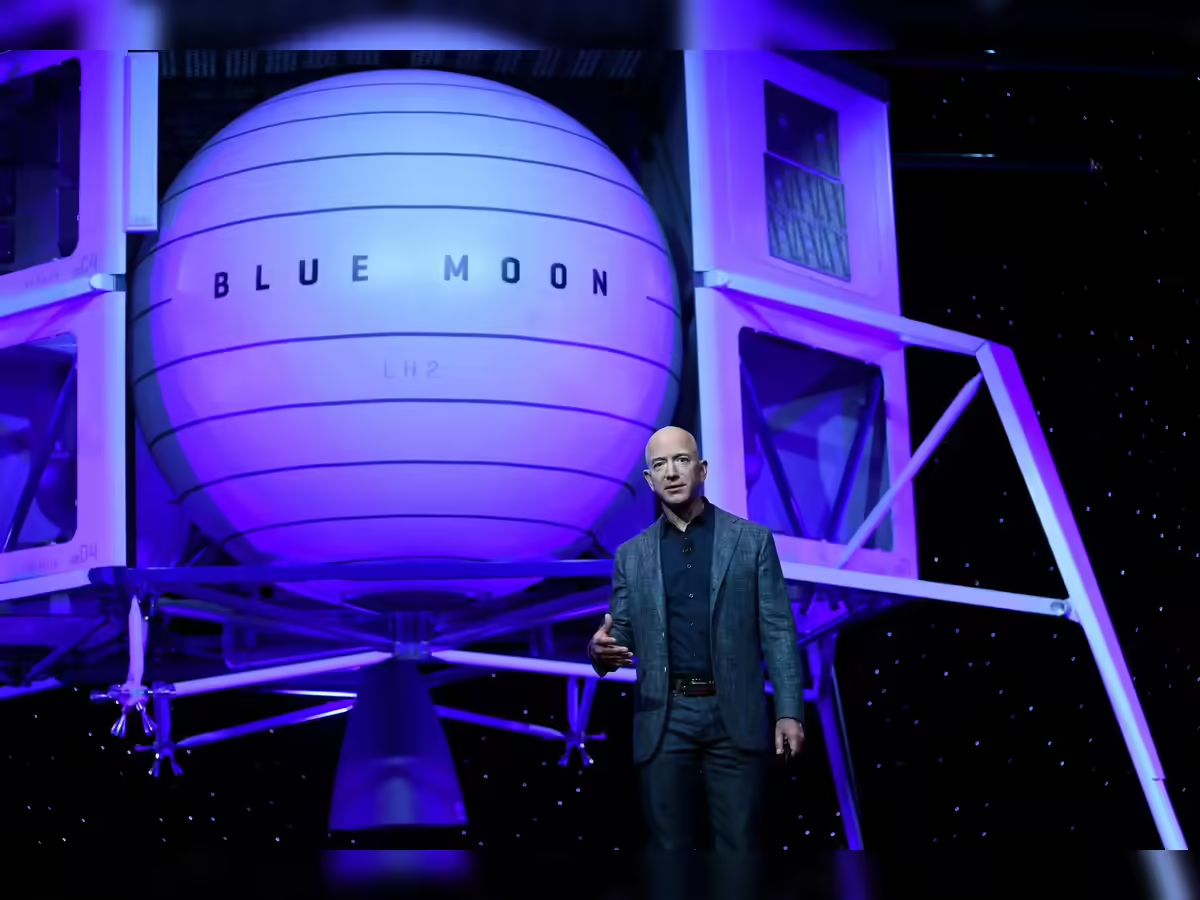
- Blue Origin CEO David Limp confirmed the company expects to resume New Glenn launches in 2026 despite May's catastrophic test failure
- The explosion caused an estimated $2.5 billion in damage to the LC-36 facility, including a 600-foot lightning tower
- Aerospace engineers remain skeptical about certifying a damaged launch pad for flight within six months
Blue Origin will fly its New Glenn rocket before the end of 2026, CEO David Limp said Wednesday, despite the May explosion that destroyed the vehicle and caused an estimated $2.5 billion in damage to the company's Florida launch complex. Reconstruction has already begun at Cape Canaveral's LC-36 facility.
Limp made the announcement at VivaTech in Paris, appearing alongside founder Jeff Bezos. "Reconstruction has already begun. We are taking this opportunity to not just repair, but to upgrade our launch system to include a more efficient vertical integration facility," Limp said. "We expect to fly this year."
What happened in the May explosion?
On May 28, 2026, a static fire test of a New Glenn rocket at Cape Canaveral ended in catastrophic failure. The explosion destroyed the rocket entirely and severely damaged the launch complex. The fireball was visible from 100 miles away.
The blast took out a 600-foot lightning protection tower and crippled key infrastructure across the facility. Independent aerospace analysts estimate total damage at $2.5 billion, making it one of the costliest launch pad accidents in commercial spaceflight history.
Can Blue Origin actually fly in six months?
The timeline faces serious scrutiny. Engineers on Reddit's r/space community have pointed out the difficulty of certifying a damaged launch pad for flight within six months. Launch facilities require extensive inspections, structural assessments, and regulatory approval before any vehicle can lift off.
The skepticism is grounded in precedent. When SpaceX's Falcon 9 exploded on the pad in 2016, return to flight took four months, but that incident caused far less structural damage. Blue Origin's situation involves rebuilding major infrastructure from scratch, not just repairing it.
Limp's framing is notable: he described the reconstruction as an "opportunity" to upgrade systems rather than simply restore them. This suggests Blue Origin may be building a more capable facility, but that ambition could extend the timeline rather than shorten it.
Why this matters for NASA's Artemis program
New Glenn is not just Blue Origin's flagship rocket. It is a critical piece of NASA's Artemis lunar mission architecture. Any delays to New Glenn's operational status ripple through NASA's own timelines for returning humans to the Moon.
Blue Origin has been competing for heavy-lift launch contracts against SpaceX and United Launch Alliance. A prolonged gap in flight capability would hand competitors more market share at a moment when the commercial launch industry is busier than ever. The company cannot afford to miss its window.
The Bezos factor
Bezos's presence at VivaTech alongside Limp signals how seriously Blue Origin is taking this moment. The founder has poured billions into the company over two decades, but Blue Origin has consistently trailed SpaceX in reaching operational milestones.
Hacker News discussions have drawn connections between Bezos's industrial AI initiatives and the technical culture at Blue Origin. Some users debate whether the company's approach balances "move fast and break things" urgency against traditional aerospace safety protocols. The May explosion will inevitably fuel that conversation.
Bezos's public statement struck a defiant tone, acknowledging the setback while insisting the company would push forward. Whether that determination translates to a 2026 launch remains the open question.
Logicity's Take
Blue Origin's "fly this year" promise is aspirational marketing as much as an engineering commitment. Six months to certify a rebuilt launch complex would be aggressive even if the explosion had caused minor damage. The real question is whether the company can afford another delay. Every month New Glenn stays grounded is a month SpaceX and ULA solidify their hold on NASA and commercial contracts. Bezos has the capital to wait; the market may not wait for him.
Frequently Asked Questions
When did the Blue Origin explosion happen?
The explosion occurred on May 28, 2026, during a static fire test of the New Glenn rocket at Cape Canaveral's LC-36 facility.
How much damage did the Blue Origin launch pad explosion cause?
Independent aerospace analysts estimate the damage at $2.5 billion, including the destruction of a 600-foot lightning protection tower and extensive facility infrastructure.
Will Blue Origin fly New Glenn in 2026?
CEO David Limp says the company expects to fly this year, though many aerospace engineers are skeptical about the feasibility of certifying a rebuilt launch pad within six months.
How does this affect NASA's Artemis program?
New Glenn is part of NASA's Artemis lunar mission architecture. Delays to the rocket's operational status could impact NASA's broader timeline for returning humans to the Moon.
Another high-stakes engineering challenge with ambitious timelines and significant skepticism
Need Help Implementing This?
Logicity covers the intersection of aerospace, technology, and business strategy. Subscribe to our newsletter for weekly analysis on the companies shaping the future of space and AI infrastructure.
Source: Tech-Economic Times / ET
Huma Shazia
Senior AI & Tech Writer
Produced with AI assistance and reviewed by the Logicity editorial team. Learn more in our Editorial Policy.




