Key Takeaways
- The %%bqsql magic eliminates the need to manually transfer data between SQL results and Python memory
- Local pandas DataFrames can be queried directly with SQL via implicit temporary table uploads
- The feature works with the free BigQuery sandbox, requiring no credit card
Google Cloud has released the %%bqsql IPython cell magic, a feature that lets data scientists and engineers run BigQuery SQL directly against local pandas DataFrames without the usual export-import dance. The magic command, part of the BigQuery DataFrames library, handles temporary table creation automatically. Your SQL cells can now reference Python variables, and your Python cells can consume SQL results, all within a single notebook session.
What problem does this solve?
The traditional workflow has always been clunky. You query BigQuery, pull results into a pandas DataFrame, manipulate the data in Python, then write it back to a temporary table so SQL can access it again. Each handoff costs time and cognitive overhead. Teams end up writing boilerplate code for data serialization, or worse, they avoid mixing languages entirely and miss out on the strengths of each.
Google Cloud introduced SQL cells in Colab Enterprise earlier, but that tied the feature to a proprietary environment. The %%bqsql magic extends the same capability to the open-source Jupyter ecosystem. You can run it locally with JupyterLab, or in any environment that supports IPython magics.
How the magic works
The magic command implicitly uploads local pandas DataFrames as temporary BigQuery tables when you reference them in SQL. This happens behind the scenes. You write a SQL query that references a DataFrame by its Python variable name, and BigQuery handles the schema mapping and data transfer.
One technical detail matters here: when preparing pandas data for SQL processing, Google recommends using the pyarrow dtype_backend. This ensures consistent NULL handling and cleaner schema mapping. The DataFrame column names also need to be SQL-friendly. BigQuery supports flexible column names with unicode characters, but special characters like slashes must be removed or replaced.
The setup requires three packages: Jupyter, bigframes, and python-calamine (for Excel file parsing in the tutorial example). Load the extension with %load_ext bigframes, set your project ID, and you're ready to mix SQL and Python cells.
Free tier availability
Google is positioning this as accessible to individuals and small teams. The feature works with the BigQuery sandbox, which requires no credit card. You get 10 GB of free storage and 1 TB of free query processing per month. The sandbox has some limitations, including 60-day table expiration and no DML or streaming inserts, but for exploratory analysis and prototyping, it's enough to test the workflow.
Beyond local DataFrames
The magic doesn't stop at local pandas data. It can query actual BigQuery tables and external tables in Google Cloud Storage, including Parquet, Iceberg, and CSV files. This makes it practical for production scenarios where data lives in the warehouse, not in your notebook's memory.
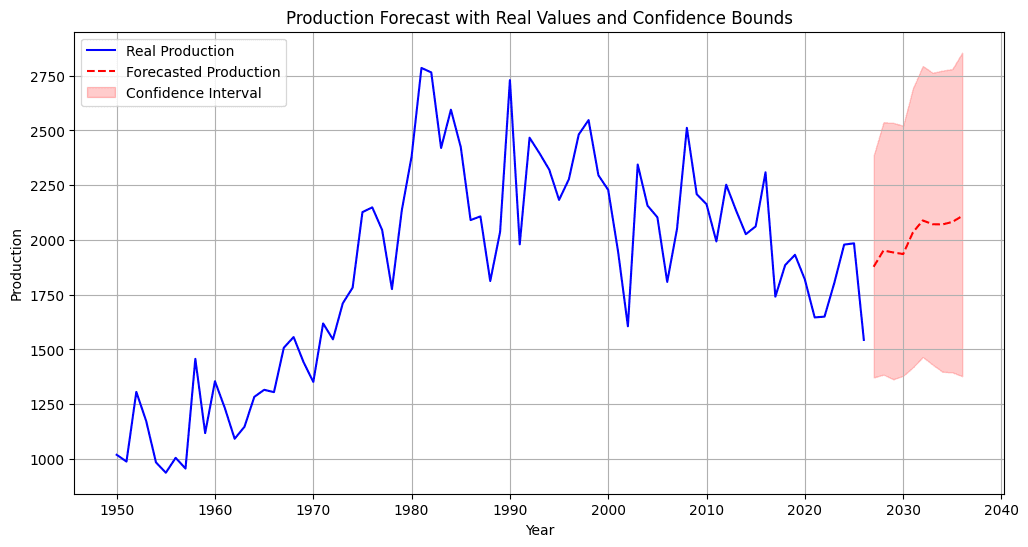
The tutorial demonstrates the workflow with USDA wheat supply data, downloading an Excel file, reading it into pandas, cleaning column names in Python, then querying the result with SQL. It's a small example, but it illustrates the point: each language does what it's good at, and the boundaries between them become invisible.
Logicity's Take
This matters for engineering teams running mixed-language data pipelines. The %%bqsql magic reduces context switching and eliminates a category of glue code. For DevOps, it simplifies notebook-based workflows that feed into scheduled jobs. Competing approaches exist: Snowflake's Snowpark offers similar Python-SQL integration, though it's tightly coupled to Snowflake's runtime. Databricks provides SQL cells in their notebooks, but requires their managed environment. Google's approach, building on open Jupyter standards and offering a free sandbox tier, lowers the barrier for teams to experiment before committing to a specific cloud vendor.
Environment options
You have three choices for running this. First, a local JupyterLab installation with a virtual environment. Second, Google Colab, which has the Python environment pre-installed. Third, BigQuery Studio, where the extension is pre-loaded. The local option gives you the most control. Colab is fastest for quick tests. BigQuery Studio integrates with Google Cloud's managed services.
For local setups, Google recommends isolating dependencies with a virtual environment. Activate it, install the packages with pip, start JupyterLab, and open a notebook. The tutorial provides a sample notebook in the BigQuery DataFrames GitHub repository for those who want to skip the setup steps.
Frequently Asked Questions
Does the %%bqsql magic require a paid BigQuery account?
No. The feature works with the free BigQuery sandbox, which provides 10 GB of storage and 1 TB of query processing per month without a credit card.
Can I use this with existing BigQuery tables or only local DataFrames?
Both. The magic can query local pandas DataFrames, actual BigQuery tables, and external tables in Google Cloud Storage including Parquet, Iceberg, and CSV files.
What do I need to install to use the %%bqsql magic locally?
You need jupyterlab and bigframes packages. Install them with pip install --upgrade jupyterlab bigframes. The extension is pre-loaded in Colab and BigQuery Studio.
How does data transfer work between Python and SQL?
The magic implicitly uploads local pandas DataFrames as temporary BigQuery tables when you reference them in SQL. This happens automatically without explicit export-import code.
Do I need to modify my pandas DataFrames before querying with SQL?
Use the pyarrow dtype_backend for consistent NULL handling. Also ensure column names are SQL-friendly by removing special characters like slashes.
Need Help Implementing This?
Logicity helps engineering teams design data pipelines that bridge SQL and Python workflows. Contact us to discuss your BigQuery DataFrames integration or broader data architecture challenges.
Source: Cloud Blog
Manaal Khan
Tech & Innovation Writer
Produced with AI assistance and reviewed by the Logicity editorial team. Learn more in our Editorial Policy.