Key Takeaways
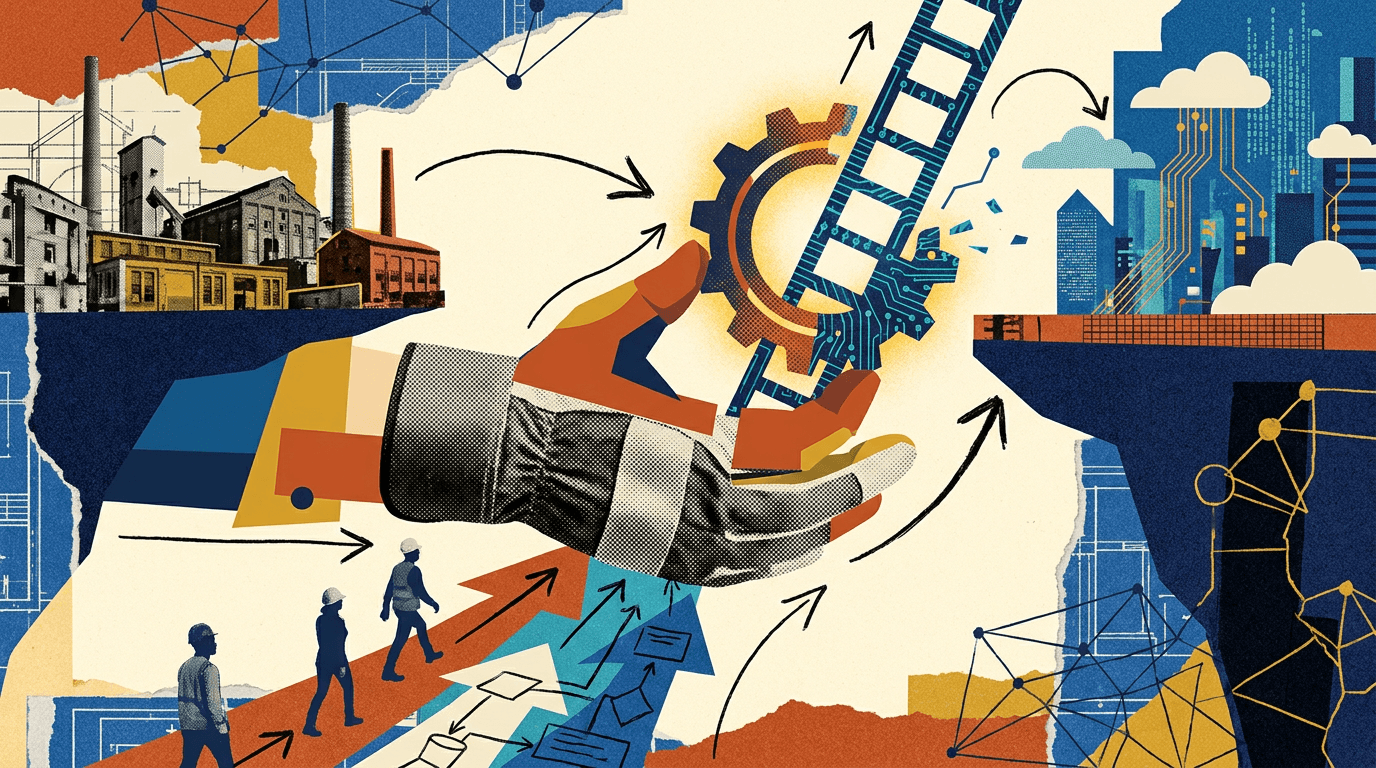
- Former Commerce Secretary Gina Raimondo launched Raise Us, a $1 billion initiative to retrain American workers for AI-driven jobs
- Amazon, Microsoft, OpenAI, and Anthropic are funding the program, marking the first joint workforce initiative by competing AI companies
- Pilot programs launching in four states will test wage insurance, career navigation platforms, and apprenticeship models
The companies building AI systems that could automate millions of jobs are now paying to retrain the workers they displace. Former U.S. Commerce Secretary Gina Raimondo has launched Raise Us, a bipartisan nonprofit aiming to raise $1 billion for AI workforce retraining. Amazon, Microsoft, OpenAI, and Anthropic are all backing the effort. Half the money is already locked in.
The irony is hard to miss. Google, Amazon, Microsoft, and Meta plan to spend $725 billion on AI development this year. Raise Us asks for $1 billion spread across multiple years. That's roughly 0.14% of what Big Tech is investing in the technology that's creating the problem.
"America has a technology strategy for leading the global AI competition. It does not yet have a people strategy, and we cannot lead without one," Raimondo said at the launch. "If we build the best AI systems in the world and leave millions of Americans behind, we won't have won anything; we'll have automated our own decline."
Why are AI competitors funding the same retraining program?
This marks the first time leading AI developers have jointly funded an independent workforce transition initiative. Raimondo, who will serve as CEO, assembled an unusual coalition. OpenAI and Anthropic compete directly in foundation models. Microsoft and Amazon compete across cloud, enterprise software, and AI assistants. Yet all four are writing checks to the same nonprofit.
Bank of America leads the corporate sponsors, funding an apprenticeship program for advanced manufacturing. The roster includes ADP, AMD, Autodesk, Blackstone, Cisco, Cognizant, Deloitte, Eli Lilly, General Motors, IBM, Mastercard, ServiceNow, UPS, and Workday. Philanthropic backers include the Rockefeller Foundation, Arnold Ventures, and the Stephen A. Schwarzman Foundation.
The New York Times reports $500 million is already committed. But the funding structure raises obvious independence questions. Companies that profit from rapid AI deployment are bankrolling an organization meant to address AI's labor disruption. Whether Raise Us can push back against its funders' interests remains unclear.
What will Raise Us actually do?
The organization operates across four pillars. State Partnerships will align education and workforce programs with employer demand through apprenticeships and short-term credentials. The twist: public funding would increasingly depend on whether participants land jobs, not just enrollment numbers.
The Employer Coalition brings together AI-using companies to develop retraining pilots. Microsoft has already tested one approach internally. The company trains entry-level legal staff across departments in AI skills so they can shift roles as technology changes. "You can think of doing that with almost any job we have," a Microsoft representative told the Times.
Raise Us will also create corporate incentives for retraining and retention, launch pilot programs with governors, and adapt training models to match shifting employer needs. Success will be measured by whether workers land and keep stable, well-paying jobs.
Which states are running the first pilots?
Four governors have signed on: Sarah Huckabee Sanders of Arkansas, Spencer Cox of Utah, Ned Lamont of Connecticut, and Wes Moore of Maryland. The bipartisan mix is deliberate. Two Republicans, two Democrats.
Each state is testing different approaches. In Arkansas, Raise Us supports Arkansas LAUNCH, an AI-powered career navigation platform connecting students and job seekers with personalized learning paths and employer-linked career tracks. Maryland will expand its Service Year program for recent high school graduates into healthcare and other labor-shortage sectors, plus launch an accelerator for displaced workers to start businesses.
Other states may offer "wage insurance" for workers who accept lower-paying jobs rather than leaving the workforce entirely. The concept addresses a real problem: workers often reject available positions because the pay cut feels too steep, then end up unemployed longer.
Does $1 billion matter at this scale?
Goldman Sachs estimates 300 million jobs globally could be exposed to automation by generative AI. McKinsey projects 40% of working hours could be impacted by large language models. Against those numbers, $1 billion spread across years and states looks modest.
The real value may be less about the money than the coordination. Getting Amazon, Microsoft, OpenAI, and Anthropic into the same room on workforce policy creates leverage that smaller grants cannot. If Raise Us can establish retraining standards that these companies adopt internally and require from vendors, the ripple effects could exceed the direct spending.
Still, Raimondo faces a structural tension. Her funders want AI adoption to accelerate. Her mission requires slowing displacement or making it less painful. Those goals conflict. Former Indiana Governor Eric Holcomb, who co-founded Raise Us with Raimondo, will need to help navigate that tension.
Frequently Asked Questions
What is Raise Us and who runs it?
Raise Us is a bipartisan nonprofit launched by former U.S. Commerce Secretary Gina Raimondo and former Indiana Governor Eric Holcomb. Raimondo serves as CEO. The organization aims to raise $1 billion to retrain American workers for AI-driven economic changes.
Which tech companies are funding AI worker retraining?
Amazon, Microsoft, OpenAI, and Anthropic are all backing Raise Us. Bank of America is the lead corporate sponsor. Other funders include ADP, AMD, Cisco, Deloitte, IBM, and General Motors, plus philanthropies like the Rockefeller Foundation.
How much has Raise Us raised so far?
The New York Times reports $500 million in multi-year pledges are already secured, halfway to the $1 billion goal.
Where are Raise Us pilot programs launching?
Initial pilots will run in Arkansas, Connecticut, Maryland, and Utah, with bipartisan governor support in each state.
What is wage insurance for displaced workers?
Wage insurance supplements pay for workers who accept jobs paying less than their previous roles. The goal is to keep people employed rather than leaving the workforce while waiting for higher-paying positions.
Logicity's Take
For AI builders, Raise Us signals where enterprise sales conversations are heading. Procurement teams will increasingly ask what your AI product does to the workforce, not just for it. Companies like Microsoft are already piloting internal retraining tied to AI deployment. That suggests a coming wave of "responsible AI" requirements in RFPs, similar to the security and privacy checkboxes that emerged over the past decade. If you're building AI tools that automate knowledge work, expect customers to ask whether you offer training resources, transition playbooks, or partnerships with workforce programs. The ROI spreadsheet now has a labor displacement row.
Related context on tech industry leadership and corporate compensation structures
Need Help Implementing This?
Building AI products that automate workflows? Contact our team to discuss responsible deployment strategies and workforce transition frameworks that can help your enterprise customers say yes faster.
Source: The Decoder / Tomislav Bezmalinović
Manaal Khan
Tech & Innovation Writer
Produced with AI assistance and reviewed by the Logicity editorial team. Learn more in our Editorial Policy.