Key Takeaways
Best VPS Hosting 2026 | My Honest Picks (Tested & Ranked)

- Ionos ranks as the best overall VPS hosting service for 2026, with Hostinger offering the strongest budget option
- VPS hosting provides dedicated resources and isolation that shared hosting cannot match, making it the right upgrade path for growing projects
- DigitalOcean excels for developers who need granular customization, while Liquid Web leads managed VPS for hands-off operations
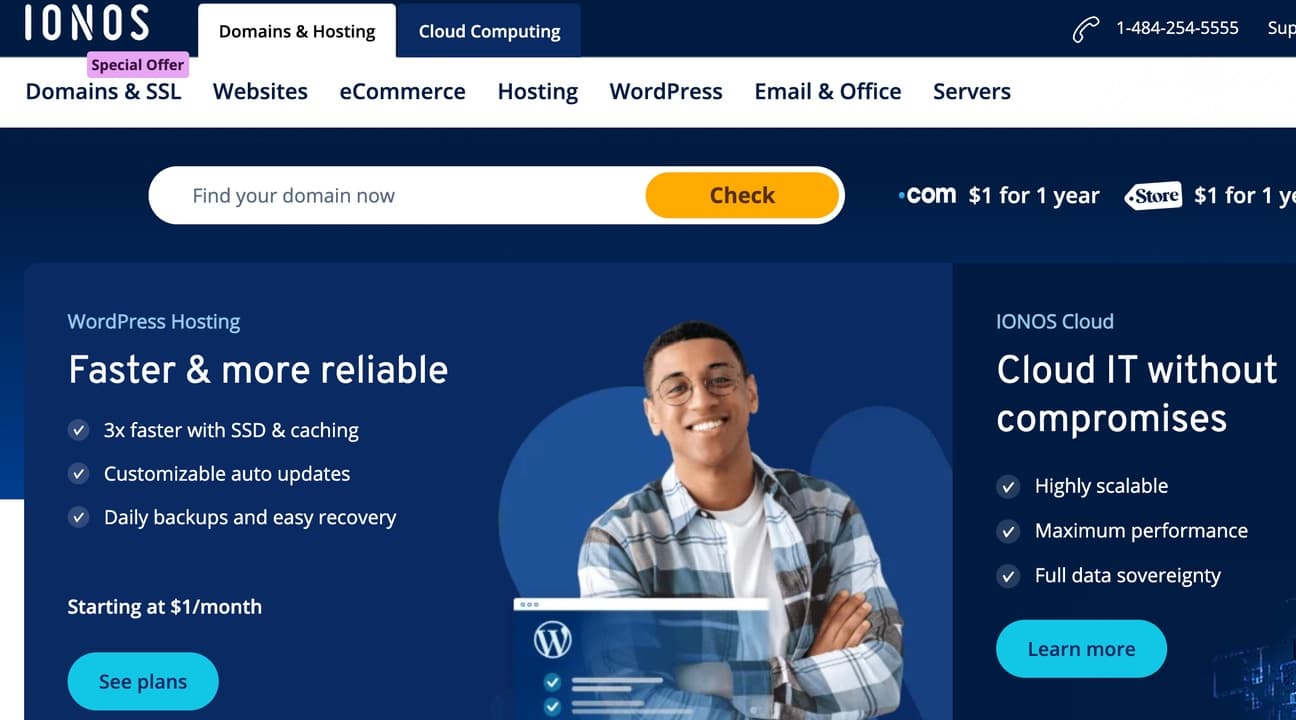
ZDNET's July 2026 update to its VPS hosting guide names Ionos the best overall virtual private server provider, with Hostinger taking the budget crown and DigitalOcean winning for customization. The guide tested 11 services across pricing, performance, support, and scalability to help growing businesses find the right step up from shared hosting.
Disclosure
Some links in this post are affiliate links — Logicity earns a commission if you sign up, at no extra cost to you. We only link products we have used or actively recommend.
The timing matters. Shared hosting works fine when you're getting a few hundred visitors a day. But traffic spikes, slow page loads, and limited storage start choking your site as you scale. VPS hosting solves this by giving you dedicated CPU, RAM, and storage on a virtualized server. You're still sharing physical hardware with other customers, but your resources are isolated. Nobody else's traffic surge tanks your performance.
Which VPS hosting service should you pick?
The answer depends on what you're optimizing for. ZDNET's rankings break down like this:
- Ionos — Best overall VPS hosting service
- Hostinger — Best budget VPS hosting service
- InMotion Hosting — Best for customer support
- Liquid Web — Best managed VPS hosting service
- Kamatera — Best flexible VPS hosting
- DigitalOcean — Best for customization
- GoDaddy — Best for beginners
- Akamai Cloud (Linode) — Best for detailed controls
- BuyVM — Best alternative for customer service
- DreamHost — Best budget alternative
- Vultr — Best alternative for flexibility and scalability
Liquid Web and BuyVM are new additions to the July update. Liquid Web fills a gap for teams that want managed VPS. You pay more, but someone else handles server maintenance, security patches, and performance tuning. BuyVM earned its spot for responsive customer service, which matters when you're troubleshooting at 2 AM.
What does VPS hosting actually cost?
VPS pricing typically runs $2 to $100 per month, depending on the resources you allocate. Compare that to shared hosting at $3 to $15 monthly. The premium buys you isolation, better uptime guarantees (usually 99.9% to 99.99%), and the ability to scale resources on demand.
Current deals from the ZDNET guide: Hostinger offers 80% off a two-year premium plan plus three months free, bringing the price to $3 per month. Ionos has a 93% discount on its Plus plan for the first year, down to $1 monthly. These intro rates spike after the promotional period, so read the renewal pricing before you commit.

When should you upgrade from shared to VPS?
Three signals indicate it's time. First, your site loads slowly even after you've optimized images and caching. Second, you're hitting traffic caps or seeing downtime during peak hours. Third, you need server-level access to install custom software or run specific configurations that shared hosting restricts.
E-commerce sites, SaaS applications, and content platforms with growing audiences typically outgrow shared hosting within 12 to 18 months. If you're running a WordPress site with 10,000 daily visitors, shared hosting will struggle. VPS gives you headroom.
Managed vs. unmanaged VPS: which do you need?
Unmanaged VPS providers like DigitalOcean and Vultr hand you a blank server. You install the operating system, configure security, manage updates. This works if you have a sysadmin on staff or you're comfortable with Linux command lines. The tradeoff is lower monthly cost and total control.
Managed VPS providers like Liquid Web handle the infrastructure so you can focus on your application. They patch vulnerabilities, monitor uptime, and often include automatic backups. You pay more, but you're buying time. For small teams without dedicated DevOps, managed VPS often makes more financial sense than hiring.
A middle path exists. Cloudways wraps DigitalOcean, AWS, and Google Cloud infrastructure in a managed layer. You get the underlying provider's performance with Cloudways handling server management. This hybrid approach has become popular with agencies running multiple client sites.
How DigitalOcean and Linode compare
Both serve developer-focused audiences. DigitalOcean earned ZDNET's pick for customization because of its granular resource allocation, extensive API, and one-click app deployments for common stacks. The Droplets interface lets you spin up a server in under a minute.
Linode, now branded as Akamai Cloud after its 2022 acquisition, won for detailed controls. It appeals to users who want fine-grained network configuration and benefit from Akamai's global edge infrastructure. Pricing between the two is nearly identical at the entry level. The choice often comes down to which documentation and community ecosystem you prefer.
Logicity's Take
The VPS market has consolidated around two tiers: budget providers (Hostinger, DreamHost, BuyVM) competing on price at $3-10/month, and developer platforms (DigitalOcean, Vultr, Linode) competing on tooling at $5-40/month. If you're a non-technical founder, start with Cloudways or a managed option. You'll spend more monthly but save dozens of hours you'd otherwise burn on server administration. For technical teams, DigitalOcean's Kubernetes and serverless offerings give you a growth path beyond basic VPS into modern infrastructure. Kamatera stands out for pay-as-you-go flexibility if your traffic is unpredictable.
What about dedicated hosting?
VPS sits between shared hosting and dedicated servers. If you're pushing the limits of even high-tier VPS plans, dedicated hosting gives you an entire physical machine. The cost jumps to $100-500 per month or higher. Most companies don't need this unless they're processing sensitive financial data, running intensive compute workloads, or require specific hardware configurations.
The hybrid approach is increasingly common: run your primary application on VPS, offload static assets to a CDN like Cloudflare, and use serverless functions for spiky workloads. This architecture often outperforms dedicated hosting at lower cost.
Frequently Asked Questions
What's the difference between VPS and cloud hosting?
VPS gives you a fixed allocation of resources on a virtualized server. Cloud hosting typically bills by actual usage and can scale resources automatically. Many providers blur this line. DigitalOcean Droplets are technically cloud VPS. The practical difference is billing model and auto-scaling capability.
Can I host multiple websites on one VPS?
Yes. Unlike shared hosting plans that often limit domains, VPS gives you full server control. You can run as many sites as your resources support. Most users configure virtual hosts in Apache or Nginx to serve multiple domains from one server.
Is VPS hosting secure enough for e-commerce?
VPS provides better isolation than shared hosting, but security depends on configuration. You need SSL certificates, firewall rules, regular updates, and PCI compliance measures if processing payments. Managed VPS providers handle much of this. Unmanaged requires you to implement it yourself.
How much RAM do I need for VPS hosting?
A basic WordPress site runs fine on 1-2GB RAM. E-commerce platforms and database-heavy applications typically need 4GB or more. Most providers let you upgrade RAM without migrating servers, so start smaller and scale when you see performance limits.
Which VPS provider has the best uptime?
Most major providers guarantee 99.9% to 99.99% uptime. Real-world performance varies. DigitalOcean, Linode, and Vultr consistently score well in independent monitoring. Check status pages and third-party uptime trackers before committing to a provider.
Understanding infrastructure investment trends helps contextualize why VPS pricing and availability may shift as cloud providers allocate resources toward AI workloads.
Need Help Implementing This?
Choosing the right VPS provider is step one. Migrating your existing site, configuring security, and optimizing performance is where most teams get stuck. If you need hands-on guidance, reach out to Logicity's consulting partners or drop a question in the comments.
Source: Latest news
Manaal Khan
Tech & Innovation Writer
Produced with AI assistance and reviewed by the Logicity editorial team. Learn more in our Editorial Policy.