Base Power closed a $1 billion Series D round, valuing the home battery startup at $13 billion. The company installs batteries in residential backyards instead of building utility-scale storage farms, a bet that has now attracted $2 billion in funding over the past year.
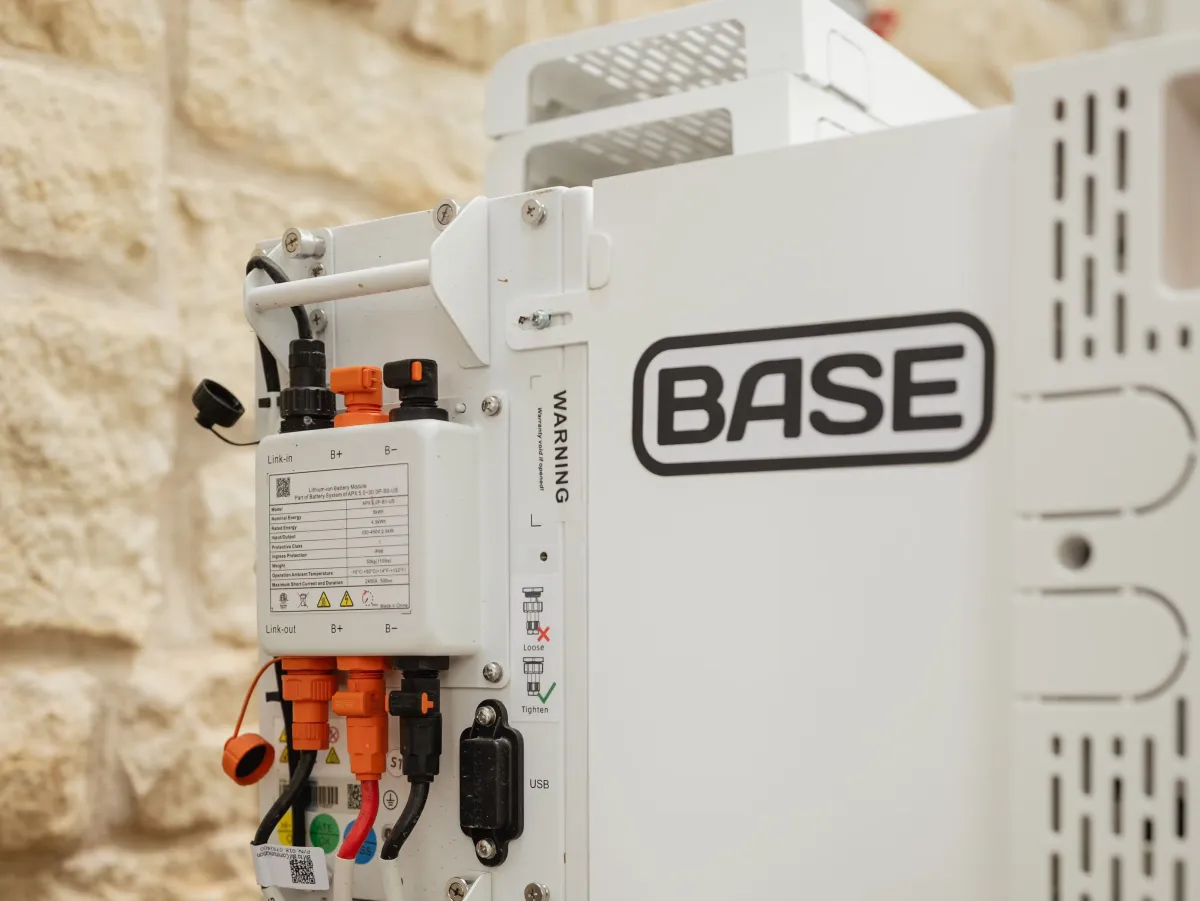
The Austin-based company is installing about 100 batteries per day, according to The Wall Street Journal, totaling roughly 8 megawatt-hours of new storage capacity daily. Base Power plans to double that installation rate by year's end. Since launch, the company has deployed more than 500 megawatt-hours of storage across Texas and Illinois.
The subscription model behind the growth
Base Power doesn't sell batteries. It installs them for a few hundred dollars, charges a monthly subscription, and retains ownership. In the Houston area, customers pay $695 for installation, $19 per month, and 13.1 cents per kilowatt-hour for electricity drawn from the battery. That rate roughly matches local retail electricity prices.
The economics work because Base Power sells stored electricity back to the grid during peak demand. Wholesale electricity prices spike during heat waves and cold snaps, and distributed batteries can respond faster than large power plants. The company effectively runs a virtual power plant made of thousands of individual units.
In regulated utility markets, Base Power partners with utilities directly to place batteries in customer homes. The utility pays to relieve strain on local distribution networks. In deregulated markets like Texas, Base Power arbitrages price swings in the wholesale market. Homeowners get backup power during outages either way.
New hardware: the Base Core battery
Alongside the funding announcement, Base Power launched a new product called Base Core. The battery stores 39.2 kilowatt-hours of electricity, significantly more than competing residential batteries. Tesla's Powerwall 3, for comparison, holds 13.5 kWh. Customers can install one or two Base Core units.
At nearly 40 kWh, a single Base Core can power a typical home for a day or more during an outage. The device is manufactured at Base Power's factory in Austin.
Why the grid needs backyard batteries now
U.S. electricity demand is growing for the first time in decades. Data centers, electric vehicles, and building electrification have pushed consumption higher, straining grids that were built for stagnant or declining load. The problem is acute in PJM, the regional transmission organization covering 13 states and D.C., where data center construction has outpaced grid expansion.
Portions of Illinois, where Base Power operates, fall within PJM territory. The company's distributed model sidesteps one of the biggest bottlenecks in energy development: the multi-year queue for grid interconnection. Large battery projects can wait five years or more for transmission access. A backyard battery connects to existing residential service and can be operational in a day.
Logicity's Take
Base Power's model flips the utility cost structure. Traditional utilities pay to build transmission lines and substations; Base Power pays homeowners to host storage. The economics hinge on wholesale price volatility, which has only increased as grids add intermittent solar and wind. The risk is regulatory: if grid operators or utilities decide distributed batteries should pay interconnection fees or face stricter dispatch rules, the arbitrage margin shrinks. The $13B valuation prices in a lot of continued regulatory latitude.
Who backed the round
Ribbit, Addition, Valor Equity Partners, and JPMorgan Chase's Strategic Investment Group led the Series D. Participating investors included Altimeter, D1 Capital Partners, Sands Capital, Coatue, Energy Impact Partners, Thrive Capital, a16z, Lightspeed, Trust Ventures, and CapitalG. Base Power CEO Zach Dell co-founded the company. His father, Dell Technologies CEO Michael Dell, did not invest in this round.
Another fast-growing startup commanding a multi-billion valuation in infrastructure-adjacent tech.
The deal makes Base Power one of the best-funded private companies in the energy storage sector. It also signals that investors see distributed residential batteries as a credible alternative to utility-scale projects, not just a niche consumer product. Whether the company can maintain installation pace and navigate an increasingly crowded market will determine if the valuation holds.
Need Help Implementing This?
If you're evaluating distributed energy or grid infrastructure technology for your portfolio or operations, reach out to Logicity for a vendor-neutral briefing.
Source: TechCrunch / Tim De Chant
Huma Shazia
Senior AI & Tech Writer
Produced with AI assistance and reviewed by the Logicity editorial team. Learn more in our Editorial Policy.