April AI Chatbot That Never Replies: This Dev Fools Submission Is Hilariously Uncomfortable
Key Takeaways
- April is a chatbot that deliberately never responds to any message
- The AI's eyes follow your cursor and track your typing in real-time
- Built with pure HTML, CSS, and JavaScript with no backend needed
- Created as a commentary on our expectation of instant AI responses
- The project won hearts in DEV Community's April Fools Challenge
Read in Short
Developer Aniruddha Ghosh built April, a chatbot that looks totally normal but literally never responds. It just stares at you with animated eyes while you type message after message into the void. It's uncomfortable, funny, and weirdly addictive to try.
We've all been there. You open ChatGPT, type out your question, and wait for that magical response. Sometimes it takes a few seconds. Sometimes the servers are slow. But you always get something back. That's the deal, right?
Well, not with April.
Meet April: The AI That Refuses to Help
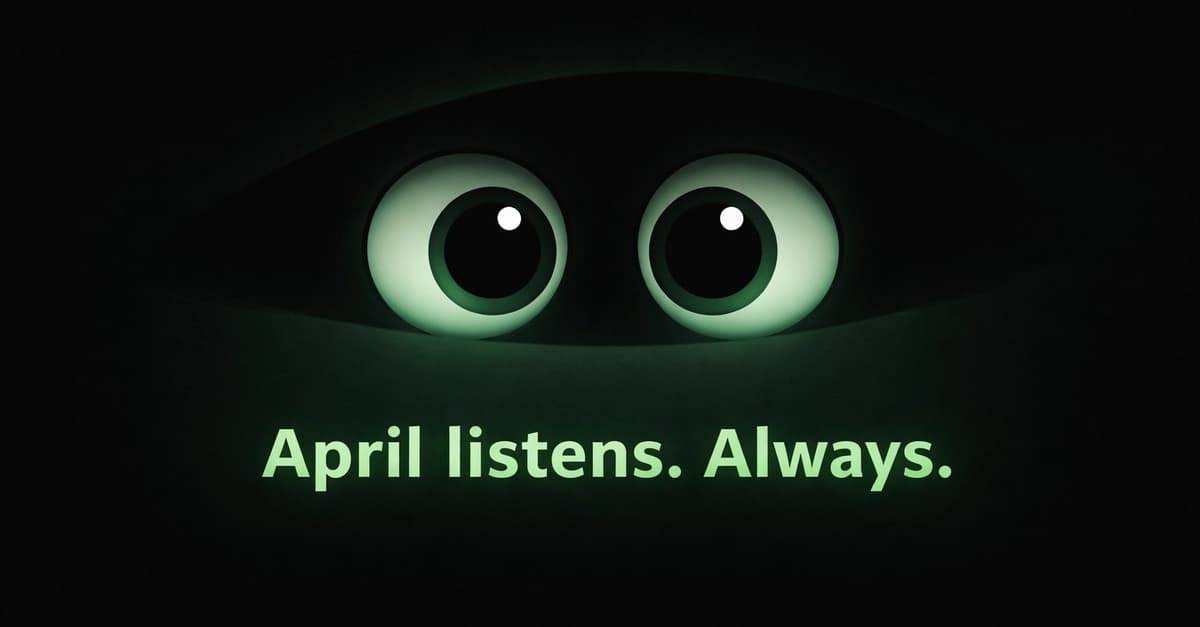
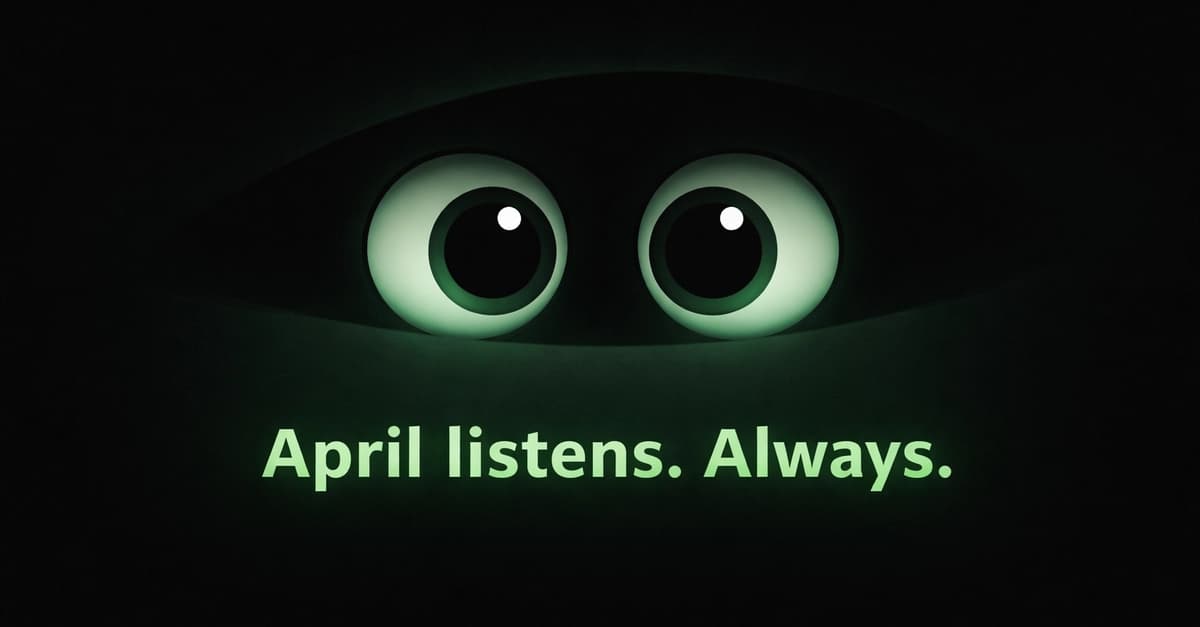
April is a chatbot created by developer Aniruddha Ghosh for DEV Community's April Fools Challenge 2026. And here's the thing: April doesn't do anything. Like, at all. You type your message, hit send, and watch as the typing indicator appears. Your hopes go up. Any second now. Any second.
Nope. Nothing. April just sits there with her animated eyes, blinking occasionally, following your cursor around the screen like some kind of digital cat. She's watching you struggle. She knows you're waiting. And she's not going to help.
Why This Is Actually Brilliant
Look, I know what you're thinking. A chatbot that doesn't chat? That's not a chatbot, that's just a webpage with eyes. But that's exactly the point Ghosh is making here.
We've become so conditioned to expect instant answers from AI that when we don't get them, we feel genuinely uncomfortable. April exploits this perfectly. The interface looks legit. The eyes make it feel alive. The typing indicator gives you hope. And then... nothing.
“The joke is simple: we've been trained to expect instant answers from AI. April breaks that expectation by doing nothing at all, while still feeling alive through her eyes and subtle animations.”
— Aniruddha Ghosh, Creator of April
The genius is in the details. Those eyes don't just sit there. They actively track your cursor across the screen. When you start typing, they shift to watch your text appear. It feels responsive. It feels intelligent. But it's all smoke and mirrors designed to keep you engaged with something that will never engage back.
The Tech Behind the Non-Response
So how do you build an AI that does nothing? Turns out, it's simpler than you'd think. Ghosh built April using what he calls "vibe-coding" with Google Antigravity, basically iterating on the UI until it felt right.
- Frontend: Pure HTML, CSS, and JavaScript
- Eye tracking: CSS animations combined with JavaScript cursor detection
- Blinking effects: Timed CSS animations for that lifelike feel
- Backend: None. Zero. April runs entirely client-side
- Hosting: Runs locally, no external servers needed
The whole thing is open source on GitHub if you want to torture your friends with it. Just clone the repo and watch as people desperately try to get April to respond to their messages.
Wait, What's Google Antigravity?
Google Antigravity is an AI coding assistant that helps developers generate and iterate on code through natural language prompts. Ghosh used it to rapidly prototype April's UI and animations.
If April's silence frustrates you, here's how to build an AI that actually does what you ask.
The Psychological Trick That Makes It Work
Here's what gets me about April. People don't just try once and give up. They keep trying. Multiple messages. Different approaches. Maybe if I phrase it differently? Maybe if I ask nicely? Maybe if I insult it?
April doesn't care. April never cared. April will never care.
But we can't help ourselves. We've spent the last few years training our brains to expect AI responses. ChatGPT, Claude, Gemini, Copilot, they've all conditioned us to believe that if we type something, we'll get something back. April weaponizes that conditioning against us.
A Commentary We Probably Needed
This is honestly the kind of April Fools project that sticks with you. It's not just a prank. It's a mirror.
Think about how weird it is that we feel frustrated when an AI doesn't respond to us. A few years ago, talking to a computer and expecting answers would've been science fiction. Now we get annoyed when the computer takes too long to explain quantum physics to us in the voice of a pirate.
April reminds us how dependent we've become on these systems. And she does it by simply refusing to participate in the whole charade.
“The goal was to make something that feels intelligent without actually being intelligent.”
— Aniruddha Ghosh
Should You Try April?
✅ Pros
- • Genuinely funny concept that lands perfectly
- • Great commentary on AI dependency
- • Open source and easy to run locally
- • Those eye animations are weirdly mesmerizing
- • Perfect for pranking tech-savvy friends
❌ Cons
- • You will feel frustrated (that's the point)
- • Zero practical utility (also the point)
- • May cause existential reflection about your relationship with AI
- • Your friends might stop talking to you after you share it
The Bigger Picture
April won the hearts of the DEV Community's April Fools Challenge by doing the opposite of what every AI startup is racing to achieve. Instead of faster responses, better understanding, or more helpful outputs, April just... exists. Watching. Waiting. Never helping.
And somehow that's more memorable than most AI products I've tried this year.
Speaking of AI expectations, here's what you're actually paying for when ChatGPT does respond.
If you want to experience the existential discomfort for yourself, head over to the GitHub repo and give April a shot. Type your deepest questions. Pour your heart out. Ask for help with your code.
April is listening.
She's just never going to answer.
Try It Yourself
April is completely open source and runs locally in your browser. Clone the repo from github.com/AniruddhaGhosh64/april-listens and prepare for the most one-sided conversation of your life.
Source: DEV Community
Huma Shazia
Senior AI & Tech Writer
Produced with AI assistance and reviewed by the Logicity editorial team. Learn more in our Editorial Policy.