Key Takeaways
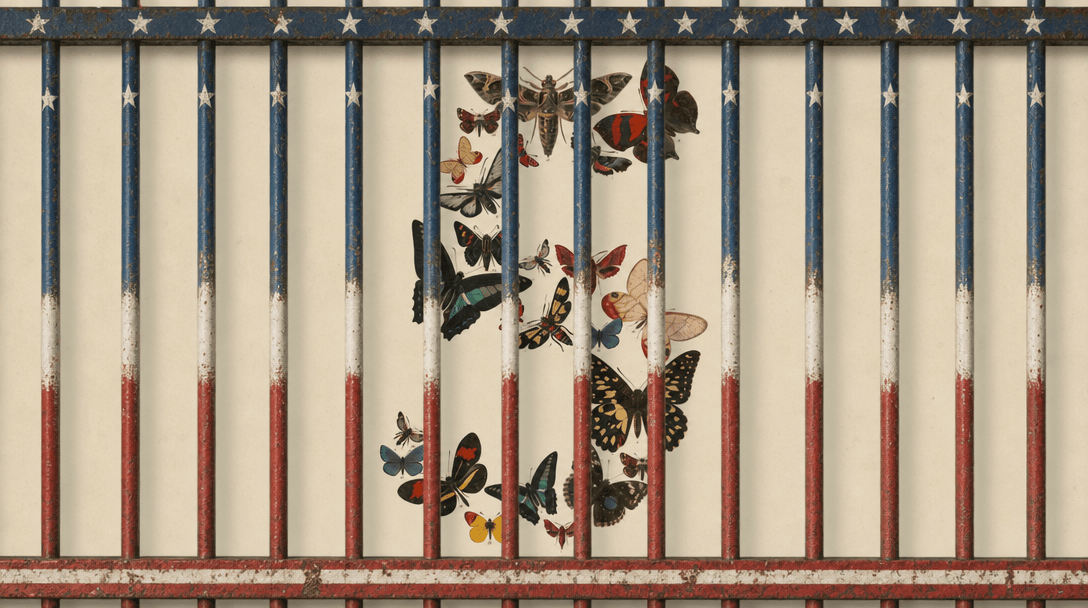
- US Commerce Department forced Anthropic to block Fable 5 and Mythos 5 for all non-US citizens, causing a total global shutdown
- European Commission warns emergency measures must not be discriminatory and calls for stronger technological sovereignty
- Researchers split between pushing for massive European AI investment and accepting that access must be secured through trade policy
The US government forced Anthropic to shut down its most advanced AI models worldwide on June 12, 2026, and European policymakers are treating it as a strategic emergency. The Commerce Department's export control order, tied to national security concerns, required Anthropic to restrict Fable 5 and Mythos 5 to US citizens only. Unable to verify citizenship in real time, Anthropic pulled the plug globally.
The European Commission is now assessing the fallout. Thomas Regnier, the Commission's spokesperson for technological sovereignty, told Euronews that emergency measures must "not be discriminatory against partners." He framed it as a "shared challenge, not one confined to a single jurisdiction or company," and called it further illustration of why Europe needs to strengthen its technological sovereignty.
The immediate cost to Anthropic is estimated at $12 billion in lost revenue. For Europe, the cost is harder to quantify but potentially larger: the sudden disappearance of AI infrastructure that enterprises and governments had integrated into critical workflows.
Why did the US shut down Anthropic's models?
The Commerce Department classified Fable 5 and Mythos 5 as strategic national security assets. This marks the first time a commercial AI foundation model has been treated this way. Elena Rossi, a senior analyst at the European Center for Digital Policy, noted that the order effectively forced "a global, non-discriminatory service suspension to satisfy export compliance."
The reasoning remains partly opaque. National security concerns typically involve preventing adversaries from accessing dual-use technologies, capabilities that have both civilian and military applications. Frontier AI models, with their ability to assist in code generation, research synthesis, and strategic analysis, fit that definition. But the sweeping nature of the restriction, affecting allies and adversaries alike, has drawn sharp criticism.
Anthropic CEO Dario Amodei is scheduled to join the heads of other leading AI companies at a working dinner with G7 leaders on Wednesday. Talks to restore access are ongoing.
What are European researchers saying?
A collection of statements from the Science Media Center shows European AI researchers agree on one thing: this is a wake-up call. They disagree sharply on what Europe should do about it.
Thorsten Holz of the Max Planck Institute for Security and Privacy called it striking that a single foreign government order could "shut down a model overnight for all non-US citizens." For Holz, digital sovereignty doesn't mean self-sufficiency. It means maintaining access to critical technology even during geopolitical conflicts.
Konrad Rieck of TU Berlin was blunter: US models can be "shut off at any time, sometimes for opaque reasons." Europe needs to develop and operate its own capable models. Gitta Kutyniok of LMU Munich called for an "Airbus moment" for AI, with joint, ambitious investment in foundation models, chip design, and energy-efficient computing. "Anyone who waits until the structures are already in place will have almost no room left to shape them," she warned.
“The ability to simply 'unplug' the intelligence backbone of a nation is not a commercial service; it is a geopolitical weapon. We cannot build our digital future on someone else's kill switch.”
— Arthur Mensch, CEO of Mistral AI
Can Europe actually build its own frontier AI?
Not everyone thinks competing head-to-head makes sense. Paul Röttger of the Oxford Internet Institute argued that Europe won't be able to develop models like Mythos or Fable 5 in competition with the US. Instead, he proposed securing access through contracts, tied to data center investments and backed by credible trade policy threats.
The structural barriers support his skepticism. Jonas Geiping of the ELLIS Institute Tübingen pointed out that Mistral, the most prominent European AI company, has "fallen far behind" over the past two years. Even if new players emerged, the basics are missing: large-scale data centers and sufficient power generation. In Germany, power generation has dropped back to 1985 levels.
One statistic captures the scale of the problem: 100% of frontier-class LLM compute clusters are currently controlled by US-based firms or US-allied data centers. Europe has no independent capacity at the scale required for training models comparable to Fable 5 or Mythos 5.
Matthias Hein of the University of Tübingen added another concern. Europe needs not just one but several providers of its own, because nobody should count on commercial companies to keep releasing open-weight models. The open-source safety valve that some assume will always exist may not.
The economic stakes are higher than defense
Geiping cautioned against drawing historical parallels to nuclear weapons tensions, a comparison Anthropic itself likes to make. Unlike nuclear weapons, AI is deeply woven into the economy. A shutdown during a diplomatic conflict wouldn't just affect defense capabilities. It could deal serious damage to European enterprises if business processes can't function without strong AI.
This is the asymmetry that makes the situation genuinely novel. Nuclear weapons are instruments of last resort, rarely integrated into daily operations. AI models, by contrast, have become operational infrastructure. Shutting them off isn't a threat of future harm. It's an immediate disruption to how companies operate right now.
The proposed response from some European policymakers is a 300% increase in public funding for sovereign AI projects under the OpenEuroLLM initiative. Whether that's enough, and whether it can happen fast enough, remains the open question.
What happens next?
The G7 dinner with AI company CEOs on Wednesday will be the first high-level opportunity to negotiate terms for restoring access. But the fundamental dynamic has shifted. EU Commissioner for Internal Market Thierry Breton warned that relying on foreign AI infrastructure is a strategic vulnerability. That's not a new argument, but it now has a concrete example attached to it.
The debate among European researchers suggests there's no consensus path forward. Some want an Airbus-style industrial policy. Others want contractual guarantees backed by trade leverage. Both approaches assume Europe has something to offer in the negotiation, whether that's a credible threat to build alternatives or a willingness to accept US terms in exchange for reliable access.
For enterprises and governments that had built on Anthropic's models, the immediate priority is simpler: find out how long the shutdown will last and whether any workarounds exist. The longer-term question, whether to trust US AI infrastructure again, won't have an easy answer.
Frequently Asked Questions
Why did Anthropic shut down Fable 5 and Mythos 5 globally?
The US Commerce Department issued an export control order requiring Anthropic to restrict these models to US citizens only. Because Anthropic couldn't verify citizenship in real time, it implemented a total global shutdown to remain legally compliant.
How much is the Anthropic shutdown costing the company?
The estimated immediate revenue loss is $12 billion due to the global service suspension.
Can Europe build its own frontier AI models?
Researchers are divided. Some argue for massive joint investment in an "Airbus for AI," while others say Europe lacks the compute infrastructure and power generation capacity to compete. Mistral, the leading European AI company, has fallen behind over the past two years.
What is the European Commission doing about the shutdown?
The Commission is assessing the practical impact and has stated that emergency measures must not be discriminatory against partners. It views the incident as further evidence that Europe needs to strengthen technological sovereignty.
When will Anthropic's advanced models be available again outside the US?
Talks to restore access are ongoing. Anthropic CEO Dario Amodei is meeting with G7 leaders on Wednesday to discuss the situation, but no timeline for restoration has been announced.
Logicity's Take
The Anthropic shutdown reveals a gap between how companies adopted AI and how they assessed vendor risk. Most enterprises treated US AI providers like any other SaaS vendor, not like infrastructure that could be turned off by executive order. That assumption now looks naive. The lesson isn't necessarily that Europe must build its own models. It's that any AI dependency, whether on US, Chinese, or eventually European providers, carries geopolitical risk that belongs in the same category as supply chain exposure or currency volatility.
Need Help Implementing This?
Logicity can help your organization assess AI vendor concentration risk and develop contingency strategies for critical AI dependencies. Contact our advisory team to discuss your specific situation.
Source: The Decoder / Maximilian Schreiner
Technical context behind the shutdown
The new article adds technical context regarding the capabilities of Fable 5 and Mythos 5, specifically detailing that the models were identified as possessing advanced, dangerous cybersecurity exploitation capabilities that justified Anthropic's initial cautious rollout. It also provides the specific detail that the US government's export control directive applied not only to global users but also to foreign national employees of Anthropic.
New details on the dispute and government rationale
The new article adds critical context regarding the root cause of the shutdown, citing reports that the White House order followed concerns from researchers about potential cyberattack capabilities in Fable 5. It also includes Anthropic's public disagreement with the government's decision, noting that they dispute the necessity of a total recall based on what they characterize as a 'narrow potential jailbreak.'
Huma Shazia
Senior AI & Tech Writer
Produced with AI assistance and reviewed by the Logicity editorial team. Learn more in our Editorial Policy.