Key Takeaways
- Clive Chan left OpenAI after 2.4 years to join Anthropic, bringing deep expertise in custom AI chip design
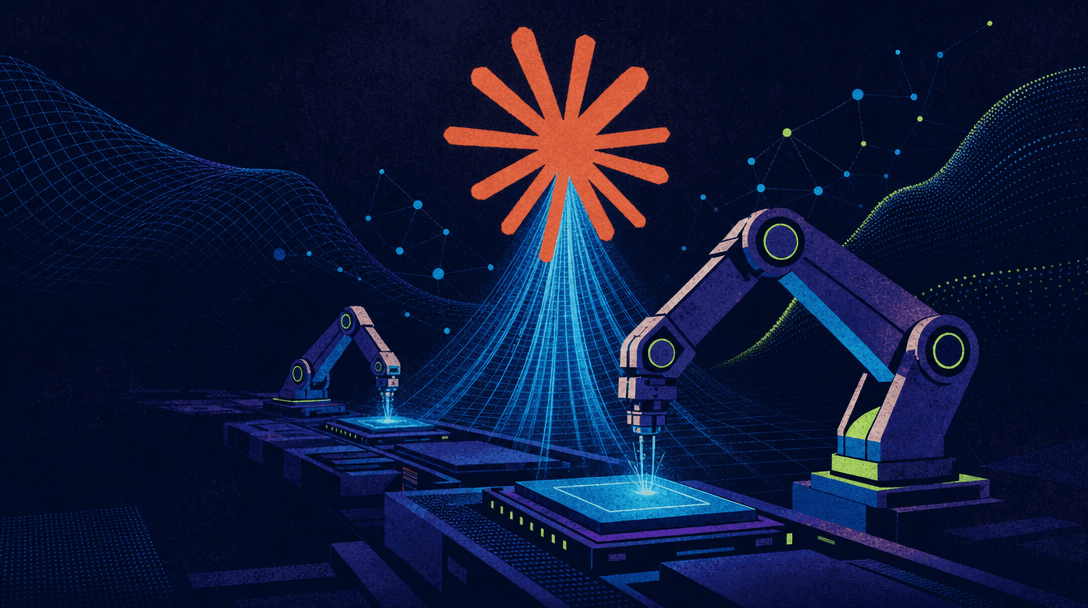
- Anthropic is reportedly weighing plans to build its own AI chips, which could reduce reliance on Google TPUs and Amazon hardware
- Custom silicon could improve Anthropic's profit margins on inference workloads as AI shifts from research breakthroughs to infrastructure plays
Clive Chan, who was the second hardware employee in OpenAI's custom chip program, has left for Anthropic. The departure marks a significant talent shift as both AI companies prepare for initial public offerings.
Chan spent 2.4 years at OpenAI, where he worked on building custom chips from scratch and contributed to the strategic partnership between OpenAI and Broadcom. That partnership reportedly hit snags over production costs and questions about OpenAI's creditworthiness.
In a public LinkedIn post, Chan praised his former team. "I don't think there's a better chip design team anywhere," he wrote. He predicted the chips developed there would become "one of the most important engines of AGI." But despite that praise, he chose to leave for OpenAI's biggest rival.
Clive Chan's announcement of his departure from OpenAI
What Will Chan Do at Anthropic?
Chan's exact role at Anthropic isn't clear. His LinkedIn description reads "perplexity per picojoule," a phrase that could point in two directions.
Perplexity measures how well language models predict text. A picojoule is a tiny unit of energy. The goal, then, is to squeeze maximum model performance from every unit of power. That can happen through better software running on existing GPUs and TPUs, or through custom silicon designed specifically for Anthropic's models.
According to Reuters, Anthropic was weighing the idea of designing its own AI chips as of April 2026. The plans were still early stage, with no dedicated team yet formed. Chan could help build one.
Why Custom Chips Matter for AI Margins
Anthropic currently runs Claude on Google's TPUs and Amazon chips. The company recently signed a long-term deal with Google and Broadcom as part of a commitment to invest $50 billion in US computing infrastructure.
Custom chips would give Anthropic a financial edge. For inference workloads, purpose-built silicon can deliver better margins over time. That matters more as AI shifts from a research-breakthrough story to an infrastructure play. Companies that control their own hardware stack can cut costs and optimize performance in ways that customers of third-party chips cannot.
OpenAI and Meta have already started down this path. Anthropic joining the race makes sense given its $9.65 billion valuation and upcoming IPO.
Chan's Background: Tesla to OpenAI to Anthropic
Before OpenAI, Chan spent about two and a half years at Tesla's Autopilot division. There he worked on a custom chip for machine learning training. His work included software framework bring-up, datacenter co-design, and energy-efficient number formats.
That background makes him valuable for any company thinking about custom silicon. He's been through the full cycle of designing, building, and deploying AI-specific chips. And he's now bringing all of that experience, plus his OpenAI chip knowledge, to Anthropic.
“I don't think there's a better chip design team anywhere... I want to climb a new mountain from the bottom again.”
— Clive Chan, Member of Technical Staff at Anthropic
The Talent War Heats Up
Hacker News discussions have centered on what some call a "talent arms race." Users note that while OpenAI remains the dominant force, Anthropic's aggressive pursuit of top hardware engineers suggests a long-term goal of vertical integration, similar to Apple's silicon strategy.
Sentiment is mixed. Some view the hire as a sign of Anthropic's growing maturity. Others see it as a warning about the volatility of the AI research labor market. Either way, Chan's move shows that the competition between these two companies now extends well beyond model benchmarks.

Logicity's Take
Frequently Asked Questions
Who is Clive Chan?
Clive Chan was the second hardware employee hired for OpenAI's custom chip program. He previously worked at Tesla's Autopilot division on machine learning training chips. He joined Anthropic in June 2026.
Is Anthropic building its own chips?
Anthropic is reportedly considering it. As of April 2026, plans were in early stages with no dedicated team. Chan's hire could accelerate those efforts.
Why do AI companies want custom chips?
Custom silicon designed for specific AI workloads can be more energy-efficient and cost-effective than general-purpose chips. This improves profit margins, especially for inference at scale.
When are OpenAI and Anthropic going public?
Both companies are reportedly preparing for IPOs, though exact dates haven't been announced. Anthropic's most recent valuation was $9.65 billion.
More on OpenAI's pre-IPO strategy
Anthropic's long-term AI safety concerns
Need Help Implementing This?
Source: The Decoder / Matthias Bastian
Huma Shazia
Senior AI & Tech Writer
Produced with AI assistance and reviewed by the Logicity editorial team. Learn more in our Editorial Policy.