Key Takeaways
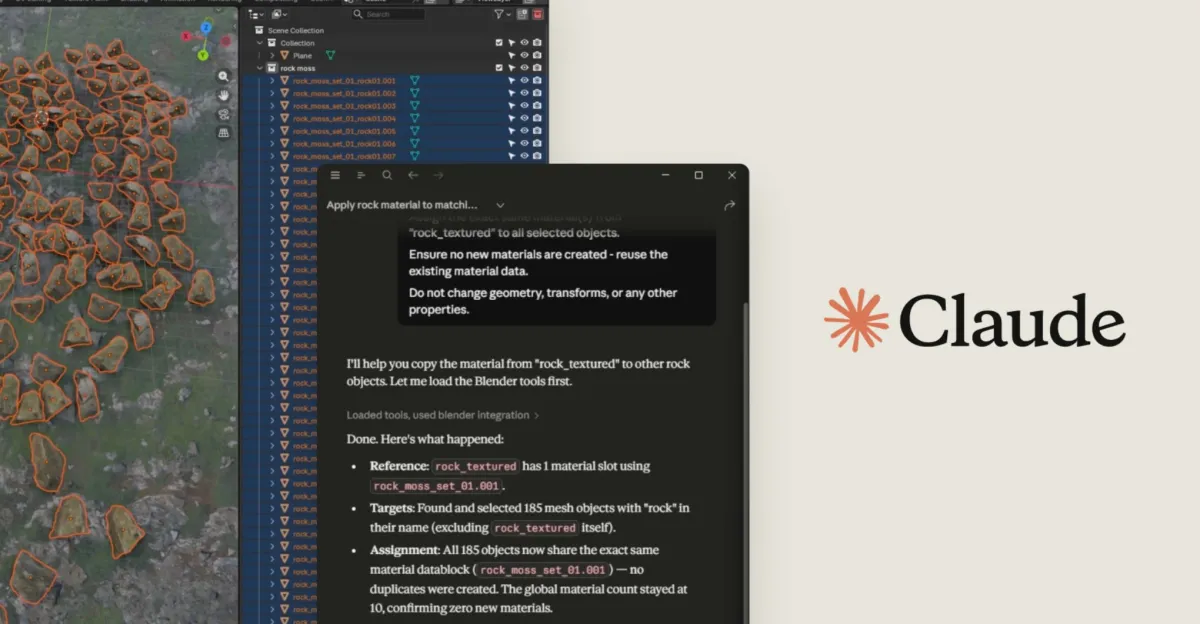
- Claude can now access Adobe Creative Cloud, Blender, Ableton, Affinity, and Autodesk through new connectors
- The Blender integration gives the 3D software's Python API a natural language interface
- Anthropic commits at least €240,000 per year to the Blender Development Fund as a Corporate Patron
Anthropic is pushing Claude deeper into creative workflows. The company launched a set of connectors that let its AI chatbot plug directly into popular creative software. Adobe Creative Cloud, Affinity, Blender, Ableton, and Autodesk are all supported.
The announcement follows Claude Design, which Anthropic released earlier this month. Together, these moves signal a clear play for the creative industry.
What the connectors actually do
Each connector lets Claude access apps, retrieve data, and take actions within connected services. The capabilities vary by application.
The Adobe connector pulls from Creative Cloud apps like Photoshop, Premiere, and Express. It brings images, videos, and designs into Claude conversations. The Ableton connector lets Claude answer music production questions by sourcing information directly from the software's official documentation.
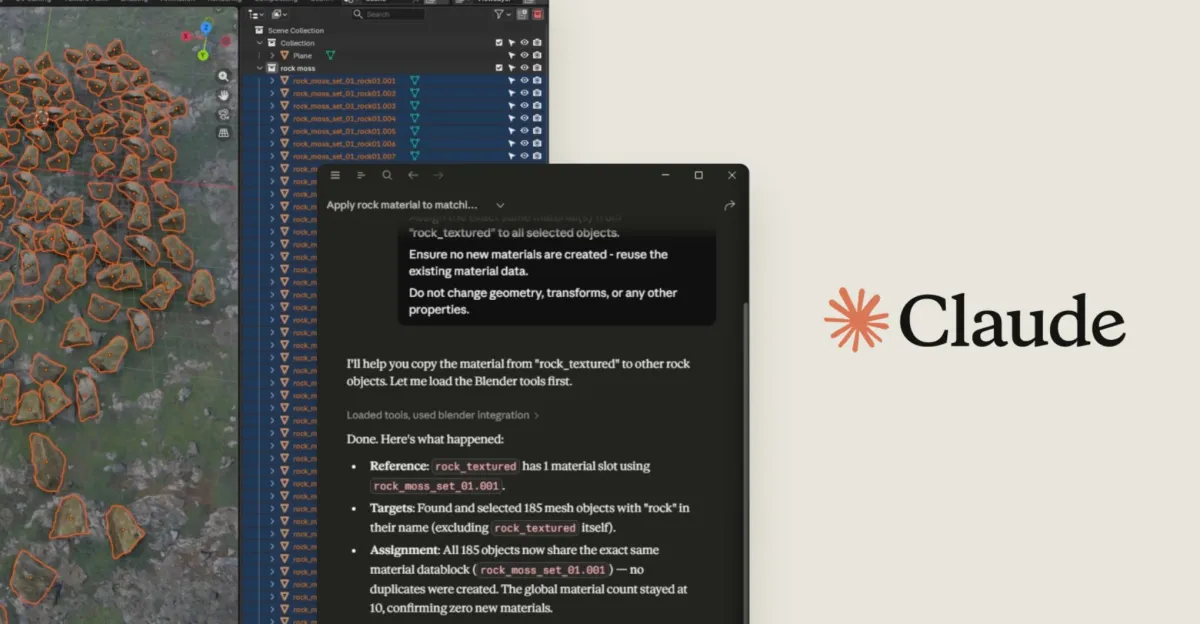
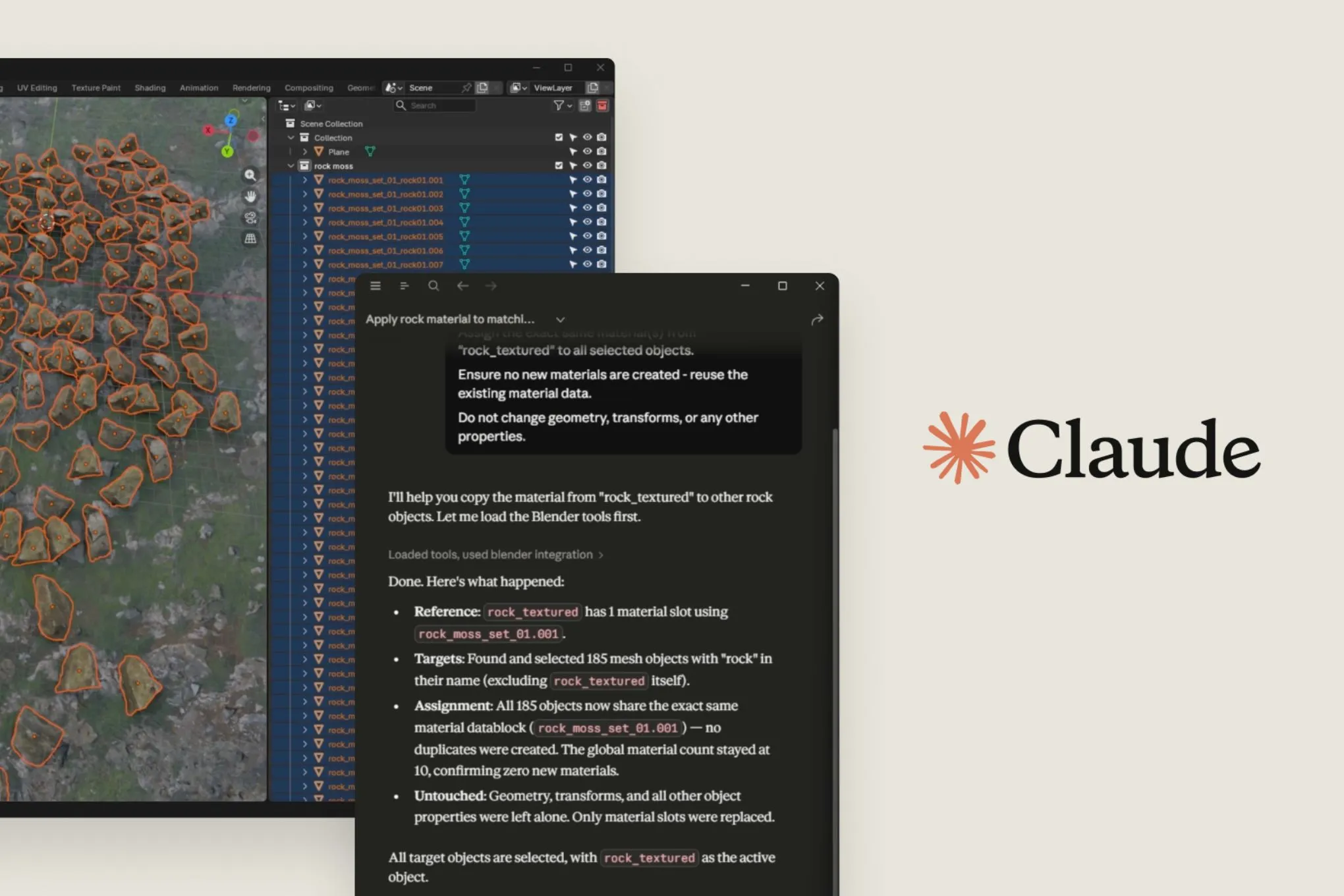
The Blender integration stands out. It gives the 3D modeling app's Python API a natural language interface. Users can debug scenes, build new tools, and batch apply object changes directly from Claude's chat interface.
“Claude can't replace taste or imagination, but it can open up new ways of working — faster and more ambitious ideation, a more expansive skillset, and the ability for creatives to take on larger-scale projects.”
— Anthropic
Anthropic positions the connectors as time savers. The company says AI can handle repetitive tasks and eliminate manual work, freeing creatives to focus on the parts that require human judgment.
Anthropic backs Blender with cash
Alongside the connector launch, Anthropic became a Corporate Patron of the Blender Development Fund. The membership tier requires at least €240,000 (around $281,000) per year.
Anthropic joins other major sponsors including Netflix, Epic, and Wacom. The Blender Foundation says the funding will help it keep pursuing projects independently and focus on building tools for artists and creators.
This is a smart move. Blender's open source status makes it accessible to millions of 3D artists, students, and studios. By supporting the software financially while building deep integrations, Anthropic creates goodwill in a community often skeptical of AI companies.
The bigger picture
This launch follows a pattern. AI companies are racing to become the default assistant layer for professional software. OpenAI has ChatGPT plugins. Google is embedding Gemini across its workspace apps. Now Anthropic is targeting creative professionals specifically.
The approach differs from image generators like Midjourney or DALL-E. Those tools create art directly. Claude's connectors position it as a collaborator that works within existing tools rather than replacing them. It handles documentation lookup, scripting, and repetitive tasks while users retain creative control.
For studios and freelancers, the practical value depends on how well these integrations actually work. A natural language interface to Blender's Python API sounds powerful. But API wrappers can be finicky, and creative work often involves edge cases that break general purpose AI.
Logicity's Take
Frequently Asked Questions
Which creative apps does Claude now support?
Claude's new connectors work with Adobe Creative Cloud (Photoshop, Premiere, Express), Affinity, Blender, Ableton, and Autodesk applications.
What can Claude do inside Blender?
The Blender connector gives Claude access to the 3D software's Python API through natural language. Users can debug scenes, build tools, and batch apply changes to objects directly from chat.
How much is Anthropic paying to support Blender?
Anthropic committed at least €240,000 (approximately $281,000) per year as a Corporate Patron of the Blender Development Fund.
Does Claude replace creative software like Photoshop or Blender?
No. Claude's connectors work within these applications rather than replacing them. The AI handles tasks like documentation lookup, scripting, and repetitive operations while users retain creative control.
Need Help Implementing This?
Indian Government Negotiates Access to Claude Mythos Amid Infrastructure Concerns
The new article discusses the Indian government's negotiations with the US and Anthropic to provide Indian companies access to a model called 'Claude Mythos'. It also highlights concerns from Indian officials regarding the model's impact on critical infrastructure such as banking, power grids, and telecom.
Detailed Connector Features and Integration Goals
The new article provides specific functional details for the connectors, such as Ableton's integration with official documentation and Affinity's capabilities for batch image adjustments and layer renaming. It also includes an official quote from Anthropic regarding their goal to assist rather than replace creative professionals.
Manaal Khan
Tech & Innovation Writer
Produced with AI assistance and reviewed by the Logicity editorial team. Learn more in our Editorial Policy.