Key Takeaways
- Anthropic sent a letter to U.S. senators claiming Alibaba used 25,000 fake accounts to run 28.8 million Claude exchanges for model distillation
- This follows earlier accusations against DeepSeek, Moonshot, and MiniMax for similar distillation campaigns using 24,000 accounts
- The allegations highlight growing US-China tensions over AI intellectual property as both nations race for AI supremacy
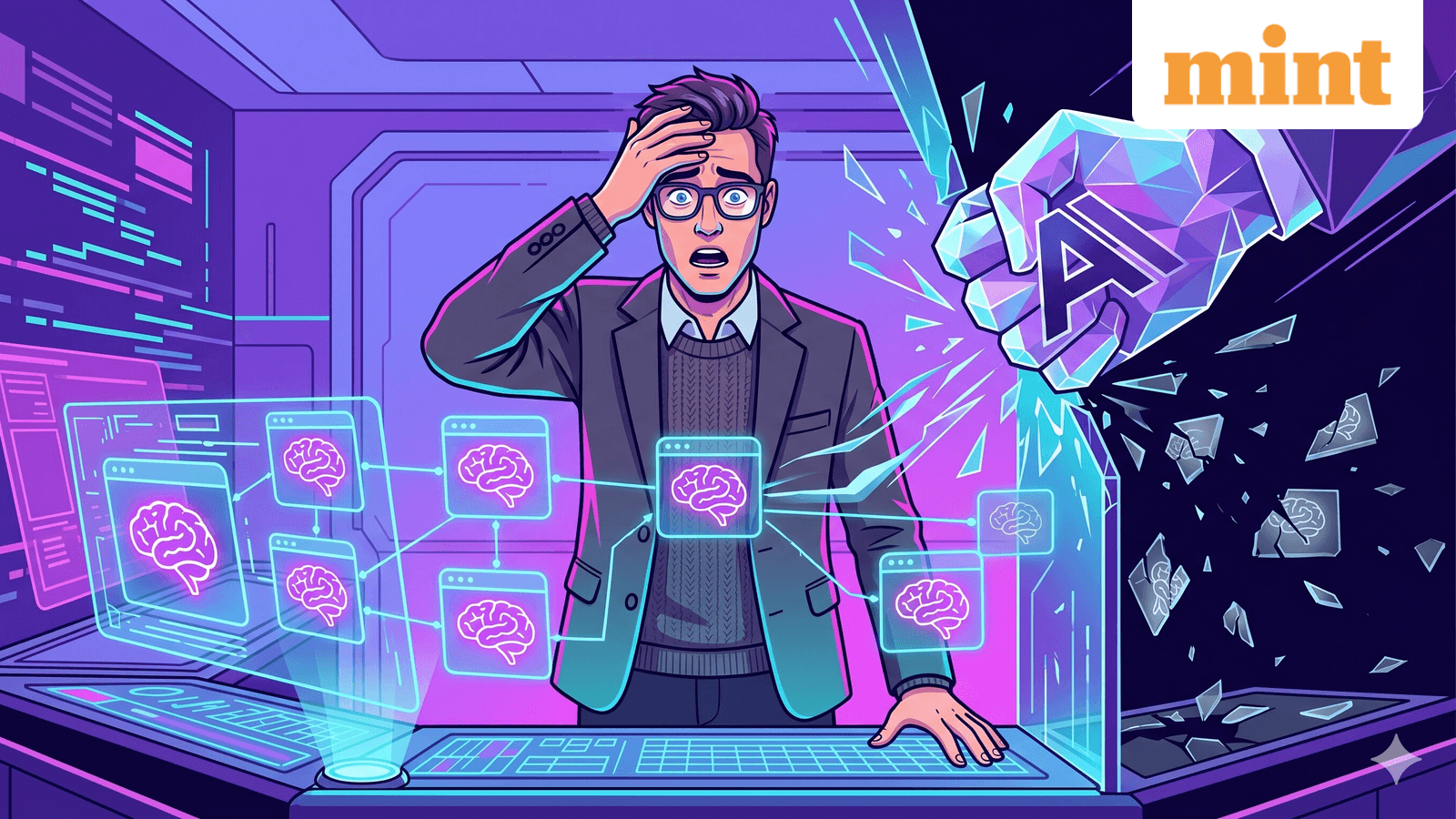
Anthropic has accused Chinese tech giant Alibaba of illegally copying its Claude AI model through a coordinated distillation campaign. In a letter sent to the U.S. Senate Banking Committee, the company claims Alibaba operators ran 28.8 million exchanges on Claude using 25,000 fake accounts between April and June 2026.
The accusation lands weeks before a scheduled congressional hearing on AI issues and marks the second time this year Anthropic has pointed fingers at Chinese AI labs for intellectual property theft.
What is model distillation and why does it matter?
Distillation is a technique where developers train a smaller, cheaper AI model by feeding it millions of input-output pairs from a more advanced model. The smaller model learns to mimic the larger one's responses, effectively inheriting its capabilities without the original training investment.
The technique has legitimate uses. Companies routinely distill their own frontier models to create lighter versions for deployment on edge devices or cost-sensitive applications. The controversy arises when competitors use it to replicate rival models without authorization.
Anthropic argues that distillation allows competing labs to build capable models "at a fraction of the time, and at a fraction of the cost, that it would take to develop them independently." For a company that spent billions training Claude, watching competitors potentially shortcut that investment stings.
This isn't Anthropic's first accusation
Earlier this year, Anthropic claimed three other Chinese AI labs ran similar operations. DeepSeek, Moonshot, and MiniMax allegedly used 24,000 fraudulent accounts collectively and made 16 million exchanges to train their models on Claude's outputs. The pattern suggests systematic targeting of American AI infrastructure.
The Alibaba accusation is larger in scale. At 28.8 million exchanges, it represents nearly double the volume of the previous three labs combined. Anthropic says it traced the activity to operators with connections to both Alibaba and Alibaba Qwen, the company's AI research division.
Why is Anthropic telling Congress instead of filing a lawsuit?
The letter went to Sen. Tim Scott, Republican chair of the Senate Banking Committee, and Sen. Elizabeth Warren, its ranking Democrat. This bipartisan approach signals Anthropic wants legislative action, not just courtroom remedies.
Suing a Chinese company from U.S. courts is difficult. Enforcing any judgment is nearly impossible. By framing the issue as a national security concern, Anthropic positions the problem as something requiring government intervention through export controls, sanctions, or new regulations.
Anthropic specifically warned that distillation could help China develop a frontier AI model matching Mythos Preview's capabilities. That framing matters. American lawmakers have expressed concern about falling behind China in AI development, and Anthropic is explicitly connecting its commercial interests to those national security anxieties.
The broader US-China AI rivalry
Both nations are engaged in a high-stakes technology competition. Washington has imposed export controls limiting Chinese access to advanced chipmaking equipment and cutting-edge semiconductors. Beijing responded with restrictions on rare earth materials essential for semiconductor production.
Despite American efforts to slow Chinese AI development, the gap may be closing faster than expected. Elon Musk recently estimated a Chinese lab would achieve a "Fable 5-class" AI model by Q1 next year. The CEO of Chinese AI lab Z.ai responded bluntly: "Won't take that long."
There's also an economic dimension. Enterprise users are increasingly switching to open-source Chinese models for routine AI tasks because American API costs keep climbing. Companies reserve expensive American models only for complex work, using cheaper Chinese alternatives for everything else. That trend undermines the revenue base American AI labs depend on to fund continued research.
What can AI companies actually do to prevent distillation?
Detection is possible but imperfect. Anthropic identified these campaigns after the fact by analyzing usage patterns: large numbers of accounts making systematically structured queries designed to extract training data. But by the time you detect it, the damage is done.
Rate limiting helps. So does requiring phone verification or payment methods that make fake accounts expensive to create. But determined actors with resources can work around these barriers. The 25,000 accounts Anthropic identified suggest significant coordination and investment.
Some researchers have proposed watermarking AI outputs in ways that would make distillation detectable in downstream models. Others suggest adding adversarial noise that degrades distillation quality. Neither approach is mature enough for production deployment.
Logicity's Take
Anthropic's decision to go to Congress rather than the courts reveals a hard truth about AI IP: the law hasn't caught up to the technology. Model distillation occupies a gray zone. Is querying a public API and learning from the outputs theft, or is it just learning? Until legislators define clearer boundaries, American AI companies will keep playing defense while competitors exploit the ambiguity.
Frequently Asked Questions
What is AI model distillation?
Distillation trains a smaller AI model to mimic a larger one by learning from its input-output pairs. The technique can compress models legitimately or clone competitor capabilities without their investment.
How did Anthropic detect the alleged Alibaba distillation?
Anthropic analyzed usage patterns and traced 25,000 fake accounts running 28.8 million structured exchanges to operators connected with Alibaba and Alibaba Qwen.
Is AI model distillation illegal?
The legality is unclear. Distillation occupies a gray area between legitimate reverse engineering and intellectual property theft, with no established case law defining boundaries.
Has Alibaba responded to Anthropic's accusations?
At the time of the letter's disclosure, no public response from Alibaba or Alibaba Qwen had been reported.
What previous distillation accusations has Anthropic made?
Earlier this year, Anthropic accused DeepSeek, Moonshot, and MiniMax of using 24,000 fraudulent accounts and 16 million exchanges collectively to distill Claude.
Need Help Implementing This?
AI security and model protection are critical concerns for companies deploying or developing AI systems. If you need guidance on securing AI infrastructure or understanding the competitive landscape, contact Logicity's AI consulting team for expert analysis.
Source: Latest from Tom's Hardware
Huma Shazia
Senior AI & Tech Writer
Produced with AI assistance and reviewed by the Logicity editorial team. Learn more in our Editorial Policy.