Key Takeaways
- Anduril is in talks to raise capital at roughly $100 billion, triple its June 2025 valuation of $30.5 billion
- Defense tech venture funding topped $12 billion in H1 2026, exceeding all of 2025's $10 billion total
- The company doubled revenue to $2.2 billion in 2025 and has secured contracts with the Pentagon, NATO, and multiple European allies
Anduril, the defense technology company founded by Palmer Luckey, is negotiating a funding round that would value it at approximately $100 billion, according to a Reuters report citing anonymous sources. That figure represents more than a threefold increase from the $30.5 billion valuation the company achieved in its June 2025 Series G round, and a $40 billion jump from the $61 billion mark it hit just two months ago in May 2026.
The proposed raise may be structured in two tranches, with the second stage bringing in investors at a higher valuation. Both stages could close before the end of 2026, Reuters reported. Anduril did not respond to requests for comment.
Why defense tech funding is surging
The timing is not coincidental. Defense tech venture funding crossed $12 billion in the first half of 2026, more than double the same period a year earlier. That six-month total already exceeds the nearly $10 billion the sector raised in all of 2025.
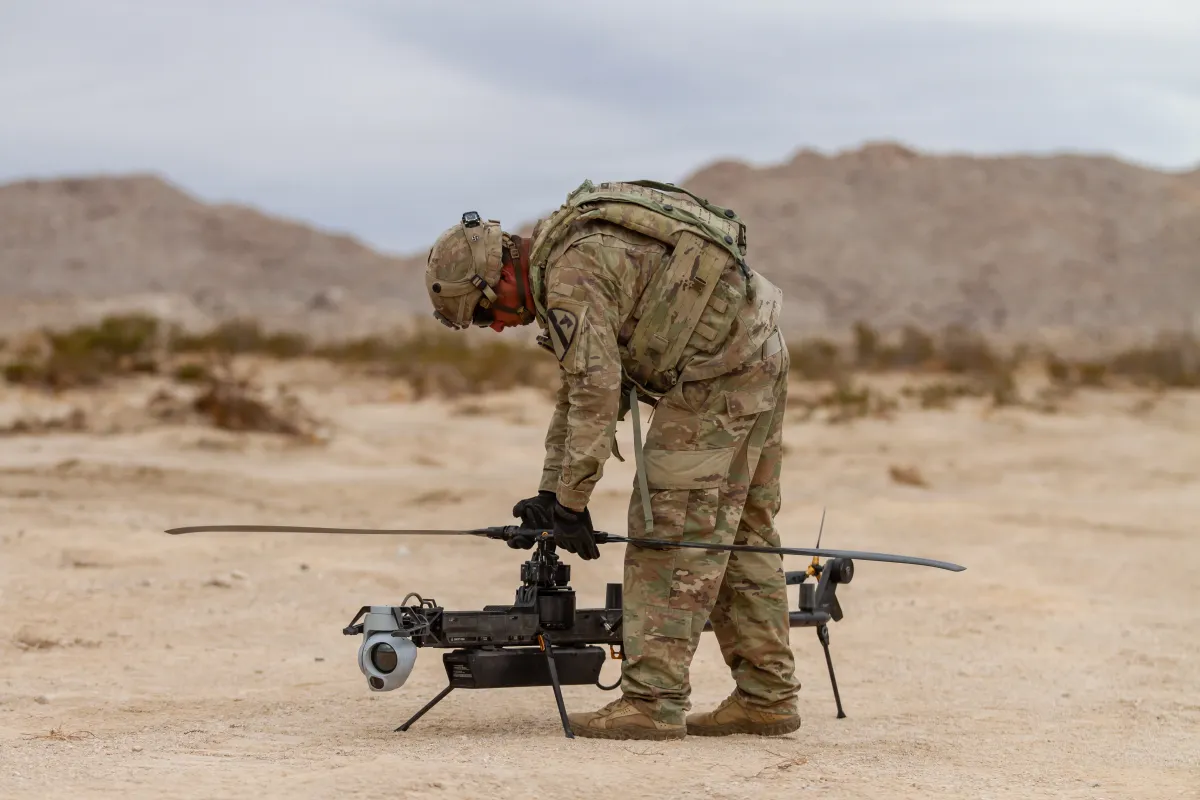
Active conflicts in the Middle East and Eastern Europe have driven sustained demand for drones, autonomous vehicles, and AI-powered military systems. Anduril has capitalized on this, signing contracts with the U.S. Department of Defense, Air Force, and Army, plus the Dutch Ministry of Defence, NATO, the U.K. Ministry of Defence, and Poland. The company reported revenue of $2.2 billion in 2025, more than double the prior year.
How Anduril's valuation compares to peers
Anduril is not the only defense startup riding this wave. Shield AI raised $1.5 billion in March 2026 for military aircraft. Mach Industries quadrupled its valuation to $1.8 billion last month. Europe's Helsing closed a $1.8 billion round this month at an $18 billion valuation. But at $100 billion, Anduril would sit in a different category entirely, approaching the market caps of legacy defense primes.
| Company | Recent Round | Valuation | Focus |
|---|---|---|---|
| Anduril (reported) | H2 2026 (in talks) | $100B | Drones, autonomous systems, AI |
| Anduril (May 2026) | $5B raised | $61B | Drones, autonomous systems, AI |
| Shield AI | $1.5B (March 2026) | Not disclosed | Military aircraft |
| Helsing | $1.8B (July 2026) | $18B | AI defense (Europe) |
| Mach Industries | Not disclosed | $1.8B | Low-cost weapons |
The shift to cheaper, expendable hardware
A common theme unites these deals: attritable systems. For decades, defense contracting meant expensive, irreplaceable hardware. Tanks, jets, and ships were built to last and cost accordingly. The new generation of startups is building weapons designed to be lost.
Mach CEO Ethan Thornton has pointed to Ukraine's battlefield use of autonomous drones as a template. His company designs systems at "significantly lower cost" than traditional contractors. The economics are simple: if a drone costs $10,000 instead of $10 million, you can lose it without losing the war.
Both Mach and Anduril have moved to secure propulsion supply chains. Mach acquired solid rocket motor maker Exquadrum for $50 million in May 2026. The Pentagon has separately funded Anduril's efforts to expand domestic solid rocket motor manufacturing. These moves address a bottleneck that existed before the low-cost weapons trend but becomes critical when production volumes scale.
Another large-scale funding deal shaping tech and geopolitics
Who's backing Anduril?
Anduril's investor roster reads like a who's who of Silicon Valley venture capital. Thrive Capital, Andreessen Horowitz, Founders Fund, ICONIQ, Flux Capital, Greycroft, Altimeter, and 1789 Capital all hold stakes, according to PitchBook. So does current U.S. Vice President JD Vance, who invested before taking office.
The political connection matters. Defense procurement is inherently governmental, and relationships with policymakers shape contract awards. Whether Vance's stake creates conflicts of interest or simply reflects early conviction in the company's mission is a question that will follow Anduril as it scales.
What this signals for the broader market
A $100 billion valuation for a private defense company would mark a turning point. It suggests investors believe the defense tech boom is structural, not cyclical. Wars in Ukraine and Gaza have lasted years, not months, and NATO allies are scrambling to rebuild depleted stockpiles.
The implication for traditional defense contractors like Lockheed Martin, Raytheon, and Northrop Grumman is less clear. These companies have decades of Pentagon relationships and billions in annual revenue. But they were built for different procurement cycles and different warfare doctrines. Whether they adapt or get disrupted is an open question.
Large-scale manufacturing and supply chain funding context
Logicity's Take
Anduril's reported $100B valuation is roughly 45x its 2025 revenue, a multiple that demands sustained hypergrowth to justify. For comparison, Lockheed Martin trades at about 1.8x revenue. The bet here is that Anduril can become a platform company, not just a weapons supplier, embedding AI and autonomous systems across the defense stack. If the conflicts driving current demand persist, and Western governments continue to prioritize domestic defense tech over legacy contractors, the valuation looks aggressive but defensible. If either assumption breaks, it does not.
Frequently Asked Questions
What is Anduril's current valuation?
Anduril was valued at $61 billion in May 2026. The company is reportedly in talks to raise new funding at approximately $100 billion.
How much revenue does Anduril generate?
Anduril reported $2.2 billion in revenue for 2025, more than double the prior year.
Who are Anduril's main competitors?
In the defense tech startup space, competitors include Shield AI (military aircraft), Mach Industries (low-cost weapons), and Helsing (AI defense in Europe). Anduril also competes with traditional contractors like Lockheed Martin and Raytheon.
What does Anduril build?
Anduril develops autonomous drones, surveillance systems, and AI-powered defense technology. It has contracts with the U.S. military, NATO, and several European defense ministries.
Why is defense tech funding increasing?
Ongoing conflicts in Ukraine and the Middle East have driven demand for drones and autonomous systems. Defense tech venture funding exceeded $12 billion in H1 2026, surpassing all of 2025.
Need Help Implementing This?
If your organization is navigating defense tech partnerships, procurement workflows, or AI integration, Logicity's consulting network can connect you with specialists. Contact us for tailored guidance.
Source: TechCrunch / Ram Iyer
Manaal Khan
Tech & Innovation Writer
Produced with AI assistance and reviewed by the Logicity editorial team. Learn more in our Editorial Policy.