Key Takeaways
- Amazon Now will expand to 300 cities, triple its original April target of 100 cities
- Prime members triple their shopping frequency after using Amazon Now, with orders growing 25% month-on-month
- Amazon faces intense competition from Flipkart Minutes, which now operates 1,000 fulfilment centres across 130 cities
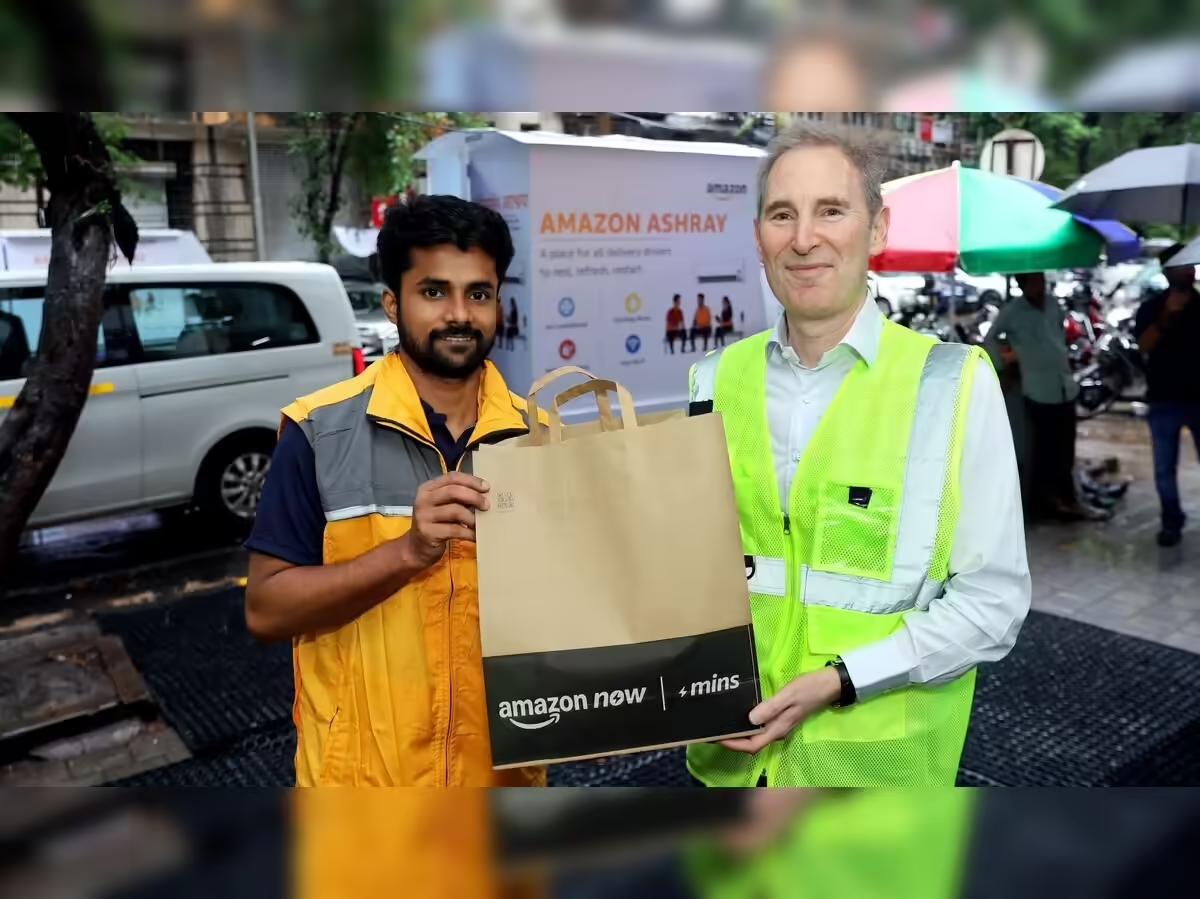
Amazon CEO Andy Jassy landed in India this week to meet government officials, entrepreneurs, and employees. The company used the visit to announce that Amazon Now, its 10-minute delivery service, will expand to 300 cities, tripling the 100-city target it set in April.
The acceleration signals that Amazon sees quick commerce as central to its India strategy, not a side experiment. In February, Amazon India committed Rs 2,800 crore ($300 million) specifically to strengthen infrastructure for rapid delivery. That investment is part of a broader $35 billion commitment to India by 2030.
Why did Amazon triple its city expansion target?
The numbers convinced them. Jassy told analysts during Amazon's March quarter earnings call that Amazon Now orders are growing 25% month-on-month. More telling: Prime members triple their shopping frequency once they start using the service.
"We are seeing a great response from customers, especially Prime members who triple their shopping frequency once they start using Amazon Now," said Samir Kumar, country manager of Amazon India. "We have further accelerated our expansion and will offer ultra-fast deliveries to customers in over 300 cities of India."
Amazon Now currently operates about 500 dark stores across 15 cities, including Bengaluru, Delhi-NCR, Mumbai, Pune, Hyderabad, Amritsar, and Kochi. The company plans to build a network of 1,000 stores to support the broader rollout.
What is Amazon selling through quick commerce?
Amazon Now started with groceries but is pushing beyond them. Last week, the company announced 100 large fulfilment centres in Bengaluru, Chennai, Delhi-NCR, Hyderabad, and Mumbai to stock electronics, fans, humidifiers, and other household items for 10-minute delivery.
This category expansion matters. Groceries have thin margins, while electronics and appliances offer better unit economics. If Amazon can get consumers habituated to ordering a mixer or a pair of headphones through quick commerce, the per-order revenue increases substantially.
How does Amazon Now compare to Flipkart Minutes?
The timing of Jassy's visit is no coincidence. On the same day, Flipkart Minutes announced it has expanded to 1,000 fulfilment centres across 130 cities in less than two years since launch. The Walmart-owned company is adding about 100 stores per month.
Amazon is playing catch-up but moving fast. Kumar acknowledged the late start in an earlier conversation: "We were slow out of the gate, but we were not sitting idle. We were figuring out what we should do and how we should serve our customers in this format. Once we decided to get there, we got there quickly."
The broader quick commerce market includes Zepto, Blinkit, and Swiggy Instamart, all of which have built dense dark store networks in metro areas. Amazon's advantage lies in its existing Prime subscriber base and logistics infrastructure. The company's data shows that dark stores convert Prime members into high-frequency buyers within 90 days of launch in their area.
What does Jassy's visit signal about Amazon's India priorities?
CEO visits to India are carefully staged events. Jassy meeting government officials suggests Amazon is seeking regulatory goodwill as it expands operations. The entrepreneur meetings likely focus on the Amazon-backed startup ecosystem. The employee visits are standard morale-building.
But the real message is strategic: quick commerce is no longer a test. Amazon is committing serious capital and leadership attention to a format it initially dismissed. The company now aims to be the market leader in the category, according to Kumar.
Logicity's Take
Amazon's 3x expansion target suggests internal data showed better-than-expected retention and order frequency. The real question is whether Amazon can achieve dark store economics in tier-2 and tier-3 cities where order density is lower. Flipkart's 1,000-store network gives it a structural lead, but Amazon's Prime membership base is a built-in customer acquisition advantage that competitors lack.
Frequently Asked Questions
What is Amazon Now?
Amazon Now is Amazon's quick commerce service in India, promising 10-minute delivery from dark stores. It started with groceries and is expanding to electronics and household items.
How many cities will Amazon Now serve in India?
Amazon Now will expand to 300 cities in India, up from the 100-city target announced in April 2025. The company currently operates in 15 cities.
How much is Amazon investing in India quick commerce?
Amazon India committed Rs 2,800 crore ($300 million) in February specifically for quick commerce infrastructure. This is part of a $35 billion total investment in India by 2030.
Who are Amazon Now's main competitors in India?
Amazon Now competes with Flipkart Minutes, Blinkit (owned by Zomato), Swiggy Instamart, and Zepto in India's quick commerce market.
Need Help Implementing This?
Building rapid delivery operations or optimizing last-mile logistics? Logicity connects you with supply chain and operations experts who can help. Contact us for tailored recommendations.
Source: Tech-Economic Times / ET
Manaal Khan
Tech & Innovation Writer
Produced with AI assistance and reviewed by the Logicity editorial team. Learn more in our Editorial Policy.




