Key Takeaways
5 Best Email Apps For Inbox Zero 2026 | From 41,000 Emails to ZERO
- Premium email features like scheduling and snooze are now standard in free apps
- AI-powered email features are table stakes, not differentiators
- The best email app depends on workflow fit, not feature count
Email isn't dying. Slack, Teams, and every collaboration tool that promised to kill it have instead made the inbox busier. Knowledge workers still spend roughly 28% of their day managing email, according to McKinsey research. The question isn't whether to use email. It's which app handles the load without creating more friction.
Disclosure
Some links in this post are affiliate links — Logicity earns a commission if you sign up, at no extra cost to you. We only link products we have used or actively recommend.
Zapier's 2026 roundup of the best email apps reflects a market that has matured faster than most founders realize. Features that justified $30/month subscriptions three years ago are now baked into Gmail's web interface. Scheduling emails, snoozing threads, AI-generated replies. All free, all default. That raises the bar for any paid client trying to justify its existence.
What changed in email apps over the past two years?
The premium email category once belonged to Superhuman alone. At $30/month, it offered speed, keyboard shortcuts, and split inboxes before anyone else. That moat has eroded. Spark, which remains free for individuals, now matches most of Superhuman's core features. Apple Mail added undo send and scheduled delivery in iOS 16. Google rolled out AI summaries and smart compose years ago.
AI was supposed to change everything. It hasn't, at least not in the way email app marketing suggests. Every client now offers some form of AI-assisted drafting or summarization. None of them solve the fundamental problem: too many messages demanding too much attention. As Rahul Vohra, Superhuman's CEO, once put it: "The inbox is the todo list everyone else writes for you." No AI fixes that.
Which email apps made Zapier's 2026 list?
Zapier tested email clients across macOS, Windows, iOS, and Android. The nine picks span free defaults to paid power tools. The standouts depend on your workflow.
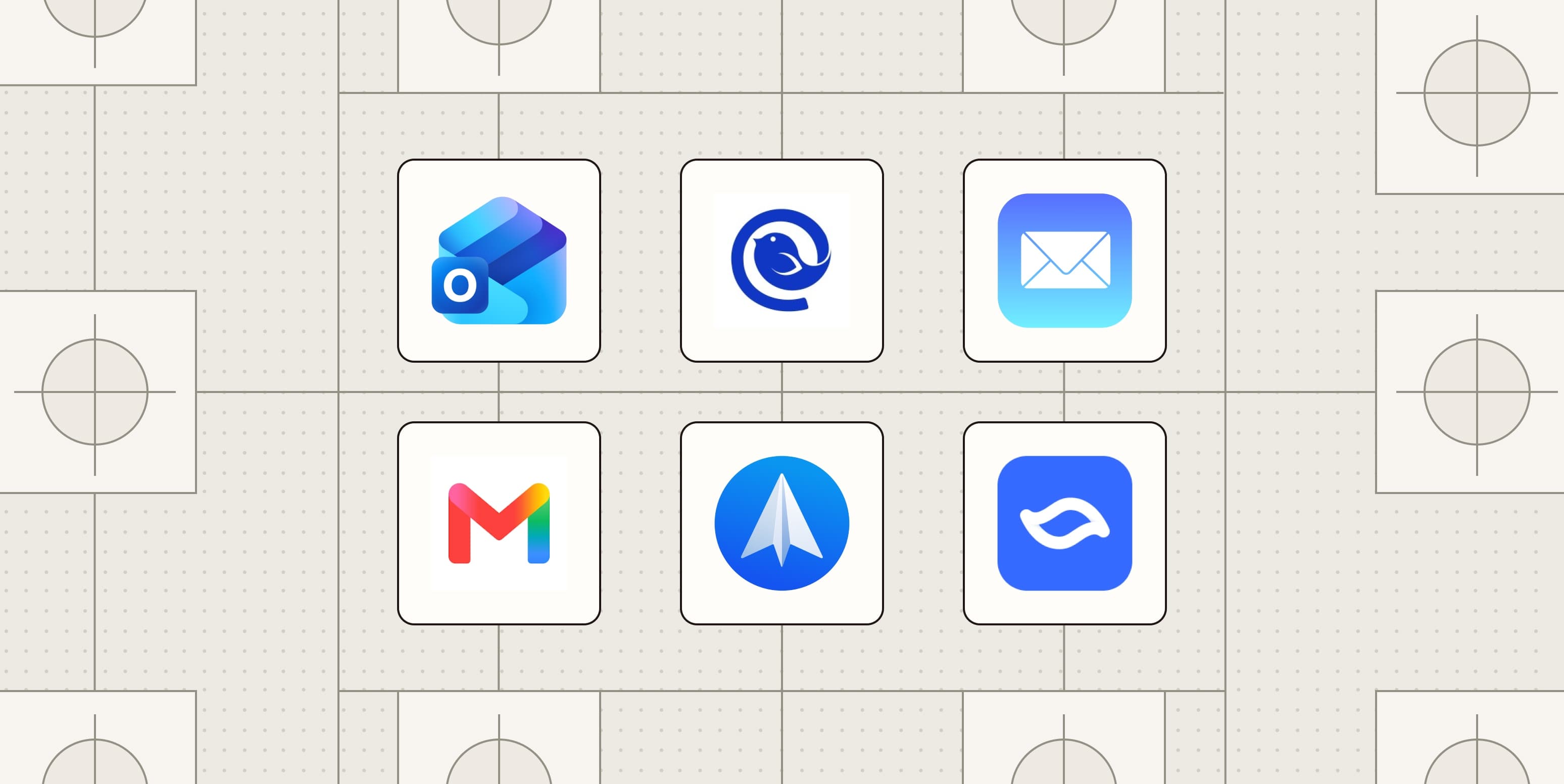
- Gmail and Apple Mail for users who want zero friction and already live in those ecosystems
- Superhuman for teams willing to pay for speed and keyboard-first navigation
- Spark for individuals who want Superhuman-like features without the monthly cost
- HEY for founders who want opinionated inbox management, not more features
- Outlook for Microsoft 365 shops where calendar integration matters more than email innovation
The review notes that niche features have become commoditized. Send later, remind me, undo send. These are everywhere now. The differentiation has shifted to philosophy and integration depth. HEY, built by 37signals, takes a contrarian stance: senders don't get automatic access to your inbox. You screen new contacts first. That friction is the point.
What should SaaS founders consider when picking an email client?
For operators running lean teams, email client choice has downstream effects. Automation compatibility matters. Zapier connects with Gmail, Outlook, and most major clients, but some apps like HEY don't play well with external automation tools. If you're piping inbound emails into Airtable or triggering Slack notifications from customer inquiries, check integration support before committing.
Price scales differently across teams. Superhuman's $30/user/month adds up fast at 20 seats. Spark's Teams plan starts lower but lacks some advanced AI features. For early-stage startups, the honest answer is often Gmail with a few plugins. You can always upgrade later.
The review author, who has used email since 1995 and worked remotely since 2012, offers a useful corrective: "The best fix is to take a deep breath and accept that email will never be amazing, but that with an app you like, it won't be a burden." That's the right framing. No app solves email overload. The goal is finding one that doesn't make it worse.
Is premium email worth $30/month in 2026?
Superhuman crossed $10 million in ARR by selling speed and polish. For high-volume communicators, the investment pencils out. If you process 150+ emails daily, shaving seconds off each reply compounds. But that calculation only holds if email is your primary work interface. Founders who spend most of their day in calls, docs, or code won't recoup the cost.
The free tier of most modern email apps is good enough for 80% of users. Gmail's web client handles everything most people need. Apple Mail's 2024-2025 updates closed the gap on iOS. Unless you've hit a specific pain point that free tools don't address, starting paid feels premature.
Logicity's Take
For SaaS founders, email app choice is a proxy for a harder question: how much time do you actually spend in your inbox? If the answer is less than two hours daily, premium clients like Superhuman ($30/month) or Spark Teams ($6.99/user/month) won't move the needle. Invest that money in automation instead. Tools like Zapier or Make can route common inquiries, create tasks from emails, and reduce inbox time more than any client redesign. The email app matters less than the systems around it.
Email volume keeps growing
Projections from Statista and the Radicati Group put global daily email volume above 400 billion messages by 2026. That's roughly 90 emails per user per day, on average. For founders and operators, the number skews higher. Investor updates, customer support escalations, partnership outreach, internal threads. The inbox expands to fill available attention.
Jason Fried, CEO of 37signals and the mind behind HEY, once called email "the cockroach of the internet." It survives everything. Slack didn't kill it. AI won't either. The apps that handle it best are the ones that accept this reality and optimize for triage, not transformation.
Frequently Asked Questions
What is the best free email app in 2026?
Gmail and Apple Mail offer the most complete feature sets at no cost. Spark's free tier is also strong for individuals who want advanced sorting and AI features.
Is Superhuman worth the cost for small teams?
At $30/user/month, Superhuman makes sense for teams where email is a primary work surface. For most early-stage startups, the cost outweighs the time savings.
Which email apps work best with automation tools?
Gmail and Outlook have the deepest integration support with Zapier, Make, and similar platforms. HEY's closed architecture limits automation options.
Do AI features in email apps actually save time?
AI summaries and smart replies help with high-volume inboxes, but they don't reduce the total number of messages. The time savings are incremental, not transformational.
What email app is best for remote teams?
Spark and Superhuman both offer team features like shared drafts and internal notes. The choice depends on budget and whether your team prefers mobile-first or desktop-first workflows.
Need Help Implementing This?
If you're rebuilding your email workflow or evaluating tools for your team, reach out to Logicity's advisory network. We connect SaaS operators with specialists who can audit your communication stack and recommend the right fit.
Source: The Zapier Blog
Manaal Khan
Tech & Innovation Writer
Produced with AI assistance and reviewed by the Logicity editorial team. Learn more in our Editorial Policy.